Between a Table and a Marketplace: Abu Dhabi Talks While War Rages
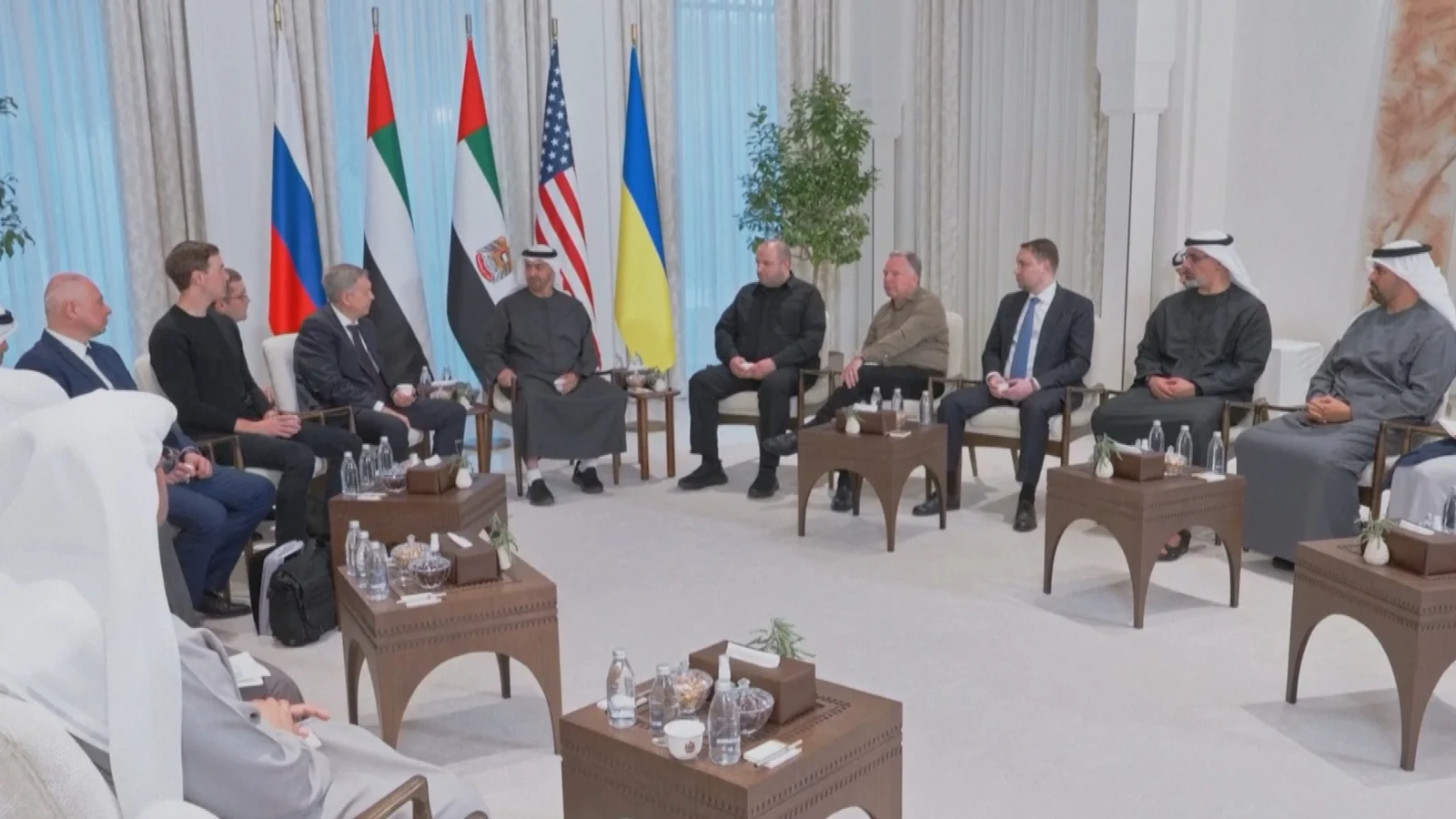
They sat around a U-shaped table beneath the cool, anonymous lights of an Abu Dhabi conference room — Ukraine, Russia and the United States — while, outside, another kind of light flashed across the sky over eastern Ukraine: missiles, the jagged punctuation of a war that refuses to be paused for diplomacy.
Photographs released by the United Arab Emirates showed faces both determined and tired. At the table, U.S. envoys including special representatives were flanked by high-profile intermediaries. In the press pack and in living rooms in Kyiv and Moscow, people watched with the old, weary hope that words might replace bullets.
What happened in the room
Kyiv’s chief negotiator described the first day as “substantive and productive,” saying the talks zeroed in on “concrete steps and practical solutions.” Officials framed the meeting as an attempt to find pragmatic ways to slow bloodshed, exchange prisoners and stabilize certain front-line areas without forcing Kyiv into territorial concessions.
Yet the Kremlin’s line remained clear and uncompromising. Moscow continues to press for territorial recognition of areas it controls and wants Ukrainian forces pulled back from key sectors — demands Kyiv rejects as a nonstarter. A Kremlin spokesperson said Russian troops would keep fighting until Ukraine “made decisions” that could end the conflict, underscoring the yawning gaps between negotiating tables and battlefields.
Who was at the table — and why it matters
What’s notable about these talks is not only the attendees but the posture. The United States has stepped into the role of broker with unusual discreetness, positioning itself between two parties with bitter grievances and profound asymmetries of power, land and narrative. Photos from the session showed U.S. envoys seated centrally, an image that speaks to Washington’s continued influence — and its hard calculus about how to balance pressure on Moscow with support for Kyiv.
“Our aim was to focus on what can be done now, not to rush to impossible compromises,” said one Western diplomat who asked not to be named. “You negotiate the achievable first.”
On the ground: a market and the human cost
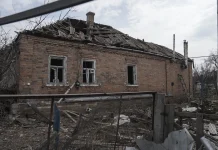
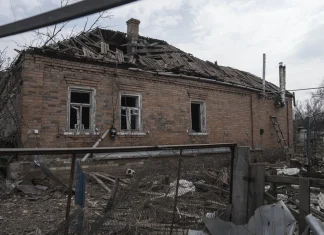
If diplomacy is a slow mechanism of repair, violence remains instantaneous. As the talks began in Abu Dhabi, a crowded marketplace in eastern Donetsk was struck. Local officials reported the use of cluster munitions, with at least seven people killed and more than a dozen wounded.
“I ran out with my shopping bag still half filled,” said Olena, a 62-year-old vendor from Druzhkivka, who fled the scene. “There was smoke and people calling names. We think peace is a dream, because our everyday looks like this.”
The Donetsk regional governor’s office said Russia shelled market areas and dropped aerial bombs. Both Moscow and Kyiv maintain they do not target civilians; yet the civilian toll continues to mount. The scale of suffering is measured in statistics, in casualty lists and in empty chairs at family tables.
Numbers that haunt negotiations
President Volodymyr Zelensky — speaking to foreign media this week — said that, since the full-scale invasion in 2022, Ukraine has lost roughly 55,000 soldiers on the battlefield, and many more are listed as missing. Russia currently occupies about 20% of Ukraine’s territory when Crimea and parts of the Donbas are included, and military analysts estimate Moscow gained roughly 1.5% more of Ukrainian land during 2024 alone.
Those figures are not mere data points. They shape public mood. Polls show a majority of Ukrainians oppose any deal that would hand territory to Russia, a political reality Kyiv says it cannot ignore.
The core impasse: land, sovereignty and a nuclear plant
At the heart of the stalemate lie thorny, existential issues. Moscow seeks recognition of territorial gains and the withdrawal of Ukrainian troops from substantial swathes of Donetsk — including cities Kyiv regards as essential bulwarks. Ukraine argues any settlement must respect its sovereignty and refuses unilateral troop pullbacks.
Then there is Zaporizhzhia, Europe’s largest nuclear power plant, sitting uneasily in territory under Russian control. International experts warn the plant remains a potential catastrophe waiting to happen if military operations continue nearby, and the question of its security is a diplomatic landmine.
“Nuclear facilities change the equation completely,” said Dr. Sofia Marin, an energy security analyst. “You’re no longer just talking about territory or population centers — you’re negotiating around a hazard that could have transnational consequences.”
Money, weapons and the pragmatic margins of compromise
Parallel to the talks, financial levers are being readjusted. The European Union moved to allow Ukraine to use a new €90 billion loan to buy a greater share of weapons from allies like the United Kingdom — provided those allies contribute financially to the borrowing costs. This is a pragmatic signal: Europe will keep providing the means for Kyiv to defend itself, while recalibrating how burdens are shared.
“This is about sustaining the military and economic resilience that makes any future agreement credible,” one EU official said. “It also reflects political realities: allies want access, but they must pay their share.”
At the same time, Kyiv has accused Moscow of exploiting last week’s U.S.-backed energy truce to stockpile munitions and then launch a record ballistic missile barrage. These tactical narratives — who used pauses to re-arm, who abused ceasefires — undermine trust and complicate the work of mediators.
What’s next — and what should we hope for?
Talks are expected to resume. Kyiv’s lead negotiator will report back to President Zelensky, and participants say they hope to secure a fresh prisoner exchange “in the near future.” But the big questions remain. Can diplomacy nibble away at suffering while preserving Kyiv’s territorial integrity? Can the international community contain an escalation that would make negotiations moot?
Ask yourself: when you read about summits and statements, can you picture the street where someone purchased bread just hours before an attack? Can a policy paper fully account for the human voice behind every statistic?
These negotiations are not merely the chess of states. They are a test of whether the global community can protect civilians, preserve institutions, and prevent the normalization of land-grab warfare in Europe. They ask us whether pragmatism will prevail over maximalist demands, and whether the mechanics of diplomacy can keep pace with the dynamics of conflict.
“Negotiations are hard because war makes people fragile and fearful,” a Ukrainian aid worker told me. “We need agreements that keep people alive today and offer a future worth living in tomorrow.”
Closing thoughts
As this chapter in Abu Dhabi closes and the next opens, the picture remains mixed: a commitment to talk — and a relentless reminder why the talks matter. For families in Druzhkivka and markets across Donetsk region, a pause in rhetoric is only meaningful if it translates to safety.
Diplomacy, in the end, is a craft as much as a hope. It starts with a table and a willingness to listen, but it must end with less blood on the ground. Will the world lean hard enough into that work? For now, we watch, we count, and we grieve — and we keep asking the hardest question: what price are we willing to pay to keep tomorrow from becoming yesterday’s tragedy?