When the lights go out: a winter of strikes, talks and the hum of generators
There is a brittle quiet to winter nights in southeastern Ukraine, the kind that sharpens every sound—the scrape of boots on ice, the tinny clink of kettle on a gas stove, the shuffle of people moving from room to room chasing warmth.
On one of those nights this week, more than 200,000 households in Russian-held parts of Zaporizhzhia found themselves plunged into cold and darkness after what Moscow-installed officials said was a Ukrainian drone strike. Telegram posts from Yevgeny Balitsky, the local governor appointed by occupying forces, reported that nearly 400 settlements were affected and teams were racing to restore power as temperatures sat stubbornly below freezing.
“We have been living like this for months—heating that sputters, alternators that whine until they give out,” said Marina, a teacher in a suburb of Enerhodar who asked that only her first name be used. “You learn quickly what matters: warm clothing, extra blankets, a neighbour who can loan you a hot plate.”
The Zaporizhzhia region—once wide open steppe where sunflowers bowed under summer sun and heavy industry hummed along the Dnieper—now wakes to a new rhythm: rolling strikes, rolling blackouts, rolling questions about how to survive the winter. Around 75% of the region is under Russian control, a fact that complicates both relief efforts and the simple human dignity of keeping a kettle boiling.
A night of drones across Ukraine: damage, casualties, and a fractured power grid
President Volodymyr Zelensky said the country endured a mass drone assault overnight, one of the most intense in recent months. “More than 200 drones” hammered at infrastructure across Sumy, Kharkiv, Dnipro, Zaporizhzhia, Khmelnytskyi and Odesa, the president’s office reported. The military registered some 30 strikes across 15 locations.
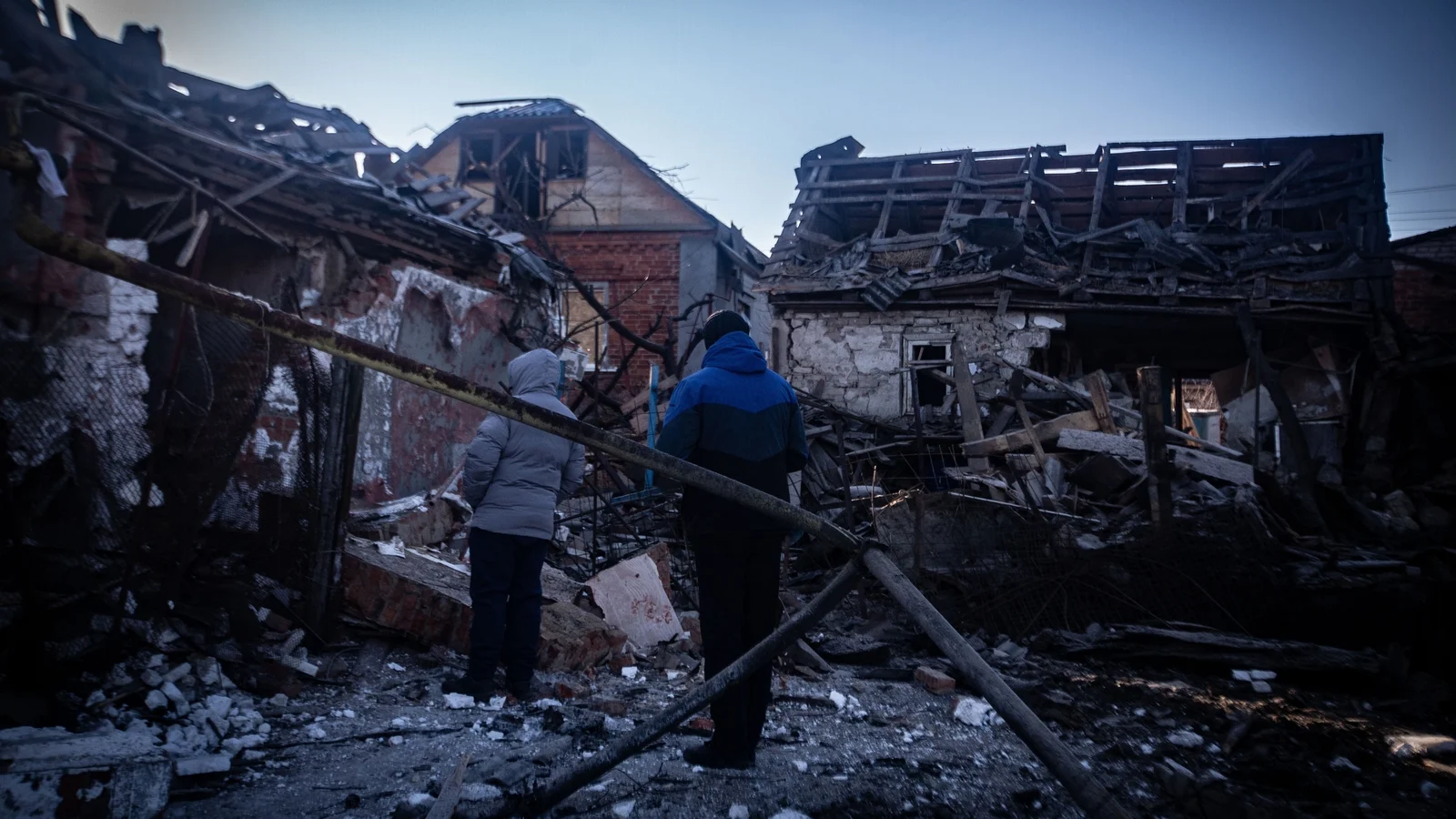
The toll was immediate: two people killed and dozens wounded, Zelensky said. Kharkiv—Ukraine’s second city, where municipal leaders have repeatedly warned about damage to energy facilities—confirmed one death. Mayor Ihor Terekhov described another night when the city’s lights and warmth were bargaining chips in a war of attrition.
“We are living under the constant calculus of survival,” said Olena, a volunteer with a Kharkiv relief network. “People line up for charging stations, for water. The kids study by candlelight and still ask if they can play outside. That question—simple as it is—feels like the bravest thing.”
Zelensky moved quickly to order emergency imports of electricity and to accelerate delivery of power equipment. When a nation’s lights go out, it reveals the fragile scaffolding beneath everyday life: hospitals wait on generators; refrigerated medicines risk spoilage; water and sanitation systems teeter.
Across the border: Belgorod, Beslan and the spillover of a neighbouring conflict
The violence skidded beyond Ukraine’s borders. The governor of Russia’s Belgorod region said a drone strike on the border village of Nechaevka killed one person and wounded another. In the Caucasus town of Beslan, North Ossetia’s governor reported that two children and an adult were injured after a drone hit a residential building—an echo of a town that still carries the scars of earlier waves of violence.
Across these lines, ordinary lives fragment into statistics: numbers of wounded, names at morgues, families with empty chairs at dinner. These are not abstractions. They are grocery lists, schoolbooks, and birthdays postponed by artillery.
Talks amid the blasts: diplomacy that keeps faith with a battered future
And yet, as drones flew and cities shuffled for warmth, diplomacy kept its awkward, stubborn pace. Ukraine’s security chief Rustem Umerov said his team had held “substantive discussions” in recent days with Jared Kushner—son-in-law of former US President Donald Trump—and American envoy Steve Witkoff. The conversations, Umerov added on social media, focused on economic development, a prosperity plan and security guarantees for Ukraine; they were expected to continue at the Davos Economic Forum the following week.
It is an image with contradictions: the hum of wartime drones on one hand, the quiet rooms of negotiation on the other. Kushner’s involvement signals interest from influential corners in the United States, while Witkoff’s presence underlines how business, investment and strategic guarantees are intertwined in any post-war recovery.
“There is a recognition that rebuilding Ukraine will require not just tanks and missiles, but a serious plan for investment, reconstruction, and security that makes those investments safe,” said Dr. Sara Levin, an expert in post-conflict reconstruction at a European university. “But you cannot thin-slice a peace package without addressing power—literally and figuratively.”
What is on the table
- Security guarantees: proposals that would bind allies to defend Ukrainian sovereignty in varying degrees.
- Economic recovery: investment frameworks, debt relief and reconstruction funds designed to attract global capital.
- Energy resilience: accelerated imports and equipment to keep hospitals, heating and water systems running in winter.
Behind every bullet point lie contentious details. The US has reportedly urged Kyiv to agree to a peace framework that could be presented to Moscow; Russia, for its part, has been cool toward the diplomatic push and has demanded major concessions from Kyiv. Negotiations in Miami and forthcoming talks in Davos are part of what many see as an awkward, urgent dance: how to end hostilities without capitulation, how to give Ukraine the guarantee of survival while preserving its sovereignty.
Stories of resilience: neighbors, volunteers and the long winter ahead
In a small courtyard in Zaporizhzhia, a retired engineer named Anatoliy runs a makeshift charging station from his garage. His sign reads: “Hot tea, phone charger, warm word.” Passersby drop coins, bread, and in the morning, small bowls of borscht that a neighbour has made in bulk.
“We learned to help each other because the state cannot be everywhere at once,” he says, handing over a steaming cup. “When you put your hands together, you warm more than the kettle.”
Humanitarian workers say these communal habits—of sharing blankets, rotating generator duty, and keeping lists of the vulnerable—have saved lives. But they also warn: winter will stretch for months yet, and the infrastructure damage is cumulative.
What does recovery look like after such a long, corrosive campaign? How do you rebuild a grid that keeps being attacked? How do you convince investors to pour money into factories and schools when the overhead risk is rockets and drone wings?
These questions are not simply logistical. They are ethical and political. They ask the world whether it will treat reconstruction as a one-time charitable act or as an investment in a stable, European future. They ask Ukrainians whether the sacrifices of four years of war can be repaid with a durable peace and a society rebuilt around resilience, not vulnerability.
Where to from here?
The headlines this week—blackouts, drone salvos, cross-border strikes and huddled negotiations—are symptoms of a conflict that has settled into the steady business of attrition. The human stories, small and incandescent, are the counterweight: volunteers cooking soup, engineers rigging heaters, parents telling bedtime stories with extra layers of meaning.
As Davos convenes and as negotiations continue in tucked-away rooms, remember this: energy is not just a line item on a post-war budget. It is the hum of a hospital, the light on a child’s homework, the steam rising from a pot shared among neighbours. The decisions made this winter will determine whether entire communities warm their hands by solidarity alone—or whether we, collectively, build back the systems that make daily life possible.
Which path do we choose? Will the world rally to repair the lights—or leave families counting candles until spring?