When a Pencil Becomes a Promise: School Kits Reach Gaza After Years of Blockade
There is a small, wooden cube on the concrete floor of a makeshift classroom in Khan Younis that catches the light like a tiny beacon. A boy — no older than nine — rolls it between his palms, then tucks it under his arm and grins. For him, that cube, along with a sharpened pencil and a narrow exercise book, is not just a toy or a tool; it is a fragile signal that life might, slowly, edge toward something resembling normalcy.
After nearly two-and-a-half years of aid items being stuck at checkpoints and in bureaucratic limbo, UNICEF says it has finally succeeded in getting thousands of educational kits into Gaza. The shipment includes pencils, exercise books, “school-in-a-carton” kits, and recreational wooden toys — the sort of basic things most children around the world take for granted. James Elder, UNICEF’s spokesperson, told reporters: “We have started to see real change: thousands of recreational kits and hundreds of school-in-a-carton kits have come in. We’ve got approval for another 2,500 school kits in the coming week.”
Not just stationary — but dignity
To understand why these modest packages matter, you must imagine learning in the dark. Many of Gaza’s children have been schooling in tents without reliable lighting, in buildings that are damaged or destroyed, or not at all. Teachers scrawl on scraps of paper by battery-powered lamps. Classrooms are improvised under tarpaulins, in community halls, or in narrow alleyways where children squeeze together like beads on a string.
“I used to teach from memory and whatever paper I could salvage,” says Fatima, a primary school teacher who asked that only her first name be used. “We would share a single pencil among five children. We worked by day as best we could, and studied by night with the glow of phones. These kits — they are a small thing, but they are a message to our children that someone remembers them.”
The kits arriving now include items that are mundane in most classrooms, but transformative here: pencils with erasers, ruled notebooks, counting cubes, and basic recreational materials designed to support learning and play. UNICEF plans to scale up education programming to reach roughly half of school-age children in Gaza — about 336,000 children — most of whom will be taught in tents or temporary learning spaces because 97% of schools sustained some level of damage, according to a UN satellite assessment in July.
Faces in the statistics
Statistics here read like a ledger of grief. The Hamas-led attack in October 2023 killed 1,200 Israelis, according to Israeli tallies. Gaza’s health authorities report that Israel’s assault killed some 71,000 Palestinians. UNICEF has cited official data that more than 20,000 children were reported killed in the conflict, including 110 since an October 10 ceasefire last year.
Numbers are necessary. They help humanitarian organisations plan, donors allocate funds, and governments weigh responses. But they are also blunt instruments: they can’t describe the curled fingers of a child gripping a pencil for the first time in years, the eyes of a mother relieved by a handful of exercise books, or the hush that falls over a tent when children recite a poem together for the first time since displacement.
Logistics, red tape, and politics
The route from an aid warehouse to a child’s hand in Gaza is rarely simple.
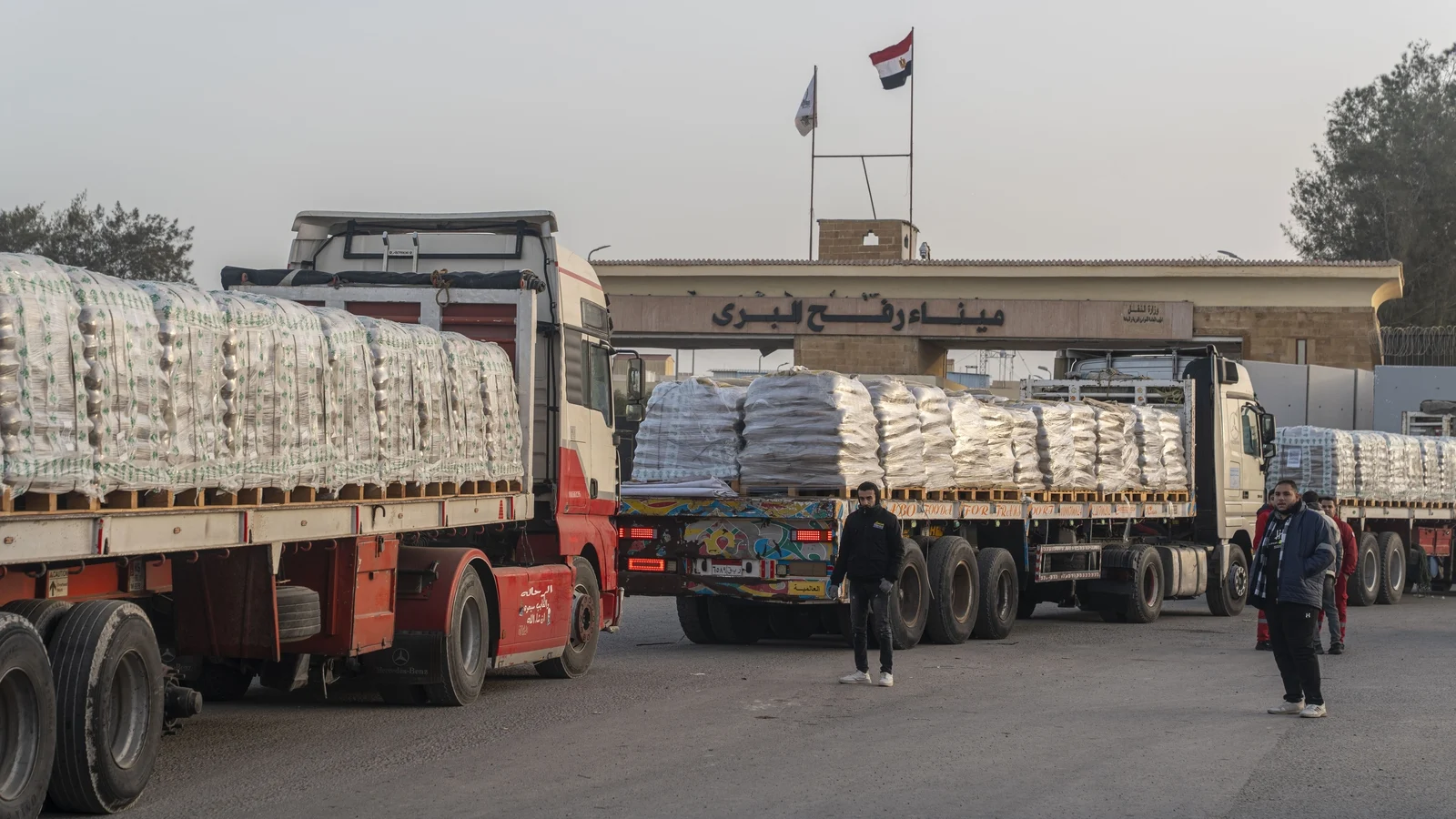
- Entry approvals: Aid consignments were frequently delayed or blocked by authorities citing security concerns. UNICEF and other agencies say school supplies were among items restricted.
- Physical destruction: With most school infrastructure damaged, learning spaces now occupy tents, community centres, and the remains of buildings.
- Operating geography: UNICEF reports most learning spaces will be concentrated in central and southern Gaza; the north remains hard to access after intense fighting and heavy damage.
Israeli authorities have said militant groups embedded in civilian areas, including schools, making the delivery and protection of civilians during conflict complex and fraught. “We cannot accept the militarisation of schools,” an Israeli official told a local press briefing last year. At the same time, aid agencies argue that children and teachers should be shielded from politics and given the supplies they need to learn and heal.
Voices from the ground
“The first thing my daughter did when she saw the new notebook was to trace the lines with her finger,” says Ahmed, a father of three in a displacement camp near Rafah. “She said, ‘Now I can write again.’ For us, it’s more than a notebook. It’s hope.”
Health workers in Gaza warn that malnutrition, limited access to clean water, and interrupted health services are undermining children’s ability to learn. “Even when you have the materials, a child who is hungry or sick cannot concentrate,” says Dr. Leila Mansour, a pediatrician volunteering at a clinic. “Education and health are inseparable in emergencies.”
Education as protection
There is growing global recognition that education in emergencies is not a luxury; it’s a form of protection. Schools provide structure, a sense of normalcy, psychosocial support, and practical skills that keep children safer from exploitation, child labour, and recruitment into armed groups. UNICEF’s efforts in Gaza are part of a broader international push to embed learning spaces in humanitarian responses.
“We’re not just handing out paper and pencils,” James Elder said. “We are helping children to heal, to reconnect to their futures.”
What this moment asks of the world
As those simple school kits circulate from hands to hands across Gaza, they expose a larger set of questions for the global community. How do we ensure consistent access to humanitarian supplies in conflict zones? How do we protect children’s rights to education and to safety amid protracted crises? And perhaps most pertinently: what does rebuilding a generation look like after the disruption of childhood?
These small deliveries will not erase loss, nor will they rebuild the schools that stood as community pillars. But they are a start — an acknowledgement by the world that children belong at the center of recovery efforts. They also ask something of the reader: to consider what it means to support learning where the stakes are not just grades and exams but survival, dignity, and the fragile scaffolding of hope.
So the next time you sharpen a pencil, pause. Imagine, briefly, that in a tent in Gaza a child is doing the same — and feel the weight of that ordinary, defiant act. What would you give to see a classroom return to life? And what more would you ask your leaders to do so that no child is left to learn in the dark?