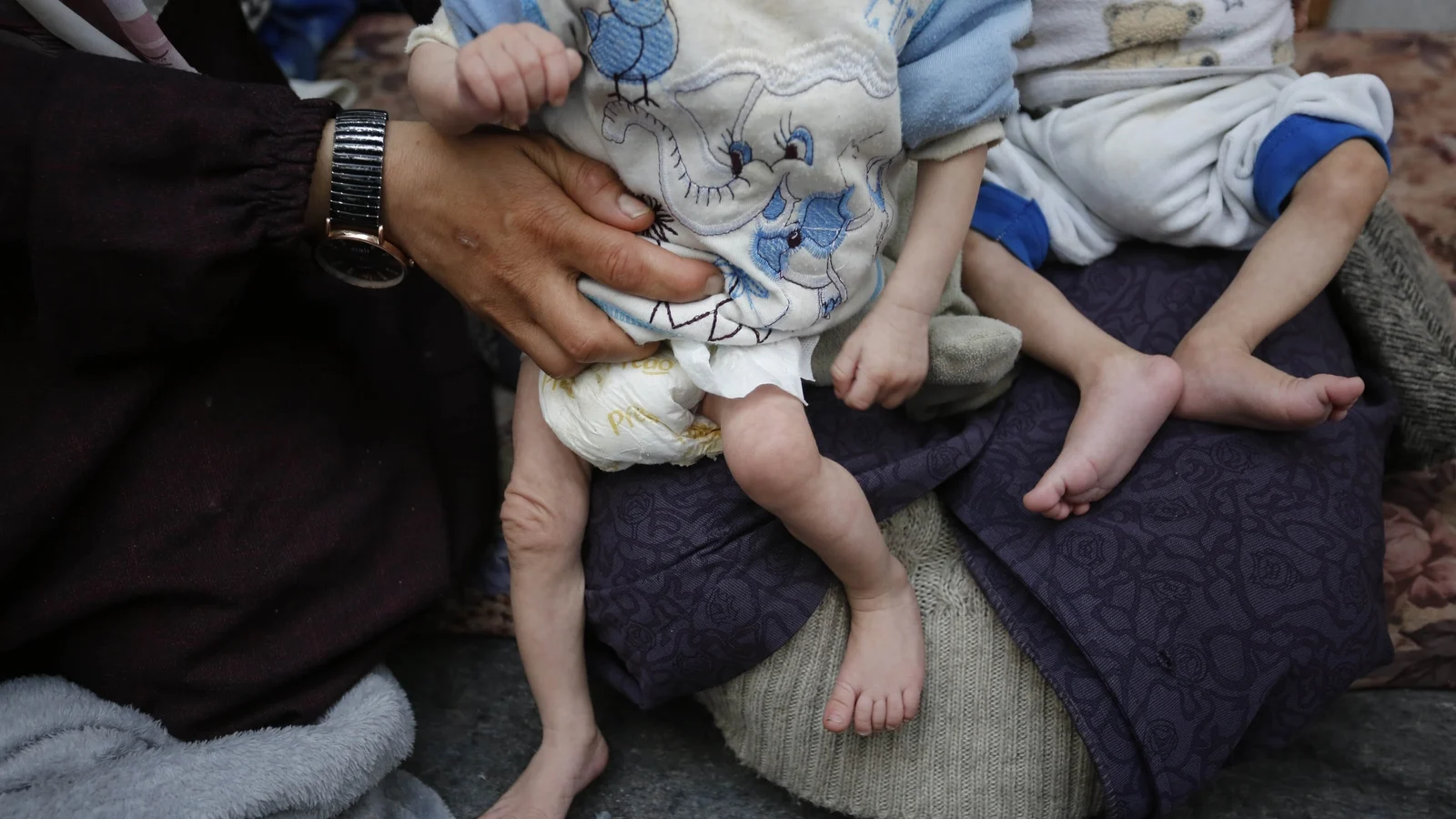
When Numbers Become Names: The Quiet Crisis of Childhood Loss
At first glance it’s a figure that sits coldly on a page: roughly 4.9 million children who did not reach their fifth birthday in 2024. Read aloud, though, and the number will not stay abstract for long. It becomes little hands, morning feeds missed, exhausted parents at dawn, a village clinic without electricity. It becomes the scorecard of a global promise half-kept.
That estimate—drawn together by the United Nations and partner agencies—arrives with a complicated provenance. Progress since 2000 has been undeniable: preventable child deaths have more than halved in two decades. But the momentum that delivered those gains has faltered since about 2015, and last year’s tally has exposed a troubling plateau at a fragile moment.
On the Ground: A Clinic, a Market, a Lullaby
In a dirt courtyard outside a small clinic in northern Ghana, a mother named Efua hums a lullaby while waiting for her son’s vaccination card to be stamped. “We used to have community nurses every week,” she says, fingers tracing the faded ink on the paper. “Now sometimes it’s once a month and the road is bad in the rains. I worry.”
Across continents, in a coastal slum near Lagos, a community health worker, Ibrahim, carries a battered cooler of vaccines through crowds of market stalls. “Last week three children came with fever; one had no bed net,” he says. “Simple things—nets, water treatment, a syringe—can mean the difference between life and death. But when the funding dries up, those things vanish first.”
What’s Driving the Slowdown?
The agencies that compiled the report point to a tangle of forces pushing against child survival gains: conflict that displaces families and fragments health services; economic instability that squeezes household budgets and national health systems; the creeping, destabilizing effects of climate change—droughts, floods, and vector-borne disease shifts; and health systems that remain too weak to deliver basic, life-saving interventions at scale.
A World Health Organization spokesperson put it bluntly: “We are seeing a global slowdown in mortality reduction. Conflict, climate shocks and fragile health systems are eroding the gains we fought so hard to achieve.”
How small interventions save small lives
Many of the deaths recorded in 2024 were preventable with low-cost, proven measures: timely vaccinations, oral rehydration therapy for diarrhoea, insecticide-treated mosquito nets, clean birthing practices, basic neonatal care, and antibiotics for pneumonia. Complications from preterm birth and easily treatable infectious diseases like malaria remain leading killers.
- Vaccination coverage gaps leave populations vulnerable to measles and other childhood killers.
- Unsafe water and poor sanitation still drive diarrhoeal disease, a major contributor to under-five mortality.
- Weak neonatal services mean that babies born too early or with birth complications are at high risk.
Money Matters: Aid Cuts and the Risk of Reversal
Timing compounds the danger. The 2024 figures reflect conditions before several major donors—starting with the United States, then followed by others—announced cuts to their international aid budgets. By the end of 2025, the Gates Foundation reported a near 27% drop in global development assistance for health compared with the previous year, a contraction it warned could push child survival indicators the wrong way.
“No child should die from diseases we know how to prevent,” said a UNICEF executive, voice edged with urgency. “We are seeing worrying signs that progress in child survival is slowing—at a time when global budgets are being pared back.”
Funding reductions do more than remove bed nets or staff salaries. They weaken surveillance systems and data collection, the early-warning sensors that allow Ministries of Health to spot outbreaks and direct resources. When data dries up, so does accountability—and policymaking starts to resemble guesswork.
Numbers with Nuance: Why 2024 Feels Different
Readers might notice a wrinkle in the timeline: 2022 was reported as a record low of about 4.9 million under-five deaths; 2023 was at roughly 4.8 million. The 2024 number looks like a rise, but analysts caution against direct comparisons—different methodologies, revised population estimates, and the imprecision of modeling in fragile settings can shift totals. Still, the trend—slowing progress since 2015—is clear.
Dr. Miguel Herrera, a pediatrician who has worked in Colombia and East Africa, nudges the conversation toward systems. “You can’t blame one thing,” he says. “Funding is critical, but so is the way it’s spent. Strong primary care, community health workers who are supported and paid, supply chains that actually reach clinics—these are the nuts and bolts.”
Local Innovation and the Limits of Will
There is resilience at the margins. In remote districts of Nepal, mothers’ groups organize to pool funds for emergency transport to far-off hospitals. In parts of Malawi, bicycle ambulances ferry laboring women to clinics. These solutions are resourceful and human, but they also underline a hard truth: community ingenuity can mitigate some suffering but cannot scale national health systems without steady investment.
“Our community built the birthing hut ourselves,” says Esther, a village elder in rural Malawi. “We painted the walls and put up solar lights. But when a baby needs neonatal oxygen, the hut cannot help.”
What Can Be Done—and What Might We Ask Ourselves?
Global health professionals point to a set of tried-and-true strategies that still account for the bulk of possible lives saved:
- Restore and sustain international health assistance targeted at routine immunization, maternal and newborn care, and malaria control.
- Invest in community health worker programs as the backbone of outreach and prevention.
- Strengthen data systems for surveillance so countries can act before problems become epidemics.
- Prioritize climate resilience in health infrastructure—solar power for clinics, flood-proof supply chains.
But beyond policy prescriptions there’s a moral question for readers: what does it mean when a generation’s prospects flicker because budgets are reallocated and headlines move on? If the cost of protecting these children is a matter of political will and predictable funding, how do we hold our institutions—national and international—accountable?
Closing: Between Statistics and Stories
The arc of the last quarter-century proves that dramatic improvements are possible. We have halved preventable child deaths since 2000 because vaccines were delivered, mosquito nets were distributed, and community nurses made house calls. The work is far from over—and it’s fragile.
If you leave with one image, let it be small and stubborn: a health worker in a sun-baked village, walking with a cooler, humming a tune while she tries to protect the next child. It is both a comfort and a challenge. Will the global community supply her with the tools and the money she needs, or will progress be measured back into the realm of wishful thinking?
We owe the answer to the children whose names never make the papers but whose lives are the clearest measure of our common priorities.