Under the Olive Trees: When Peacekeepers Become Targets
The sun sinks slow over southern Lebanon, gilding the knobby trunks of centuries-old olive trees and casting long shadows across a landscape that has known more ceasefires than peace. In the dusk, a UNIFIL patrol hums by — the blue of their helmets catching the last light — a tiny human buffer between two powers that have been trading blows for decades.
And then, in a soft, ordinary valley where goats graze and women hang laundry to dry, the sudden sound that no one wants: an explosion, the metallic scream of an artillery round, the dull concussion of a roadside blast. In the space of a heartbeat, three lives that were tasked with keeping peace are snuffed out. Routines and maps and negotiation briefs cannot bring them back.
What Happened
At the end of March, UN investigators concluded that the deaths of three UN peacekeepers in Lebanon likely stemmed from two separate strikes: one from an Israeli tank-fired 120 mm round that struck near a UN post, and another from an improvised explosive device that destroyed a vehicle — an IED the probe says was most plausibly planted by Hezbollah. The incidents, which took place on 29 and 30 March, also injured several other peacekeepers.
These findings are preliminary, the UN cautioned, and the organization has asked national authorities to investigate and prosecute. “We are seeking clarity and accountability,” said a UN spokesperson. “Those serving under the UN flag are civilians in uniform — their safety is paramount.”
Numbers and Context
UNIFIL — the UN Interim Force in Lebanon — has been stationed along this border strip since 1978, tasked with monitoring ceasefires and supporting the Lebanese Armed Forces. It is among the UN’s largest and oldest missions, numbering roughly ten thousand troops over the years, drawn from dozens of countries. Yet size and history have not insulated it from the volatility that has accompanied the recent surge in hostilities between Israel and Hezbollah-backed forces.
Since the 2006 war and in subsequent years, the south has repeatedly flared. The recent episodes are a grim reminder that peacekeeping forces, meant to be neutral arbiters, often find themselves perilously close to the flashpoints they are there to prevent.
Voices from the Ground
“We mark our coordinates. Twice we shared our positions,” said Lieutenant Karim Haddad, a Lebanese Army liaison who has coordinated with UN patrols for years. “When someone who carries a rifle aims at a UN vehicle, it breaks a very thin rulebook we all try to live by.”
On the coast, where UNIFIL’s headquarters sits in the town of Naqoura, shopkeepers spoke of the blue helmets with the weary affection one reserves for a neighbor who has been through too much. “They bring water sometimes, and they keep children away from checkpoints,” said Rima Awad, who runs a bakery by the harbor. “We are all tired — of rockets, of the waiting.”
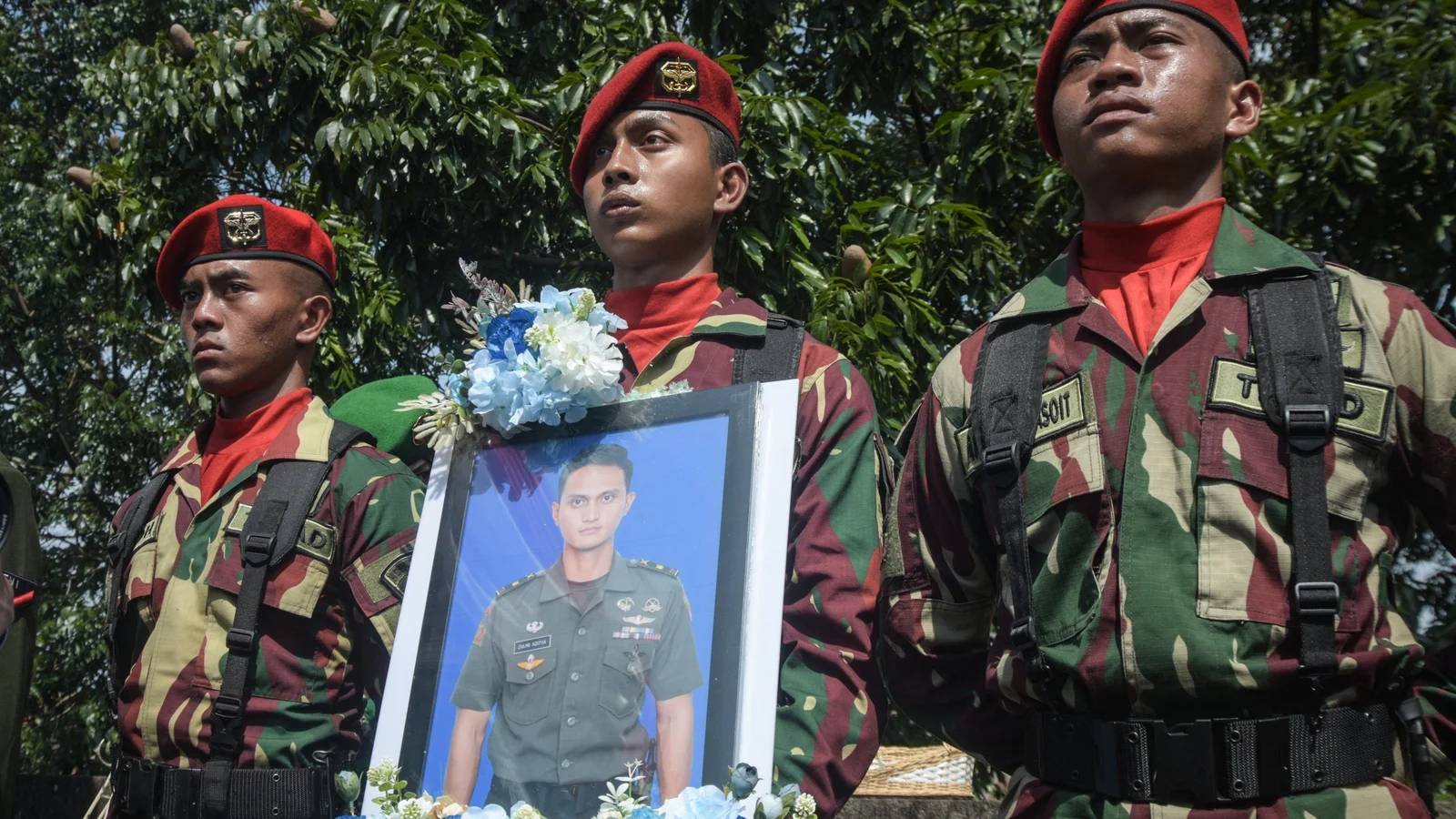
Families in Indonesia, whose nationals serve in UNIFIL detachments, have been thrown into grief and indignation. “My son was peaceful, he believed in helping people,” said Mariam Siregar, the mother of one of the fallen. “If a nation wants to fight, let them fight — do not throw our boys into the middle.”
Accountability in a Crossfire
The probe’s blunt conclusions — a tank round and an IED — foreground a difficult question: when UN personnel are killed in multinational conflicts, who holds the culprits to account?
“The mechanisms are weak,” explained Dr. Laila Hassan, a Beirut-based scholar of international humanitarian law. “The UN can investigate and call for prosecutions, but it lacks coercive power. These are politically charged incidents; national authorities often have limited will, especially when their allies are implicated.”
The UN has invoked international norms and treaties — including obligations under the 1994 Convention on the Safety of United Nations and Associated Personnel — but translating a report into prosecutions is a fraught path that depends on states’ cooperation. The UN has formally requested that the relevant national authorities investigate and, where appropriate, hold perpetrators criminally accountable.
Diplomacy and Danger
Indonesia, which contributed troops to the UNIFIL contingent, has publicly urged investigations and warned that ongoing military operations in southern Lebanon continue to endanger peacekeeping personnel. “All actions that endanger peacekeeping personnel constitute a serious violation of international law and must not continue,” said an Indonesian foreign ministry official. Yet officials in Jakarta told reporters any decision about withdrawing troops would be considered with “very, very careful” deliberation.
For many troop-contributing countries, the calculus is agonizing. Sending forces abroad is a matter of national pride and global responsibility — and also of risk. Smaller nations in Asia and Africa have supplied a disproportionate share of UN peacekeepers over the past two decades, and their choices reverberate at home.
Human Costs and Global Resonance
Across the UN’s seven-decade history, thousands of peacekeepers have died in service — a stark testament to the hazards inherent in trying to hold fragile accords together in fractured places. These are more than numbers; they are sons, daughters, neighbors. The loss ripples outwards: families, villages, the local bakeries where patrols once bought bread.
What does the death of a peacekeeper mean in a world where conflicts are increasingly asymmetrical — fought not just between armies but with rockets, drones, and masked militias embedded in civilian life? How do we protect those who serve to protect others?
Local Color, Global Questions
Walk through the villages of southern Lebanon and you’ll find a tapestry of ancient culture: men sipping dark, cardamom-scented coffee on low stools; olive harvests that sustain families; children kicking tattered soccer balls in alleys where murals of martyrs meet patched laundry lines. The presence of UN blue is woven into this daily life — a reminder that even the mundane carries geopolitical weight.
“We want our children to know peace,” said Fatima, a schoolteacher in a village near the border. “If the soldiers are killed, what lesson do we teach them? That being neutral is not enough?”
Where Do We Go From Here?
There are no easy answers. Strengthening accountability mechanisms, bolstering rules of engagement, improving situational awareness and communication with local forces — all these are necessary but not sufficient. Ultimately, peacekeeping is a symptom, not a cure: it operates in places where politics has failed.
Perhaps the most uncomfortable question for international audiences is this: how much responsibility do distant countries bear for maintaining the fragile stabilizers they helped create? If a peacekeeping mission cannot be kept safe, should it be reimagined, withdrawn, or reinforced? And who pays the moral and political cost for each choice?
In southern Lebanon, the olives will still be harvested, bread will still be baked, and children will still play. But each time a blue helmet falls, the fragile hope that people can live between the lines becomes that bit harder to sustain. We owe it to the fallen — and to the communities that sent them — to ask the hard questions and to insist that peacekeepers are not treated as collateral in other people’s wars.