Gaza’s humanitarian crisis has reached a breaking point, UNICEF has warned, saying that after more than two years of violence daily life has become a battle for essentials such as clean water, sanitation and basic hygiene.
Salim Oweis, the organisation’s Communication Officer, has just returned from Gaza after spending two weeks travelling through different parts of the territory.
Speaking on RTÉ’s This Week programme, Mr Oweis said he witnessed people suffering from skin rashes and bites linked to rodents, a problem he described as worsening amid widespread destruction.
His account came as Gaza’s civil defence service and hospitals said Israeli attacks killed at least six people today, the latest deaths reported despite a ceasefire that has been in place for months.
Israel and Hamas continue to trade near-daily allegations of truce breaches, and Gaza remains marked by bloodshed as efforts to secure a permanent end to the war have yet to move forward.
An Israeli airstrike on the Jabalia refugee camp in northern Gaza killed four people and wounded several others, according to the civil defence agency, a rescue service that operates under Hamas authority.
Mr Oweis said UNICEF has observed some increased movement within areas where travel is permitted, but he said many Gazans remain frustrated because services have not kept pace and people are still struggling to meet basic needs.
Displaced Palestinians, including children, form crowded queues at a food distribution point in the Nasr neighbourhood, west of Gaza City
He said those basics include being unable to maintain hygiene, alongside persistent wastewater problems.
Gaza’s water system, sanitation and sewerage infrastructure have been effectively depleted or destroyed, he said.
“Adults and children are beyond struggling every day to keep themselves in a state of good hygiene, but also to protect themselves from rodents, bites and such.
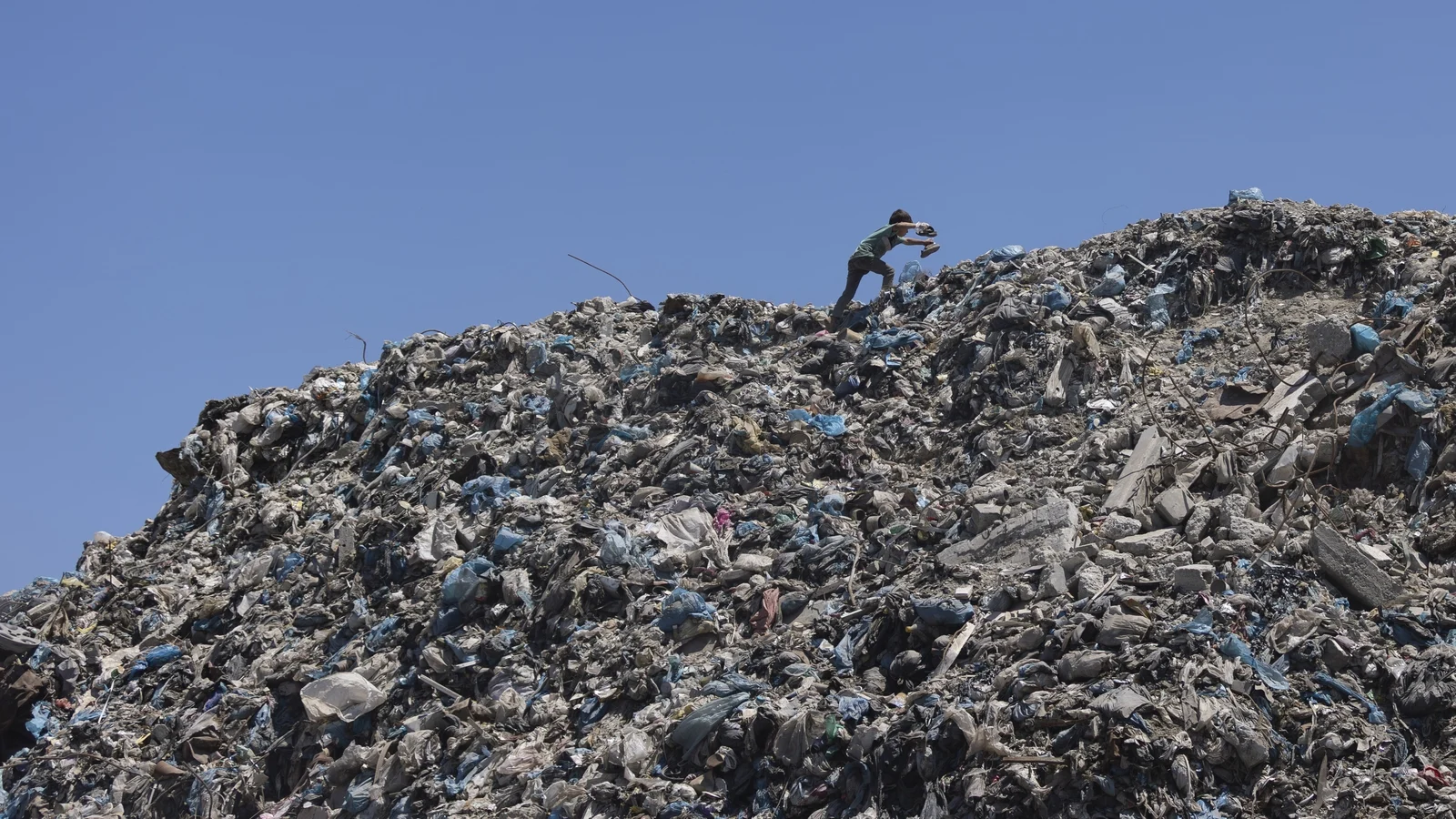
“After two and a half years of violence, there’s mountains of rubble and solid waste spread across residential areas so it’s the perfect environment for rodents to re-produce and take over the city.”
He said rodents are entering tents and camps as well as damaged buildings, adding that the sewerage system has deteriorated badly because maintenance has been impossible amid continued violence.
We need your consent to load this rte-player contentWe use rte-player to manage extra content that can set cookies on your device and collect data about your activity. Please review their details and accept them to load the content.Manage Preferences
Turning to healthcare, Mr Oweis said only a small number of hospitals are operating and none is fully functioning, even as needs continue to rise.
“Those that are still standing are dealing with not only the injuries of the war still happening, but also with day-to-day diseases, sicknesses and traumas.
“The health system is really collapsing under the pressure.”
He said the situation requires more aid, but supplies are either not being allowed into Gaza or the volume getting through is insufficient.
Mr Oweis also pointed to areas that remain unsafe, including the yellow line, where people still live but cannot reach services because of security concerns, leaving communities effectively cut off.
He said UNICEF can help some children who need medical attention to leave on medical grounds, but warned delays can be fatal, adding that children can die while waiting.
At least 986 Palestinians have been killed in Gaza since the ceasefire took effect on 10 October last year, according to Gaza’s health ministry, which operates under Hamas authority and whose figures are considered reliable by the United Nations.
The Israeli army has reported five deaths in its ranks during the same period.