Under the Same Night Sky: A Strike, a State, and the Quiet Work of War
It was not thunder that rolled over Sokoto that night but a distant, mechanical roar — a shot fired not from the soil of northwest Nigeria, but from beyond its horizon. Villagers later described a bright streak slicing the heavens and a tremor in the dust underfoot. For many, it was another jolt in a long, bad year. For others it was, at least for the moment, a line drawn against the violence that has hollowed out communities across vast swathes of the country.
The United States, at the behest of Abuja, carried out an air strike against militants linked to the Islamic State in northwest Nigeria, U.S. and Nigerian officials said. Washington framed the operation as a precision strike aimed at degrading fighters who had been blamed for a wave of attacks on civilians. Nigeria’s foreign ministry called it a coordinated move in an ongoing security partnership — the latest chapter in a complicated, often fraught counter‑insurgency story.
What Happened
According to military sources, the strike targeted suspected IS-affiliated camps in Sokoto state. A video released by the Pentagon showed a projectile streaking from a naval platform. U.S. Africa Command described the hits as “precision” and said multiple militants were killed. Nigeria’s foreign minister said the operation was a “joint” one, carried out with intelligence shared by Abuja.
“This has been planned for quite some time,” a Nigerian foreign ministry statement read, emphasizing that the operation was aimed at “terrorists” rather than adherents of any faith. A U.S. defense official added that strikes followed weeks of intelligence‑gathering flights over parts of the country.
Voices from the Ground
Out in the markets of Sokoto, conversation moved between relief and wariness. “We heard the sound late, we saw the light,” said Amina Idris, a market trader who fled her village three years ago after a militia attack. “People are tired. We want safety for our children. But then, who stays to protect us tomorrow?”
An elder in a nearby town, who asked that his name not be used for fear of reprisals, was blunt. “Foreign planes come, bombs fall, and sometimes it feels like the world treats our suffering like a chessboard,” he said. “If these strikes keep fighters from taking another village, then so be it. But we have been ignored for years.”
Security analysts note the fragile calculus here. “External strikes can be a force‑multiplier for local security forces,” said Dr. Chinedu Okafor, a Lagos-based expert on insurgency. “But they are not a cure. Without local governance, humanitarian support, and credible policing, the vacuum will be filled again.”
A Fractured Narrative: Who Is Being Targeted?
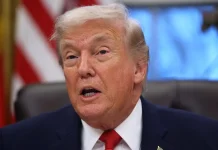
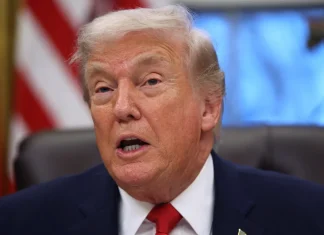
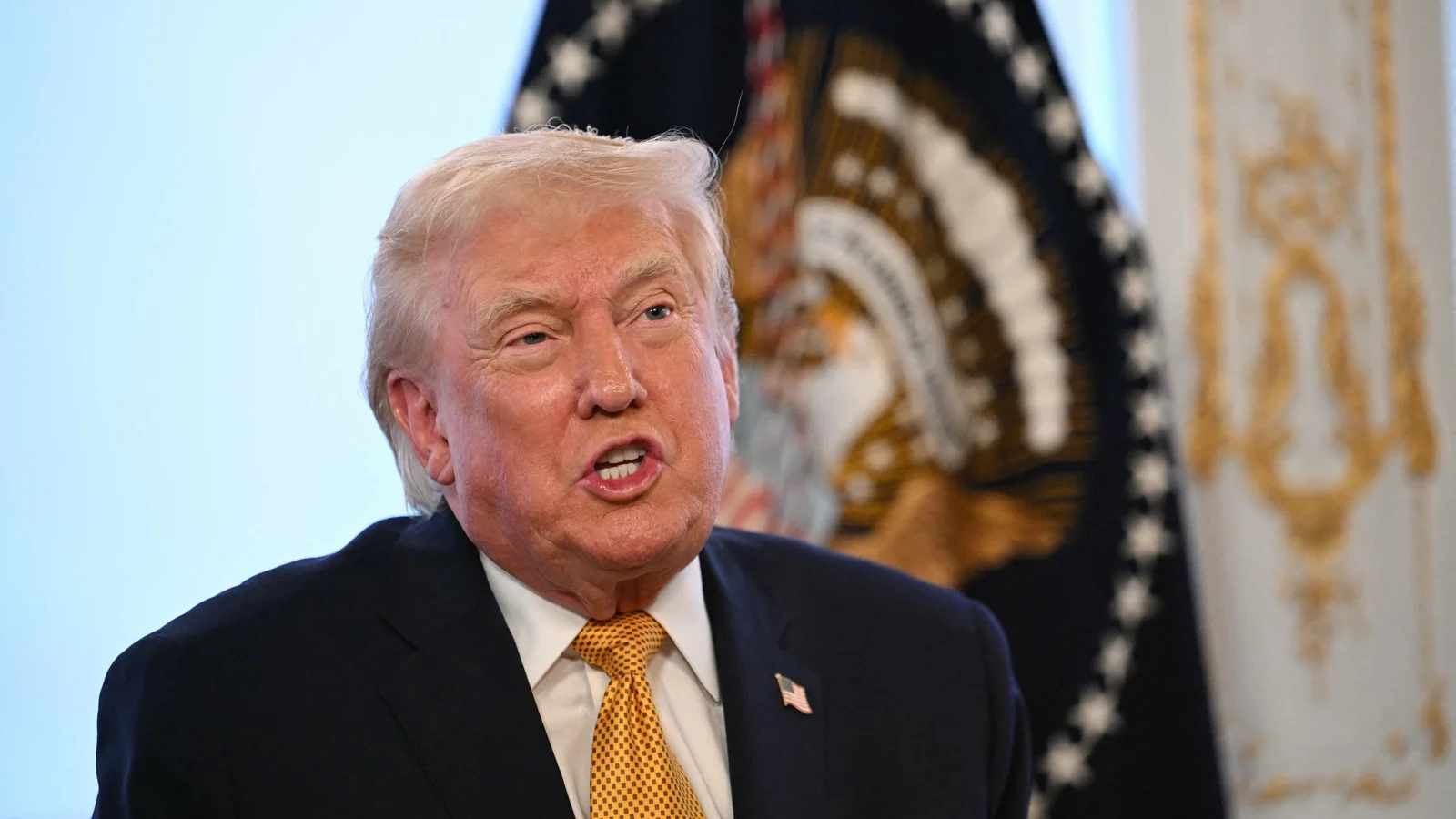
Domestic politics and religious narratives have complicated public perception. President Donald Trump — who has increasingly framed the violence in Nigeria as an existential threat to Christian communities — announced on social media that he had ordered the strike, calling it a response to assaults he described as particularly brutal.
Nigerian officials and many observers caution against a simplistic religious framing. Yusuf Maitama Tuggar, Nigeria’s foreign minister, told international outlets the operation targeted “terrorists,” not a faith group, and that victims of armed groups in Nigeria are both Muslims and Christians. The country’s population, split roughly between Muslims in the north and Christians in the south, has long been vulnerable to identity politics that militants exploit.
“Militant groups in Nigeria have evolved,” explained Aisha Bello, a human-rights worker in Abuja. “There are assassinations, village raids, kidnappings for ransom, and clashing local dynamics — land disputes, cattle farming, banditry — that get folded into broader extremist narratives. To say one side only is targeted is to ignore the complexity on the ground.”
Context: Decades of Conflict, Millions Displaced
Nigeria is Africa’s most populous nation — home to about 220 million people — and its security landscape is a patchwork. The northeast has been ravaged for more than a decade by Boko Haram and the Islamic State West Africa Province (ISWAP), which together have killed and displaced tens of thousands and uprooted millions. In the northwest and central belt, banditry and communal violence have added another layer of grief, with mass kidnappings and attacks leaving villages empty.
Last week, a suspected suicide bombing at a mosque in the northeast killed at least five people and wounded dozens more — a grim reminder that violence is neither distant nor contained. President Bola Tinubu used his holiday message to appeal for religious peace, promising to protect “Christians, Muslims, and all Nigerians from violence.”
Why America Is Involved
U.S. involvement is not new. For years, American forces have provided training, intelligence support, surveillance, and logistics to partner nations across West Africa. In recent months, the presence of U.S. reconnaissance flights and intelligence assets over parts of Nigeria has increased, officials say, as Washington seeks to blunt threats to Americans and to regional stability.
“We’re responding to a request from a sovereign government,” a U.S. defense official said. “These are targeted strikes, designed to limit the operational capabilities of extremist groups and reduce the threat to civilians.” The official, speaking on background, added, “We’re not seeking permanent basing or boots on the ground beyond advisory and intelligence roles.”
Local Color and Long Shadows
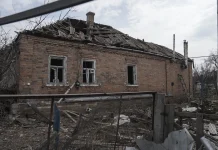
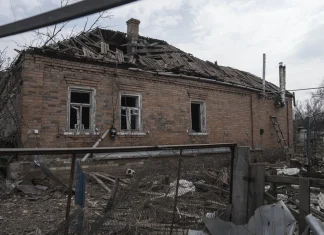
Sokoto is a land of sun-warmed clay and centuries-old history — once the seat of a powerful caliphate, with mosques and palaces that still thread the skyline. Traders braid dates and spices on woven mats. Camels tediously cross dusty trade routes; children spin around ancient wells. Yet the same soil has been the scene of sudden violence, burnt compounds and families on the move.
“I miss the sound of our market — the bargaining, the laughter,” said Musa, a farmer now camping on the outskirts of town. “You wake up thinking about your crops, then a message comes: don’t go to the field. You plan your day around fear.”
The Bigger Questions
Is kinetic action enough? Can strikes — however precise — dislodge ideologies and the local grievances that fuel recruitment? Or will the latest intervention become, for many, another temporary reprieve in a cycle of violence?
There are no easy answers. Experts stress that military tactics must be paired with political solutions: land reforms, reconciliation processes, economic development, and support for local justice mechanisms. “Security is a composite,” Dr. Okafor said. “You cannot bomb your way to governance.”
What to Watch Next
- Whether Nigeria and the U.S. carry out follow‑up operations and how those are framed domestically.
- Humanitarian conditions in the affected areas — whether civilians are displaced and what aid reaches them.
- How local leaders and traditional institutions are engaged in stabilization efforts.
Closing: A Shared Horizon
Across oceans and lines of command, decisions were made that night that ripple into villagers’ lives. A missile’s distant light can mean the end of an immediate threat — or the beginning of new displacements, new grievances. The people I spoke with in Sokoto asked for one thing, plainly: the chance to sleep without fear.
That request — simple, profound — is a test of international cooperation and of Nigerian governance alike. It asks whether fleeting moments of military success can be translated into sustained safety, whether global powers and local communities can stitch a durable peace from the same frayed cloth.
What do we, as readers and global citizens, imagine in response? Do we see a roadmap that ties protection to justice and development? Or do we accept snapshots of relief that leave the long story unchanged?
The night sky in Sokoto will clear and cloud again. The people there — farmers, traders, elders — will keep watch. So must the rest of us, not only for the drama of strikes and headlines, but for the slow, necessary work of rebuilding lives after the noise fades.