Smoke Over the Strait: How a Narrow Waterway Became the World’s Pressure Point
There are places on the map that, for most people, exist as a thin blue line on a globe. The Strait of Hormuz is one of them — a 21-mile throat between Iran and Oman that funnels a chunk of the planet’s energy lifeblood. Now imagine that same narrow channel turned into a bargaining chip, a battleground, and a chokehold on countries half a world away. That is the stark reality unfolding as strikes, threats, and retaliations ripple out from Tehran and touch harbors, markets, and kitchen tables from Mumbai to Madrid.
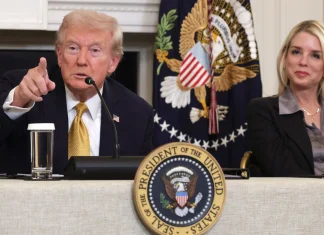
“We haven’t even started destroying what’s left in Iran. Bridges next, then Electric Power Plants,” President Donald Trump declared on social media late one night, his words landing like a fuse. The post, and video he shared showing smoke pouring from a newly built Karaj bridge, set off a cascade of reactions—grief in the Iranian suburbs where families counted the dead, fury in Tehran’s foreign ministry, and alarm on trading floors where oil tickers blinked nervously.
A bridge, a bomb, a neighborhood in mourning
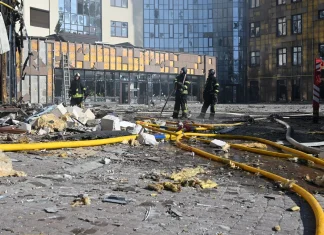
Karaj, once a commuter spillover from Tehran where children play in alleyways beneath a sky of fluorescent laundry, awoke to a different kind of sound: the mangled silence after sudden violence. State media reported eight dead and 95 wounded after the strike on the B1 bridge, a structure meant to relieve the city’s snarled traffic.
“They hit a bridge that wasn’t even open,” said Leyla Azimi, a vendor who runs a tea stall near the damaged approach. “We sell bread and tea. People come, talk. Now people come and cry.” Her voice broke as she described neighbors bringing blankets to the injured at a temporary triage station set up in a schoolyard.
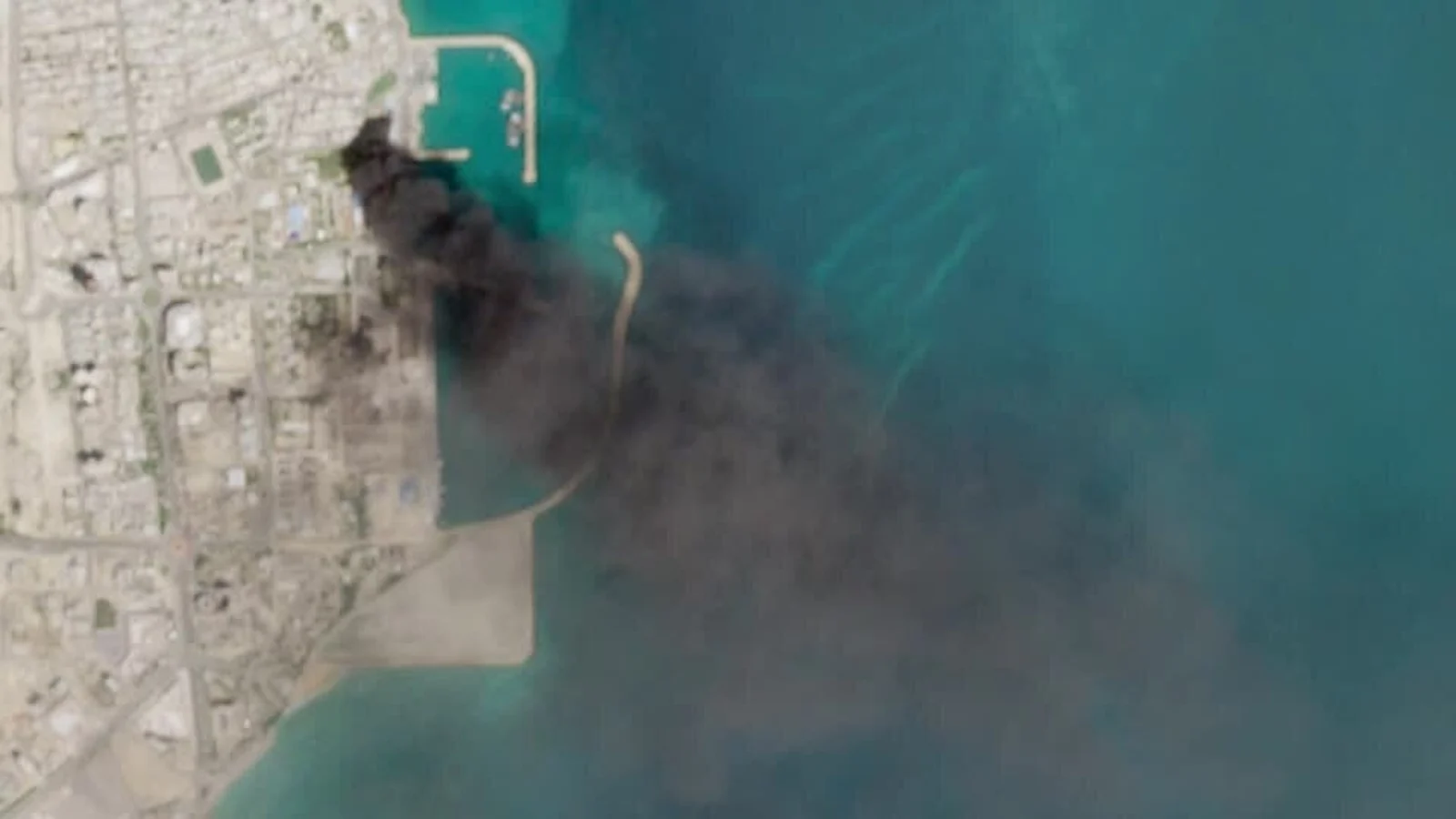
Iran’s foreign minister, Abbas Araqchi, answered in blunt terms: “Striking civilian structures, including unfinished bridges, will not compel Iranians to surrender.” That declaration was matched by satellite images of smoke rising from Qeshm island’s port — images that, for a cargo captain somewhere off Fujairah, meant one thing: routes are changing and bills will rise.
International law on edge
More than a hundred American international law scholars have written to Washington warning that the public rhetoric and some actions “raise serious concerns about violations of international human rights law and international humanitarian law, including potential war crimes.” The letter cited particularly incendiary comments: a mid-March remark where President Trump said the U.S. might strike Iran “just for fun,” and a Pentagon official’s dismissal of “stupid rules of engagement.”
“When senior leaders rhetorically normalize harm to civilians, you lower the threshold for catastrophic mistakes,” said Dr. Miriam Thompson, an international humanitarian law professor in Geneva. “Words become permission slips unless checked by law and oversight.”
Diplomacy by relay—and by brink
Behind closed doors, intermediaries have been running shuttle diplomacy, with fresh faces in Tehran responding only intermittently to offers from Western capitals. The rhetoric in public, however, has remained blistering. “Iran’s leadership knows what has to be done, and has to be done, FAST!” the president added, leaving no velvet on the threat.
The drumbeat of escalation has prompted a virtual meeting chaired by Britain with some 40 countries probing ways to reopen the Strait to commerce. Participants left the call with agreement on a principle—freedom of navigation—but little in the way of a shared plan. “We’re looking for collective ideas, not collective war declarations,” a British official said afterward, exhausted by the diplomatic treadmill.
The narrow mouth that feeds the world
The stakes are literal: the Strait of Hormuz normally handles roughly one-fifth of global seaborne oil trade. In recent weeks, Iran has demonstrated it can, and will, make passage hazardous by attacking tankers and striking nearby bases that host U.S. troops. That has reverberated through economies that rarely think about the geography of fuel until their pumps run dry.
“Ships used to queue for days to pass,” said Captain Rafiq al-Hassan, who has ferried crude through the strait for 25 years. “Now owners wonder whether a permit will get you through or a missile will.” He describes crews staying awake longer, engines burning more fuel for evasive maneuvers. “It’s a different trade. Everyone pays for it.”
Tehran has proposed a draft protocol with neighboring Oman that would require vessels to obtain permits and licenses — in effect, a toll on maritime movement. The European Union’s foreign policy chief, Kaja Kallas, pushed back publicly: “International law doesn’t recognise pay-to-pass schemes,” she wrote, insisting that the waterway remain open to all in peacetime and conflict alike.
Security Council, vetoes, and a fragile consensus
On the diplomatic front, a Bahraini resolution to protect commercial shipping is set for a Security Council vote, but China’s UN envoy, Fu Cong, has signaled opposition to any authorization of force. “Any military action would be legitimising the unlawful and indiscriminate use of force,” he said, warning that escalation would have “serious consequences.”
That split at the UN leaves practical solutions in limbo, even as global markets react. Oil prices jumped on the news of continued hostilities, insurance premiums for tankers spiked, and shipping companies began penciling in longer, costlier detours around the Cape of Good Hope.
Human cost, global ripple
The war has already exacted a heavy toll. Thousands have been killed and tens of thousands wounded across the region, according to humanitarian groups on the ground. The head of the International Federation of Red Cross and Red Crescent Societies delegation warned that medical needs are “rising exponentially” and that supplies could run short at any moment.
“We are not only responding to bullets and shrapnel,” said Ahmed Hariri, a field coordinator for a regional aid NGO. “We are treating panic, displacement, broken livelihoods. There’s a long shadow beyond the immediate wounds.”
And the shadow is economic as well as physical. Fuel shortages have already pinched economies in Asia, and analysts warn Europe may soon feel the squeeze. A joint report by two UN agencies cautioned that a sharp slowdown could trigger a cost-of-living crisis in parts of Africa where food and energy are heavily imported.
What now? Questions we cannot duck
What does it mean when a waterway—an artery of global commerce—can be held hostage by a single nation’s choice to retaliate or to extract leverage? How do international institutions respond when the mechanisms they rely on—diplomacy, trade law, maritime norms—are tested by raw force and theatrical threats?
Those are not abstract queries for the people in Karaj repairing a home with their bare hands, or for the mother in Kuwait who watched air defenses flare in the sky, or for the captain altering course and adding weeks to a round trip. They are the questions that will shape lives and balance sheets alike. “We sleep less, we worry more, but we go on,” said Leyla, the tea vendor, pouring a cup for another customer. “Until someone makes it stop.”
As the world watches, the Strait of Hormuz has become a mirror: reflecting our dependence, our diplomatic fragility, and the way localized violence can cascade into global uncertainty. How we answer the questions it poses will say a great deal about the world we want to live in—one where waterways hum with commerce, or one where a single bridge or a single tweet can set the seas aflame.