A Small City, a Big Shock: Meningitis Ripples Through Canterbury
Canterbury at midnight is a study in contrasts: cathedral spires bathed in orange light, narrow cobbled lanes smelling of fried fish and late-night coffee, and then the sudden hush after a night when music, heat and bodies pressed together made the air feel electric. It was in one of those nights that an invisible passenger hitched a ride—the bacterium that causes meningitis—turning a routine evening out into an unfolding public-health drama.
For residents and students in this ancient cathedral city, the news arrived like a cold wind. Two young people have died, more than a dozen others are seriously ill and the Health Security Agency has said the number of cases being investigated will almost certainly rise. What began as isolated hospital admissions has stretched into an outbreak centred on a nightclub and linked to two universities and several schools across Kent.
The Numbers: What We Know Right Now
Official figures are still moving. Health authorities have reported around 20 cases under investigation, with five new diagnoses announced in one update and more expected. So far, six cases have been confirmed as MenB—the strain of meningococcal bacteria responsible—and public-health teams have raced to protect those at risk.
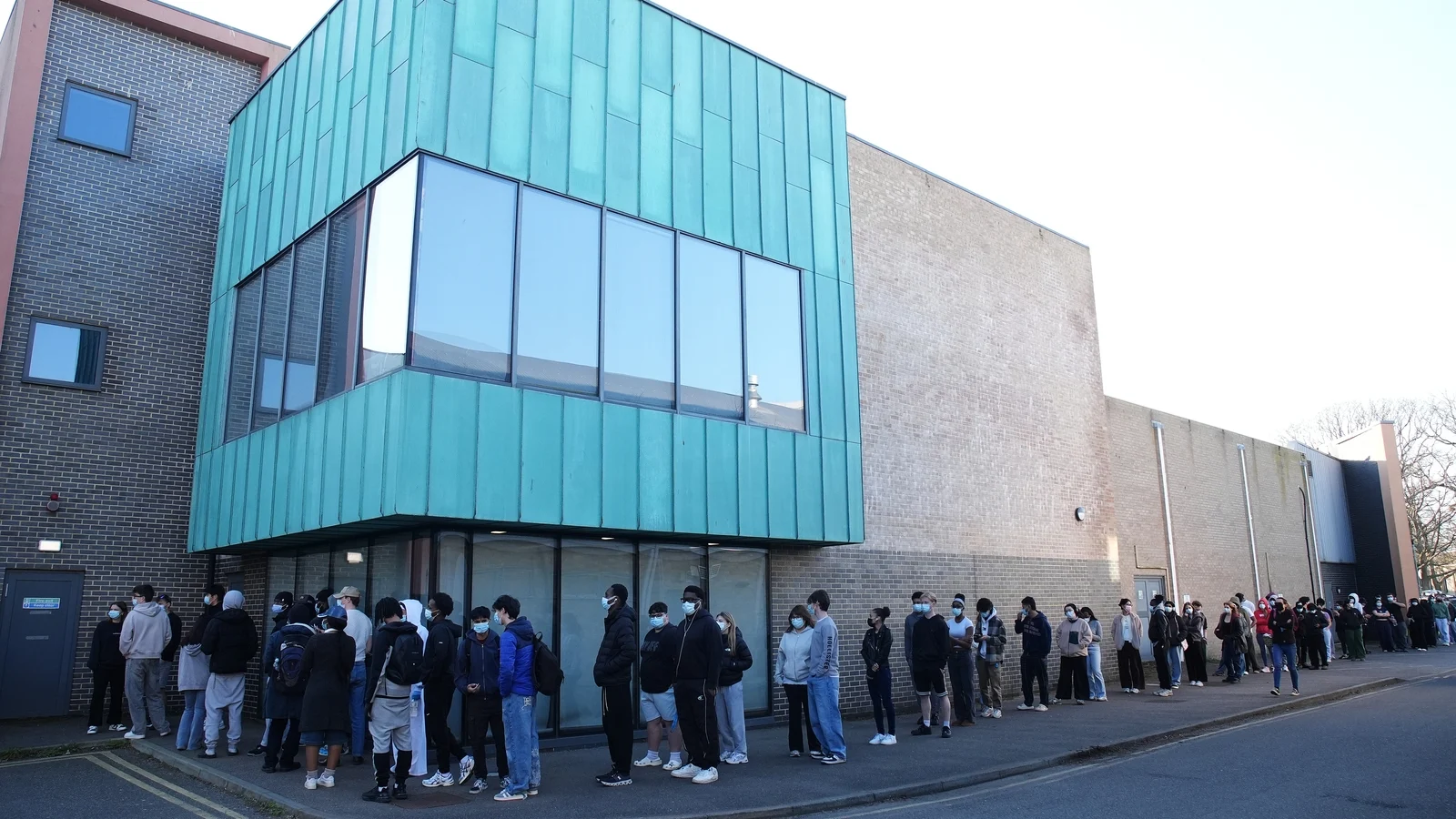
At the University of Kent’s Canterbury campus, a brisk, orderly line formed outside the sports centre as students waited to be vaccinated. The university reports that about 600 menB jabs were administered on site, while some 6,500 courses of antibiotics have been issued as a precautionary measure. In total, roughly 5,000 students on campus are eligible for the vaccine and are being urged to come forward—first for the short-term shield of antibiotics, then for the longer-term protection provided by the two-dose vaccine schedule (the second dose is given at least four weeks after the first).
“This is very unusual,” a senior public-health scientist told me. “We usually see sporadic cases across the country—perhaps one a day at most. To have this many cases linked to a single event or venue is out of the ordinary.”
Two Possibilities: Behaviour or Biology
Experts are weighing two broad explanations. One is behavioural: nightclubs are environments of prolonged, close contact—dancing, loud conversation that leads to shouting and close proximity, sharing of drinks, and the casual exchange of vaping devices or cigarettes. These are perfect conditions for a bacterium spread by saliva.
The other possibility is unsettling in a different way: the bacterium itself may have changed in a way that makes it easier to transmit. While that is a technical question requiring genomic analysis and time, scientists do not discount it.
“Either we’re seeing a convergence of risky interactions,” said Dr. Helen Carter, an infectious-diseases specialist, “or this particular strain has gained a transmission advantage. Both scenarios demand the same immediate response: rapid vaccination, targeted antibiotic prophylaxis and heightened clinical vigilance.”
How Meningococcal Disease Spreads—and What Makes This Outbreak Different
Meningococcal bacteria live in the back of the throat for many people without causing disease. Estimates suggest about 10% of adults carry the bacteria; carriage rates are higher among teenagers and young adults. Most carriers never get sick, but sometimes the bacteria invade the bloodstream or the meninges, causing severe, rapidly progressing illness.
The bacteria are spread by close contact—kissing, sharing cups or vapes, or prolonged face-to-face conversation in cramped spaces. It is not like COVID-19 or influenza in that it does not linger in the air over long distances and generally does not survive well on surfaces. That is why public-transport anxieties should be tempered; the real risk is sustained close contact.
“Think of it as an intimacy-driven infection,” a local public-health nurse explained. “It needs proximity. That’s why outbreaks often trace back to social gatherings where people are close for hours.”
On the Ground in Canterbury: Voices and Small Scenes
At the vaccination hub outside the university sports hall, there were nervous smiles and the polite, sometimes weary, banter of people who had been standing in line for an hour. “I was at the club last weekend,” said Maya, a second-year student, pressing a steaming paper cup of tea into one hand. “It’s scary to think it might be from there. We’re all really careful, but you don’t expect this.”
Down the street, the owner of a late-night kebab shop shook his head. “We’ve had students here every night for years,” he said. “They’re like family. Now people come in asking if it’s safe. We try to keep calm, but you can see the worry.”
Teachers and parents in affected schools described confusion and grief. A local headteacher, speaking quietly, said families rallied quickly: “Parents were phoning, wanting to know what to look for. We closed off some activities, issued letters, and encouraged everyone to get medical advice.”
Clinical Alert and NHS Response
The UK Health Security Agency has issued a national alert to the NHS, urging clinicians to have a “high index of suspicion” when treating young people aged 16 to 30 with compatible symptoms. The agency warns that the cases seen so far have been severe with rapid deterioration and advises protective measures—face masks and gloves—prior to antibiotic administration.
Students who have left Canterbury are being advised to visit their GP for vaccination, and health authorities insist there is adequate stock of menB vaccine in the NHS supply chain despite some reports of private pharmacies struggling to provide jabs.
Why This Matters Beyond Kent
This outbreak is more than a local emergency; it touches on broader themes in public health. It highlights the precarious balance between young people’s social lives and communicable-disease risk, the importance of rapid containment and the value of vaccines in halting spread. It also raises questions about surveillance: how quickly can scientists determine whether a microbe has changed, and how quickly can communities be mobilised in response?
There is also an international angle. French authorities reported a linked hospital admission in France; that patient is now in stable condition and no further linked cases have been found there. In our globally connected world, pathogens, like people, move quickly.
What to Watch For—and What You Can Do
If you or someone you know is in the affected age group and attended venues in Canterbury, health officials recommend prompt medical advice. Typical signs to watch for (as advised by clinicians) include:
- High fever and severe headache
- Neck stiffness
- Sensitivity to light and vomiting
- A rapidly spreading rash that does not fade under pressure
- Confusion or a decline in consciousness
Early antibiotic treatment can be lifesaving. Vaccination remains the best line of defence for those eligible.
Closing Thoughts: When the Night Meets Science
Canterbury’s lanes will again hum with music. Students will return to nights out, and the stalls on the market square will resume the easy commerce of a city that has long balanced tradition and modern life. But this episode should also leave us asking hard questions: how do we protect communal nightlife without stripping it of spontaneity? How quickly can public health marry scientific detective work with community-level action?
“We can’t live in fear,” said a community volunteer handing out information leaflets, “but we need to take sensible steps—vaccinate, watch for symptoms, and be kind to one another.”
So, what would you do if you were asked to queue for a jab tomorrow? Would you go immediately—or wait? The choice is a small one for an individual but a big step for the community. In moments like this, those small steps matter more than we often realise.