The Strait in Shadow: A Fragile Truce, Heavy Skies and the Price of Chokepoints
The sun rose over the Strait of Hormuz with an almost cruel normality — a pale line on the horizon, the slow silhouette of tankers that once threaded this narrow throat like beads on a necklace. From the tiny fishing piers of Bandar Abbas to the coffee stalls of Fujairah, people moved as if the world had not been rearranged overnight. But the silence in the shipping lanes tells a different story.
For decades the Strait of Hormuz has been one of the stagehands of the global economy: a narrow corridor less than 60 miles across at its widest that channels roughly one-fifth of the world’s seaborne oil and liquefied natural gas. Ships that used to pass in droves — some 140 vessels a day in calmer times — are now scarce. In the first 24 hours of the ceasefire, announced by the United States, only a single oil products tanker and five dry bulk carriers transited the waterway. That drop-off is not just a statistic. It is a living, immediate disruption felt at docks, refineries and kitchen tables around the planet.
Promises and Pushback
What began as a tentative two-week pause in hostilities immediately showed signs of strain. Washington accused Tehran of failing to fulfill a central element of the truce: reopening the strait. “That is not the agreement we have!” President Donald Trump wrote on a social media platform, adding later that Iran was doing a “very poor job” of allowing oil to pass through — a bluntness that underscored a mix of impatience and the high stakes involved.
Iran, for its part, pointed to what it called an unaddressed escalation elsewhere: Israel’s strikes inside Lebanon. In Tehran, hardline media and spokespeople insisted the ceasefire could not be separated from events in Lebanon and the wider “axis” of allies that Tehran considers integral to its regional posture. “If you squeeze one end of a rope, the other end tightens,” said a Tehran-based analyst who requested anonymity. “Tehran sees Lebanon as part of the same fabric. To them, peace in one place without peace in another is hollow.”
Closer to the Ground: Voices from the Region
At a tea shop perched above a scruffy Bandar Abbas quay, Mohammad, a fisherman of 28 years, thumbed a cigarette and watched the empty horizon. “My father taught me to read the sea. Empty lanes mean empty nets,” he said. “We were told a truce would let the ships move. But truce for whom and from what? Oil is big talk, but for us it is bread.”
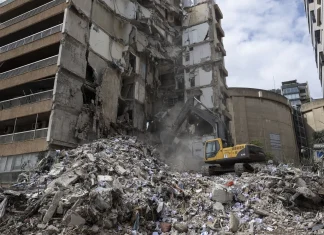
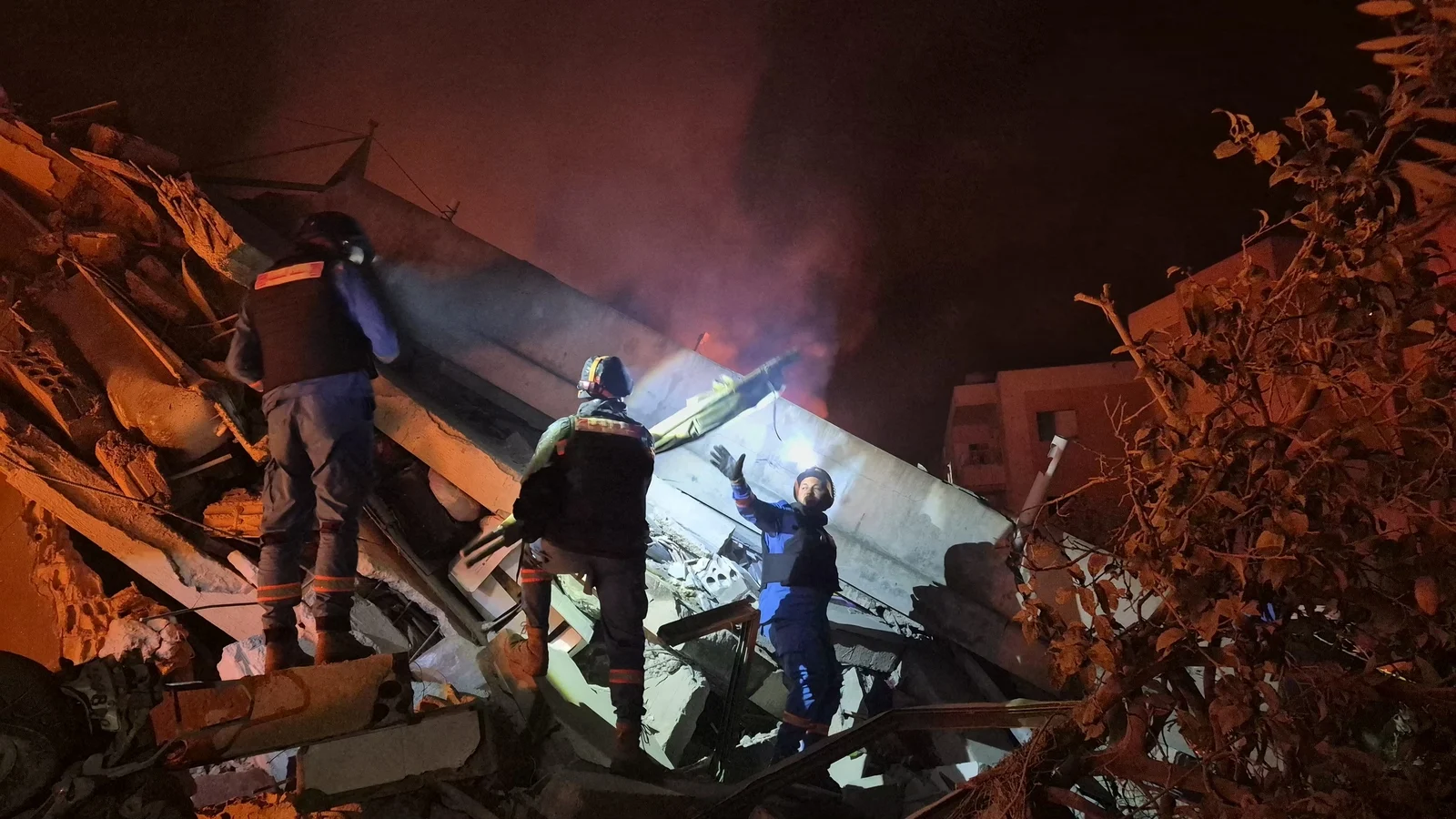
On the Lebanese coast, in areas pockmarked by the recent heaviest strikes of the war, the air smelled of diesel and burnt timber. Laila, 42, who had fled her apartment block with paperwork stuffed in a plastic bag, spoke with an economy of anger and fatigue. “They talk about ceasefires in Islamabad and Washington,” she said. “But what matters to me is that my son can sleep at night.”
Across the border in northern Israel, sirens and intercepted missiles have become daily punctuation marks. The Israeli military said it struck several launch positions in response to rocket fire from Lebanon, and that air defenses had intercepted incoming projectiles. Militants aligned with Iran, including Hezbollah, have staged retaliatory strikes and have said that infrastructure in Haifa and other northern urban centers are legitimate targets.
Disagreements Over the Map of a Truce
The core of the friction is a mapping dispute: does any pause in fighting include Lebanon, where Israel has conducted a parallel campaign against Hezbollah? The United States and Israel have publicly maintained that the latest ceasefire did not extend to Lebanon. Pakistan, which mediated the agreement, together with Iranian officials, asserts that Lebanon and Tehran’s network of allies are part of the deal — a claim that immediately set the parties on divergent tracks.
“In negotiations, the devil lives in the margins,” said Dr. Amina Rahman, a conflict resolution specialist at a university in Islamabad. “If the mediators and the principals have different mental maps of what a ceasefire covers, you get sequential violations — each side sees the other as the violator.”
What Was on the Table — and What Remains
Iran presented a ten-point proposal that, in broad strokes, sought an end to military operations, recognition of Iran’s right to enrich uranium, lifting of sanctions, and maintenance of control over the Strait of Hormuz. American officials, by contrast, had been moving with urgency toward a meeting in Pakistan between U.S. and Iranian delegations, hoping to turn a two-week breathing space into something more durable.
In Tehran, statements threaded together resolve and grievance. Iran’s supreme leader warned of retribution for attacks on Iranian soil, promising accountability “for every single damage inflicted.” In the corridors of power in Washington, talk turned quickly to logistics: how to translate paper promises into safe corridors for vessels, clear rules of engagement, and monitoring mechanisms that both sides could trust.
Why the World Is Watching — and Why It Should Care
It is tempting to see the ordeal of the Strait as a distant game between governments. But energy markets, fragile supply chains, and everyday consumers feel the effects almost instantly. When a chokepoint that carries roughly 17–20 million barrels per day of petroleum is constricted, markets jitter. Insurance rates for tankers spike. Shipping routes elongate as captains detour around the Cape of Good Hope, adding time and expense. For importing nations in Europe, Asia and beyond, disruptions can translate into higher fuel prices and pressure on inflation already strained by other global shocks.
Beyond economics, there is the peril of escalation. A single miscalculated strike, a misfired missile, or a rogue actor could shatter a delicate balance. “These are not abstract risks,” said an American diplomat involved in the talks, speaking on condition of anonymity. “One missile in the wrong place can set off a chain reaction we cannot easily control.”
Small Stories, Big Signals
On the pier, a tea seller named Fatima wrapped her hands around a chipped mug and watched a lone bulk carrier crawl past. “They say the ships will come,” she said. “But we measure peace in cups of tea and in the weight of fish we manage to pull ashore. The politicians measure peace in statements. That is why we do not believe easily.”
Her words echo a broader truth: grand deals and high-level communiqués are only useful when they redeploy into the ordinary lives of people. For now, the truce is a fragile bridge between belligerents, one that must be rebuilt every few hours with diplomacy, transparency and the hard mechanics of verification.
Choices Ahead
As negotiators prepare to meet, as mediators from Pakistan and elsewhere shuffle proposals and red lines, the world faces a question that is both strategic and moral: how do we secure chokepoints without militarizing them, how do we end wars while honoring national security concerns, and how do we refocus attention on rebuilding the lives of people caught in the crossfire?
Will diplomats turn a two-week pause into a roadmap for a longer détente? Or will ambiguity — about Lebanon’s inclusion, about the definition of safe passage, about who enforces what — turn the truce into nothing more than a pause before the next round?
For the sailors who watch for buoys at dawn, for the Beirut mothers tallying the days since their children last slept through the night, and for markets that trade on certainty, the answers cannot come soon enough. The Strait waits, patient and unforgiving. The question is whether the world will accept a brittle calm — or demand, and deliver, something more enduring.