When Swords and Speeches Collide: Inside a Crisis That Has the Region Holding Its Breath
There are nights in cities where the air changes pitch—something tightens in the throat of a place. In Tehran that night, it tasted of diesel, cardamom tea gone cold, and the metallic hum of distant aircraft. At the same time, across the Mediterranean, alarm rooms lit up in Tel Aviv and Washington. Words that had been shouting at one another for years—sanctions, enrichment, regime change, deterrence—suddenly found their way into missiles and radio broadcasts.
This is not a story that begins with a single bullet or a single speech. It is an entanglement of history, ambition, fear and grief. To make sense of it, you have to meet the people at the center of the storm and the figures who steer it from the high towers of power.
The Players on a Squeezed Chessboard
Below are the principal actors in a crisis that has global reverberations. They are as much personalities as policies—each carrying a weight of stories, resentments, and a distinct appetite for risk.
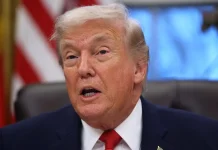
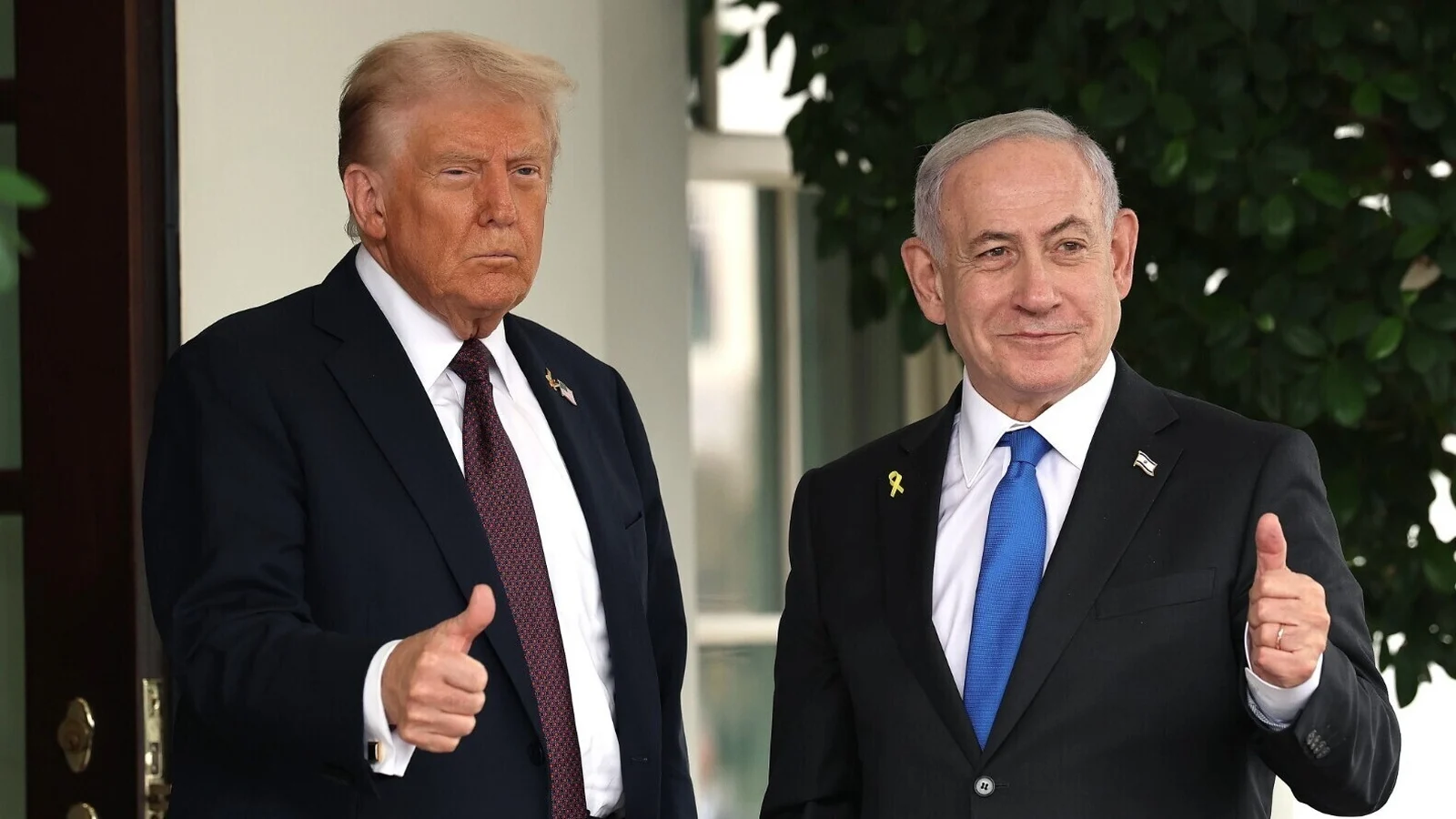
Donald Trump — the dealmaker who doubled down
For years the former New York businessman turned political outsider cultivated the image of a peacemaker. Yet on Iran he favored pressure. His “maximum pressure” campaign—symbolized by the 2018 U.S. withdrawal from the 2015 nuclear accord—aimed to squeeze Tehran back to the negotiating table by choking its oil revenues and financial links.
“We want a peaceful outcome,” a U.S. official in a Washington think tank told me. “But we also want to make sure Iran cannot threaten our allies. That’s where ‘very hard’ rhetoric becomes policy.”
And rhetoric matters. When leaders publicly warn of heavy responses to the killing of protesters or to moves toward a weaponized nuclear program, those warnings become commitments or provocations, depending on who reads them. In this crisis, the United States’ posture combined threats with renewed diplomatic channels—talks that moved fitfully against a backdrop of escalating tension.
Ayatollah Ali Khamenei — the keeper of the revolutionary flame
At the top of Iran’s state sits a figure who has watched and shaped the Islamic Republic for decades. Ascending to the supreme leadership in 1989, he has been the final arbiter of foreign and domestic strategy, endorsing uranium enrichment as a sovereign project and overseeing the expansion of Iran’s regional footprint—from Beirut to Baghdad, from Damascus to Sana’a.
“We will not bow to pressure from abroad,” declared a cleric close to the leadership in a private briefing. “Our resistance is as much ideological as strategic.”
Khamenei’s calculus has been wary of Western intentions and skeptical of deals that might, in his view, leave the revolutionary core vulnerable. When Iranian diplomats reopened talks that many hoped would unfreeze relations, he cautioned patience and guarded expectations—signaling that for him, concessions are a fast road to weakness.
Benjamin Netanyahu — Israel’s unblinking sentinel
For decades, Israel’s leaders have viewed Iran’s nuclear trajectory as an existential problem. Benjamin Netanyahu has made it a political crusade as well as a national security priority—publicly urging action when he judged diplomacy insufficient and addressing the Iranian people directly at times, hoping to peel away domestic support for Tehran’s rulers.
“We will not allow a regime committed to our destruction to acquire the means to carry out that threat,” an Israeli defense analyst said. “For them, pre-emption is not aggression—it’s survival.”
That calculus has fed into a sharpened Israeli posture: a willingness to act alone or in concert with allies if it judges the risk of inaction to be greater than the fallout of strikes.
Reza Pahlavi — the symbol and the shadow of a bygone era
Outside Iran, in a world of exile politics and diaspora social media, the name Reza Pahlavi carries a charged mixture of nostalgia and controversy. The eldest son of Iran’s last monarch has positioned himself as a figure around whom anti-regime sentiment can coalesce. He has not set foot in the country since the revolution, but his image and slogans—”Pahlavi will return”—echoed in recent street protests.
“People chant what gives them hope,” said an Iranian-American activist in Tehran. “Sometimes that’s monarchy, sometimes it’s a new republic. What matters is people want an end to oppression.”
To many inside Iran, however, Pahlavi’s legacy is complicated; he is both a rallying point and a reminder of another era that included its own abuses and inequities.
Mohammed bin Salman — Riyadh’s pragmatic architect
The crown prince of Saudi Arabia, who rose to eminence in 2017, views a stable neighborhood as essential to his kingdom’s grand economic transformation. For Riyadh, a severely destabilized Iran could mean proxy escalation across the Gulf, jeopardizing oil lifelines and the broader commercial re-opening Riyadh has been chasing.
“We do not want the region to fall into chaos that deprives our people of jobs and prospects,” a Gulf diplomat told me. “A weakened Iran is not the same as a peaceful Iran.”
In 2023, Saudi Arabia and Iran undertook a cautious rapprochement brokered by a third power—an acknowledgment that, for Gulf monarchies, the price of perpetual confrontation was becoming too high.
On the Ground: Voices That Turn Headlines into Human Stories
Walk through Tehran’s Grand Bazaar and the headlines feel remote. You meet a woman threading pearls into a necklace who worries about her son’s future. You find a tea vendor who says, “We fear war. We have seen too many funerals.” And at a university coffee shop, a student shrugs: “We want reform, but we do not want to become a battleground.”
A shopkeeper in Isfahan described the calculus many families face: “If the border flares, nobody cares about our small shops. Food prices swell. People disappear overnight.”
These are not abstractions. Iran is home to roughly 85–86 million people. Years of sanctions and mismanagement have strained the economy, with high inflation eroding wages and sending many young Iranians abroad in search of opportunities. Protests—large and small—have rippled through cities in recent years, demanding an end to repression and a better life.
What Does This Mean for the World?
Ask yourself: when a regional confrontation escalates between nuclear-capable states and their proxies, who gets to call for caution? Who pays the price? The answers are rarely tidy.
This crisis lays bare broader themes: the limits of pressure versus diplomacy, the moral quandaries of supporting uprisings abroad, and the blunt reality that the cheapest path to stability is often the hardest to achieve politically.
Strategists warn of a cascade effect—attacks that invite retaliation, which invites deeper involvement by outside powers, which invites regional fragmentation. Humanitarian organizations worry about civilian casualties and refugees. Economists watch oil markets; traders watch every flare-up for signs of supply disruption.
“The fundamentals are simple and terrifying,” said a regional security scholar. “Once kinetic operations begin, control is partial and uncertainty rules.”
Where Do We Go From Here?
We could harden into camps and wait for the next round of speeches and missiles. Or we could treat this as an invitation to ask deeper questions: How do societies build resilience without resorting to repression? How do international actors balance deterrence with diplomacy? And perhaps most urgently—how do the voices of ordinary people reclaim the narrative?
In the bazaar, a vendor folded his hands over a steaming cup and said, softly: “We tire of being the stage on which others fight. Let us live our lives.” It was a plea, and a map. It asked us to imagine a future where power is not the only language spoken at midnight.
As the crisis unfolds, the world will be watching—because the choices made in the halls of power ripple down narrow alleys and into kitchens. That is the human cost. That is the human stake.