After the Treaty: A Quiet Moment Before a Dangerous Tomorrow
There was an almost ceremonial silence in Geneva the day the last pillar of the post‑Cold War nuclear order fell away. Diplomats shuffled papers. Cameras flashed. Outside, the city’s baristas poured espresso and the lake glinted like a promise that cannot be kept. Inside the Conference on Disarmament, a familiar refrain about stability being “at risk” echoed down marble corridors. But what does the end of an agreement on paper feel like to people on the ground — and what kind of world are we walking into now?
For nearly two decades, a single treaty — the one that capped deployed nuclear warheads for the United States and Russia at 1,550 each — provided a thin, steadying scaffold to global strategic calculations. It was never perfect. It never restrained modern delivery systems, or sat across from emerging nuclear states. Still, when it expired, the sense among many in the room was less of closure than of falling asleep at the shallow end of a very deep pool.
Voices from the Hall and the Street
“We’ve outgrown the architecture that kept us honest,” said a senior U.S. arms‑control official I spoke with in Geneva, his voice low enough to be private but certain in tone. “This isn’t nostalgia for treaties past. It’s a call to design rules that fit the weapons of today.”
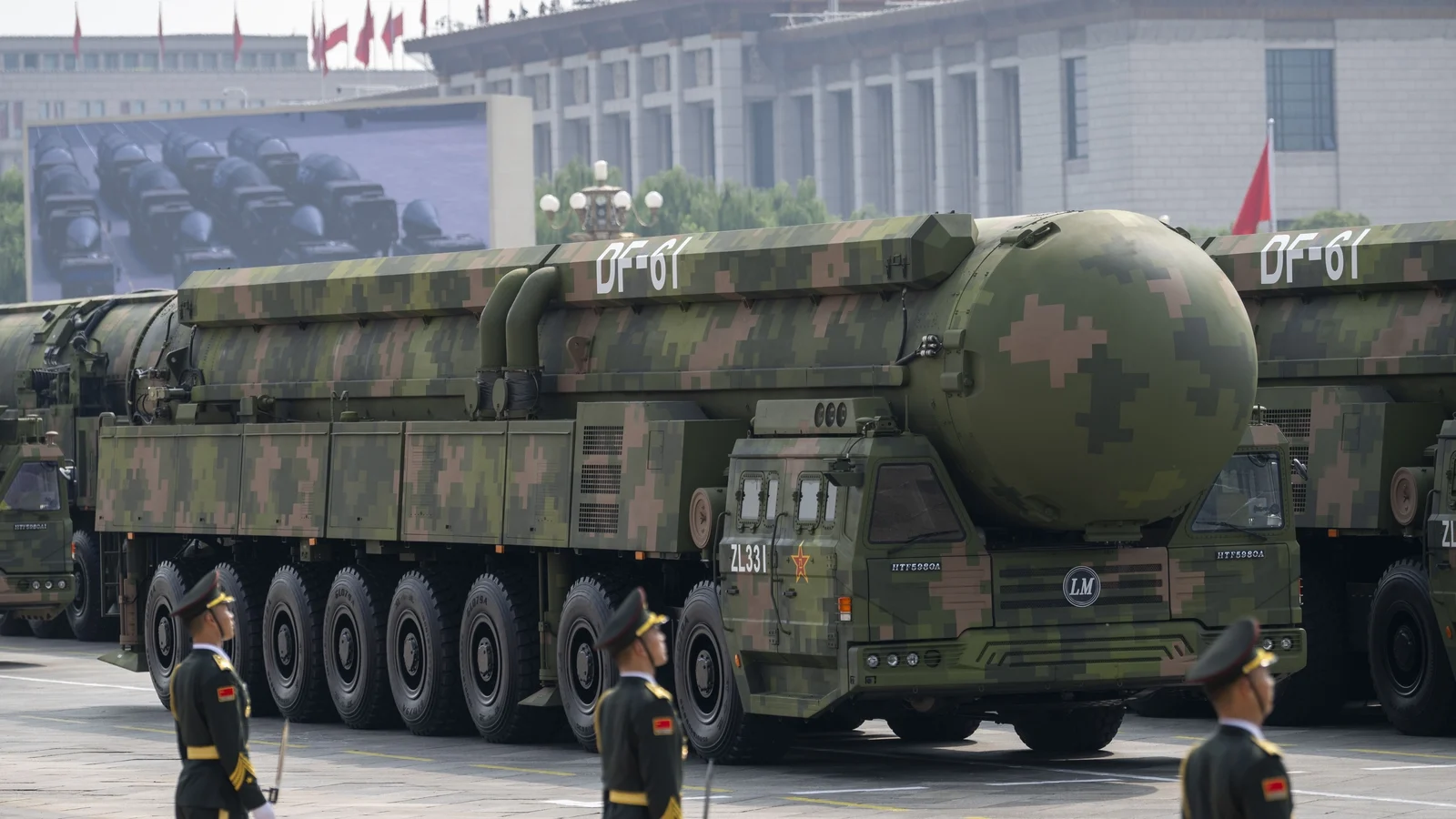
Across the hall, a Chinese diplomat politely but firmly declined such a shot at multilateral reinvention. “China’s arsenal is not at the same scale as that of the United States or Russia,” a diplomatic source told me, reflecting a line repeated in official statements. “We will not join in negotiations that presuppose equivalence.”
And in a small café down the alley from the UN complex, an ambassador from a non‑nuclear NATO country shrugged. “We need restraint on all sides,” she said, stirring her coffee slowly. “It’s not only about numbers. It’s about signalling: will states refrain from threats that lower the threshold for use?”
Local Color: Geneva’s Quiet Contrast
The city itself seemed to offer a metaphor. Lined with chestnut trees and manicured lawns, Geneva has hosted peace talks and treaties for a century. Yet even here the news felt oddly discordant — the placid promenades beneath Mont Blanc presiding over talk of weapons designed to erase cities. A street vendor unloading fresh croissants muttered, “Everything is politics now,” as if nuclear strategy were a weather report.
What the Numbers Tell Us — and What They Don’t
Here are the basic facts that anchor the anxiety: the treaty that has lapsed capped deployed strategic warheads at 1,550 for the two superpowers. Beyond those caps, global inventories — held by nine nuclear‑armed countries — are estimated in the low tens of thousands. Independent trackers place the world’s total arsenal at roughly 12,000–13,000 warheads, a small fraction of Cold War peaks but still a force that could wreck whole regions.
Numbers, however, can be misleading. They do not count the speed of deliveries, the advent of hypersonics, the muddiness introduced by dual‑use platforms, or the digital vulnerabilities that could trigger false alarms. They don’t measure the erosion of mutual trust — the slow, corrosive effect of words like “violation” and “modernization.”
Why This Matters Beyond Capitals
Imagine living in a town that was once a quiet industrial hub. One day, two big firms collide and sign a safety pact that keeps both factories from working on explosive new dyes. For thirty years the pact holds and life continues. Then the pact lapses. Workers are not just nervous about numbers on paper; they worry about rainwater contamination, about school closures, about jobs redirected to weapon labs. That’s the human dimension often missing from diplomatic statements.
The end of this treaty matters because it makes planning harder for ordinary citizens and for small states that have long relied on the predictability of superpower calculations. Neighborhoods near missile bases, communities dependent on defense spending — their futures are tethered to decisions made in faraway capitals. And on the global scale, the treaty’s lapse injects uncertainty into markets, alliances, and humanitarian planning.
Arguments and Counterarguments
Proponents of a new, wider agreement argue that the old deal was built for a bipolar world. “We can’t freeze a system that never addressed emerging actors or technologies,” said an arms‑control scholar at a Geneva think tank. “Any new architecture must include transparency measures for more countries and rules for novel delivery modes.”
Opponents push back hard. “You can’t bind unequal arsenals with the same yardstick,” a European defense analyst told me. “And you can’t ask a rapidly modernizing power to accept limits that preserve a rival’s unilateral advantage.” This argument feeds the very logic that accelerates an arms race: if one side refuses constraints, others feel they must catch up.
Paths Forward — Fragile and Contested
So what can be done? Here are some proposals circulating in diplomatic backrooms and academic journals:
- Interim restraint measures: A voluntary, time‑limited pledge by the largest arsenals to maintain ceilings while negotiations continue.
- Broadened transparency: Confidence‑building steps that include more states through declarations, inspections, and data exchanges.
- Technology‑specific rules: Agreements that limit certain delivery systems or tactics — for example, restrictions on the early use of tactical nuclear weapons or on destabilizing missile defenses.
Each path is fraught. Each requires trust that is currently in short supply. And each would demand political courage at home — leaders willing to face domestic critics who portray disarmament as naive or dangerous.
What Should Worry Us Most?
Not every lapse in diplomacy turns into catastrophe. But the danger now is not a single headline. It’s the cumulative erosion of norms: the steady, almost invisible normalization of rhetoric that contemplates the actual use of nuclear weapons, the patchwork of modernizations that make arms cheaper and faster, and the sidelining of multilateral forums where crises can be cooled.
Ask yourself: do we want a future where the only way to gain confidence is through parity of arsenals? Or could we imagine a layered system where verification, regional groupings, and technological guardrails make living under deterrence less precarious?
Closing Thought
There is a strange intimacy to the threats we face. The same technologies that let us speak instantly across continents also make the misstep that much more devastating. Diplomacy in this era will need to be as nimble as the technologies it seeks to contain and as humane as the people it aims to protect.
“We’re at a crossroads, not a dead end,” a former negotiator told me as we watched dusk settle over Lake Geneva. “But crossroads require a map. Right now, we’re arguing over who gets to draw it.”
Will the major powers sit down and draft a modern compass — or will they drift, each following its own course, toward an uncertain horizon? The answer will shape the century in ways our grandchildren will either curse or bless.