At the heart of the Vatican, a quiet but consequential no
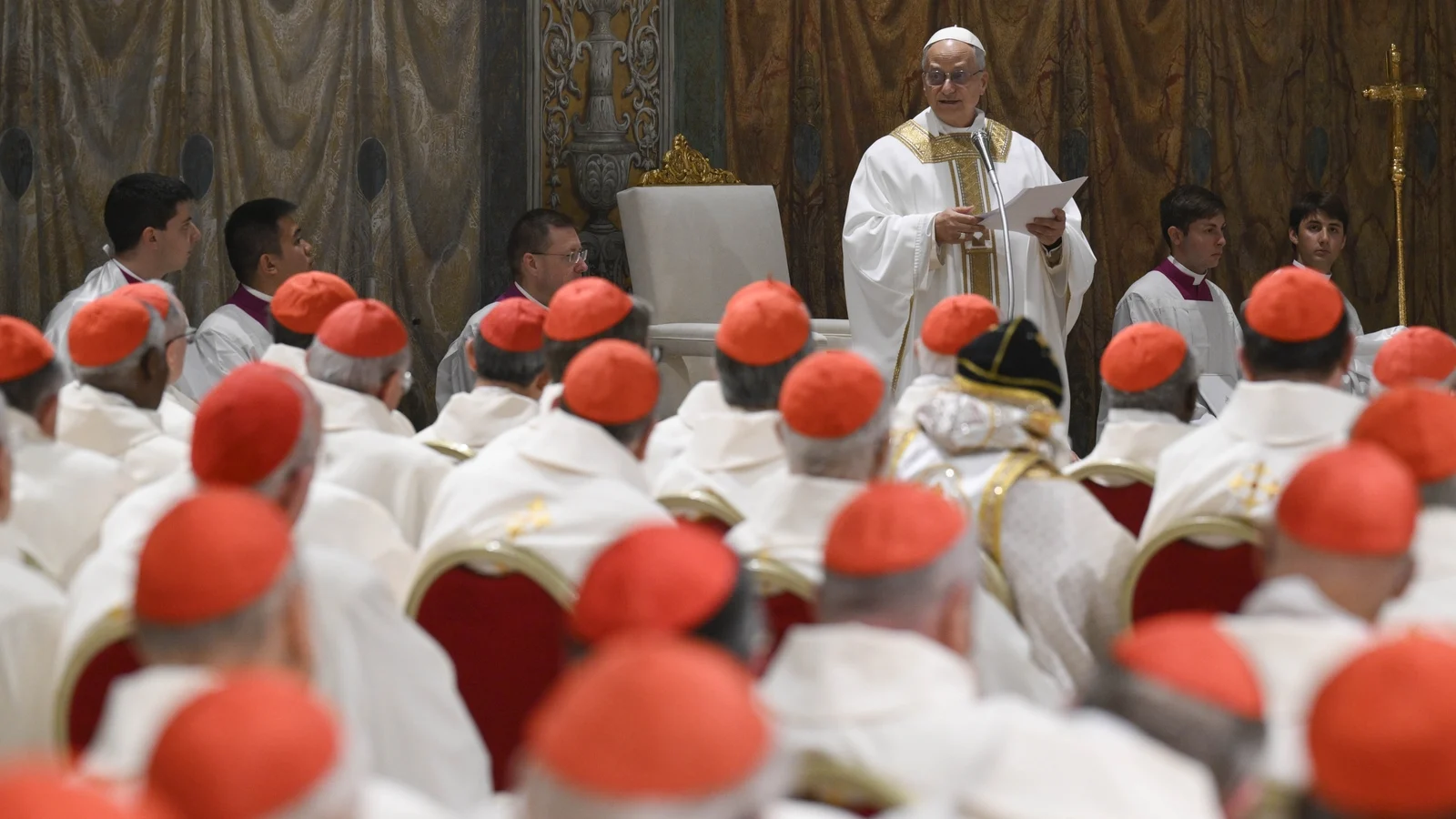
There are moments in Rome when the corridors of the Vatican feel less like stone and more like a slow-moving current — deep, patient, and forever reshaping the life of the Church. This week one such current shifted direction. A high-level commission assembled by the Holy See has concluded, in a 7–1 vote, that it cannot at present open the door to ordained women serving as deacons.
The verdict, delivered in a report presented to the pope, is stingingly precise in tone. It says historical and theological inquiry “excludes the possibility” of instituting women as deacons right now, while also urging that the subject remain under further study. For advocates and skeptics alike, the language feels both definitive and deliberately cautious.
What the commission said — and what it didn’t
The report’s framing is important: it is a judgment born of scholarship and theology rather than a blunt policy decree. “Our task was to sift the evidence — ancient texts, liturgical practice, the living tradition — and pronounce what that evidence permits,” said a Vatican official who reviewed the document and asked not to be named. “The conclusion was not a blanket condemnation but a prudential assessment based on what was shared with us.”
Yet the commission’s vote — seven in favor of excluding such ordination, one against — will reverberate. Its membership included historians, canonists, and theologians chosen to balance scholarly rigor with pastoral sensitivity. The group’s admission that its findings “do not as of today allow a definitive judgement to be formulated” leaves an opening, but an ambivalent one: the door is closed now, but the conversation will continue.
Why this matters — in the pews and around the world
To many Catholics, this seems at once abstract and intimate. Globally there are roughly 1.3 billion baptized Catholics; more than half of them are women. They are teachers, pastoral ministers, choir directors, catechists — the lifeblood of parish life in cities from Nairobi to Naples, Manila to Mexico City. Yet the body of ordained clergy remains overwhelmingly male.
“I grew up seeing the sisters do the work no one else would: visiting the sick, running literacy programs, baptizing infants in rivers when no priest could get there,” said Rosa Morales, a 62-year-old catechist in Lima. “Having women formally recognized as deacons would mean dignity, acknowledgment, and new ways to serve.”
Across continents, the role of the deacon matters in very practical terms. Deacons are ordained ministers who can baptize, witness marriages, preach, and perform many pastoral functions; unlike priests, they do not consecrate the Eucharist. For communities in remote regions — where priests can be scarce and distances vast — deacons are often the essential bridge to sacramental life.
Different voices, different hopes
The reaction to the commission’s ruling was immediate and varied. “This is a pastoral issue as much as a doctrinal one,” said Father James O’Rourke, a parish priest in Dublin. “We can respect the commission’s scholarly integrity while lamenting that many of the faithful, especially women, feel sidelined.”
On the other side of the argument, Cardinal Pietro Mancini, a conservative voice long skeptical of ordaining women, told a small Italian radio station that the vote “protects the unity of the Church and the continuity of its sacramental theology.”
And then there are the quiet, personal responses. “My granddaughter asked me if only men could be deacons because God likes men better,” said Sister Bernadette, a nun who has worked in a Nairobi clinic for 30 years. “How do you explain centuries of nuance to a child who just wants to see fairness?”
History on the table: Phoebe and the debate over ancient practice
One of the most compelling points of evidence for proponents of women deacons is historical: the New Testament mentions a woman named Phoebe as a deacon in Paul’s letter to the Romans (Romans 16:1). Early Christian communities also appear to have used the term “deaconess” in various ways, sometimes linked to ministries among women — for instance, assisting with female baptisms at a time when gender segregation was normative.
But historical evidence is rarely tidy. “We see echoes of women serving in liturgical and ministerial capacities, but whether those roles are identical to the ordained diaconate of today is disputed,” explained Dr. Anya Kovács, a church historian based in Budapest. “The semantics and ecclesial structures have shifted a lot in two millennia. That complicates any simple ‘proof text’ argument.”
Where doctrine meets lived reality
Canon law and doctrinal statements also shape the debate. In 1994, Pope John Paul II issued Ordinatio Sacerdotalis, which declared that the Church does not have the authority to ordain women to the priesthood. That document did not explicitly bar women from the diaconate — and that omission has become the locus of both hope and controversy.
Pope Francis, recognizing the sensitive balance between tradition and reform, established two commissions to investigate the question — one to look at history, the other to assess theological implications and pastoral needs. The groups met largely in private, and their findings are now just beginning to surface.
Beyond Rome: what this says about women and religion in the 21st century
This is not merely a Catholic story. Around the world, religious institutions are wrestling with questions about gender, leadership, and the pace of change. Some communities have moved toward inclusive ordination; others are tightening traditional boundaries. The Vatican’s decision will be read as a signal by ecumenical partners and by women of faith weighing their place in their communities.
“People want meaning as much as they want justice,” said sociologist Dr. Maya Singh, who studies religion and gender. “Religions are repositories of both transcendent claims and social identity. When official structures seem slow to reflect lived realities, tension is inevitable.”
What comes next?
The commission’s recommendation for further study ensures that the issue will not vanish. For activists, the path forward may involve patient scholarship, grassroots pastoral experiments, and persistent plea for recognition. For the Vatican, the challenge is to weigh doctrinal continuity against pastoral urgency.
Can a Church that calls itself universal reconcile ancient tradition with a changing world where women lead schools, hospitals, and entire communities? What does it do when millions of faithful feel their gifts are honored in practice but not in altar-side symbol?
These are the questions that will echo through parish halls and theological faculties in the months to come. They are not questions with easy answers; they are questions about identity, authority, and the meaning of service.
Invitation to reflection
Whether you are a lifelong Catholic, someone who once passed through a parish doorway, or a curious observer of global faith trends, consider this: how do institutions balance the weight of history with the moral urgency of today? How do communities keep their stories alive while listening to new voices within?
“I am not asking for revolution,” said Lucia Martins, a youth worker in São Paulo. “I am asking that the Church listen to us as it once listened to the apostles — not to erase the past, but to hear how the Gospel calls us now.”
The commission’s verdict is, in one sense, a temporary resting point. But the questions it raises are perennial. They will follow the faithful into confessional boxes, dinner tables, university lecture halls, and, inevitably, back into the halls of the Vatican itself.