On the Edge of Sound: Two Irish Volunteers and the New Geometry of War
When you imagine a warzone you might picture shattered facades, columns of smoke, rows of sandbags and the solemn pace of ambulances. What Oran McInerney and Declan McEvoy came back talking about was something sharper, more modern: the soft whine of drones threading the sky like predatory insects, the weathered resilience of people insisting on normal life in the shadow of missile warnings, and the strange intimacy of cross-border compassion that brings an electrician from County Clare to a makeshift kitchen in Kharkiv.
The conflict that began in February 2022 has now rolled into its fifth year, a slow-motion catastrophe stretching over a thousand kilometres of front line. It has become a conflict not only fought with boots and tanks, but with batteries, microprocessors and the kinds of commercially accessible aerial systems that turn ambulances into targets and a quick extraction into a life-or-death sprint.
Frontline Medicine in the Drone Age
“You can’t linger anymore,” Oran tells me in a voice that holds the grit of somebody who has repeatedly come back from the heart of things. “An extraction that used to be measured in minutes is now measured in seconds. If a drone spots you, you’re finished.”
From Doonbeg in Co Clare, Oran has travelled multiple times to eastern Ukraine as an emergency medical technician working with a US-based NGO. He’s evacuated civilians from places that have become shorthand for the war’s brutality—Kramatorsk, Bakhmut—and has loaded wounded soldiers, Ukrainian and Russian, into ambulances while the horizon bled with the slow, lethal choreography of modern warfare.
“There’s always a quiet moment,” Oran says. “It’s the pause between the siren and the impact, when everyone looks at the sky. That’s when you learn faces—aged, terrified, incredulous. One man I helped said he couldn’t believe someone had come from Ireland to lift him out. He gripped my hand like we’d been family for years.”
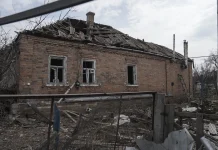
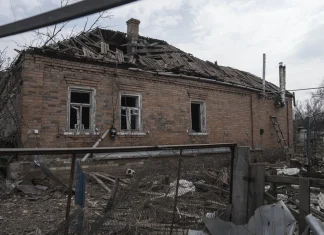
The threat that modern drones pose is not hypothetical. With effective ranges easily reaching dozens of kilometres and loitering munitions able to strike with precision, the frontline is no longer a bright-line trench; it’s a wide, dangerous zone. Volunteers and medics operate in a corridor that some describe as up to 50 kilometres deep, within reach of guided unmanned systems, making any rescue operation a potentially lethal target.
Life’s Ordinary Bones, War’s Shifting Flesh
Declan, who volunteered in Kharkiv preparing meals for emergency services and hospitals, brought back stories of a city that has learned an uneasy double life. “Most nights missiles and drones came calling,” he recalls. “You get the alert on your phone and move like a practiced machine into cover. Then, five minutes later, someone’s buying bread. It’s surreal.”
Kharkiv’s streets, he says, are full of small rituals of survival. Old women sweep stoops, teenagers queue for coffee in bullet-scarred cafes, and once-a-week market stalls sell sunflower oil, loaves and warm pleasantries. Orthodox churches hold candlelit vigils, and in parks small shrines appear—photographs, flowers, a few candles—homemade altars to lives stopped too soon.
“I struggled with that normality,” Declan admits. “I’d be popping into a shop for crackers while air raid sirens pulsed through the city. You feel the cognitive dissonance—how does life continue next to the act of being destroyed?”
Human Threads and Hard Choices
Both men return to Ireland carrying more than photos and anecdotes. They carry names. They carry the weight of friendships formed under pressure. Oran speaks of colleagues who will never leave—a contrast that throws his own mobility into stark relief. “I can get on a plane. They can’t. It’s their home, their family. You see them in a trench or a bunker and you realise your sacrifice is different.”
That difference gnaws. For locals, staying is not an adventurous choice but a tethered duty. “We are defending everything we know,” a Kharkiv nurse told Declan as they ladled soup into steel bowls. “Leaving would be losing our history.”
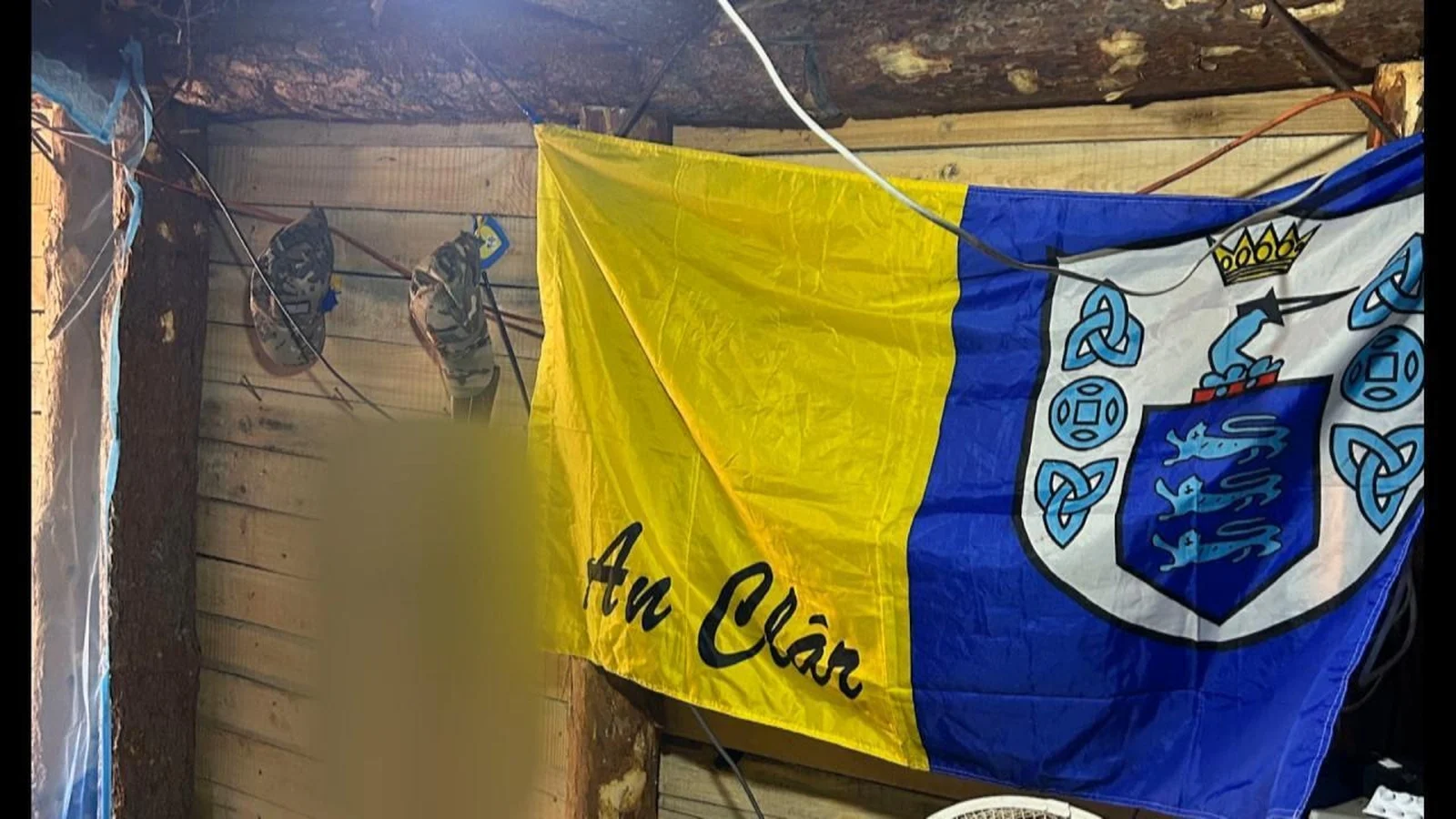
For international volunteers, the calculus is different and often agonisingly simple: go, help, leave. Yet many of them find themselves bound in ways bureaucracy cannot quantify—by names, stories, the cadence of a city that fed them and trusted them. The Irish tricolour fluttering in Kyiv with the names of expatriates who died stands as a small, private testament to that binding, a shrine to connections that defy borders.
What This Means for Humanitarian Work Globally
Modern conflicts increasingly blur the line between combatants and civilians, between front and rear. The weaponisation of commercial technology—drones, encrypted communications, satellite-guided delivery systems—changes how humanitarian aid is delivered and who can safely deliver it.
- Frontline lengths: The conflict’s active line across Ukraine now extends to more than 1,000 km, creating a vast, fragmented zone where civilians and aid workers are exposed.
- Displacement: Millions have been uprooted, seeking refuge within Ukraine or abroad, creating sustained humanitarian needs for housing, healthcare and mental health support.
- Technology’s double edge: Drones improve situational awareness for aid convoys but also expose them to targeted attacks, challenging the neutrality and safety traditionally afforded to ambulances and medical personnel.
“Humanitarian doctrine hasn’t kept pace with the technologies of modern war,” says an independent conflict analyst I spoke with. “We need new rules of engagement for unmanned systems, clearer protections for medical transports, and rapid, practical protocols for volunteers operating in contested airspaces.”
Small Actions, Big Echoes
In the end, the narrative that Oran and Declan bring home is stubbornly, beautifully human. It’s not a parade of victories or a manifesto of geopolitical analysis; it’s a ledger of little mercies. It’s a bowl of soup served to a nurse coming off a 12-hour shift. It’s a stretcher lifted by strangers who become family by force of necessity. It’s an Irish flag wrapped around names that no one should forget.
So what do we owe the people who stay? What responsibility do those of us who live far from conflict have toward those who remain tethered to war? These are uncomfortable questions. They ask us not only to marvel at bravery but to reconsider how we fund, protect and legislate humanitarian action in a world where the sky itself can be weaponised.
“You learn to be efficient, to be fast, to be kind in the smallest moments,” Oran says, softer now. “You also learn how fragile hope can be, and how necessary it is.”
If you met someone like Oran or Declan in a grocery queue tomorrow, would you ask where they’d been? Would you listen to their stories? And would you be ready to understand how a distant war has reshaped the geometry of compassion—so that saving one life often means racing against the hum of a machine in the sky?