Before Dawn in Saltivskyi: The Quiet That Breaks
It was almost four in the morning when the sky over Saltivskyi, a northern suburb of Kharkiv, split for a moment and the block of flats on the corner answered with a shower of glass. The sound was not like a bomb in movies — no great roar, just a metallic percussion as windows exploded outward, curtains sucked through frames, and the street filled with a fine, glittering rain.
The missile was not a cruise missile but a Shahed — one of the loitering drones that have become grim punctuation marks in Ukraine’s second winter of war. Miraculously, there were no deaths. No bodies were carried down stairwells that morning. But lives were upended: tenants woke to rooms scattered with shards, kitchens rendered unusable, and the urgent, private arithmetic of what to salvage and what to leave behind.
The woman who came back
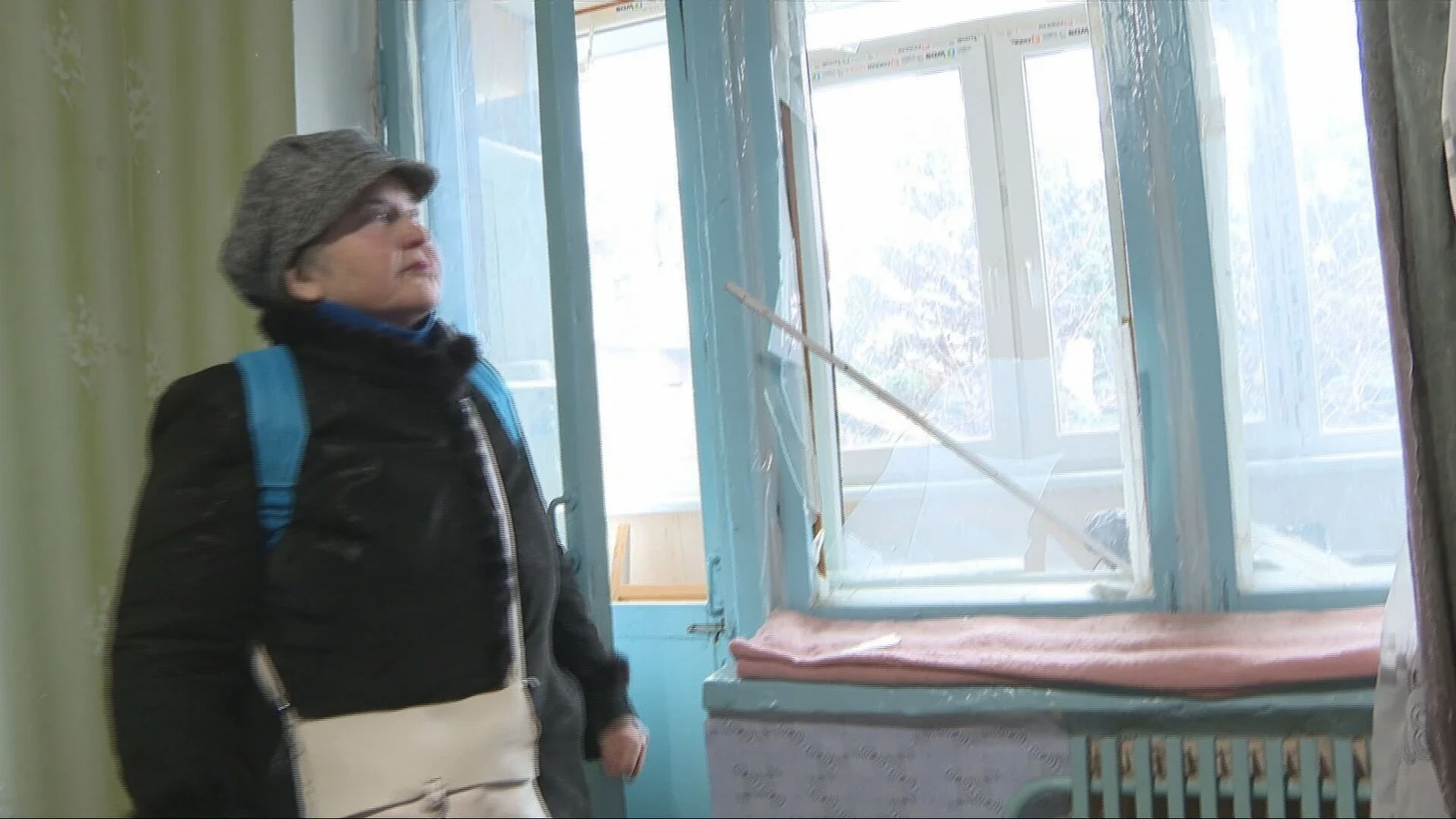
Margarita Belkina is 72, slight, and wrapped in a cardigan that could tell stories of other winters. She moved back to her second-floor studio in December after years as an internally displaced person in Kyiv. She had been away for almost four years, part of the great, ongoing shuffle of Ukrainians who left and returned depending on where the shells fell and where work and family tugged.
“I thought Saltivskyi was safe,” she said, tea black at the bottom of a chipped cup. “For four years nothing touched this district. I returned because my son was frightened for me in Kyiv — he said ‘come home, here is quieter.’ Now look.” Her hands folded, then unclenched. “If I must die, let it be here. This is my city, my people.” The words landed like a small flag planted in shattered glass.
Her pension, she told me, amounts to 3,000 Ukrainian hryvnia a month — roughly €60 by current conversion. “It does not buy warm blankets or peace of mind,” she joked, then cried. She had spent the night at her son’s apartment nearby and learned of the strike through a neighbourhood messaging group; at 3:52am a single text pulsed across screens: “Is everyone alive?”
Boarding up, handing out blankets
By late morning, municipal teams were at work gluing plywood over jagged window frames, while volunteers with the Ukrainian Red Cross handed out blankets, hot drinks, and small emergency kits. A young volunteer named Olena, who had the practised calm of someone who had seen too much, moved through the apartments with a clipboard.
“We don’t just give out bandages,” she said. “We listen. People need to name what happened. The practical help, the hot water, the glass repair — that comes later. Right now, they need to feel seen.” Her voice softened when she spoke of Margarita. “She says she regrets coming back but then — she says she will not be taken from her columns and her trees. That is the kind of stubbornness that keeps this city breathing.”
Community networks — a modern lifeline
In a war where the sky is the front, neighbourhood chat groups have become as vital as cellars. From the ministerial evacuation lines to private Telegram channels, residents warn one another of incoming attacks, share shelter locations, and coordinate help. “We text, we drive, we knock on doors,” said Yaroslav, a 34-year-old IT worker who runs a local group that maps which buildings have heating and which have broken windows. “It’s how we stay a neighbourhood rather than a list of victims.”
Nets on the motorway: improvisation against a new threat
On the outskirts of Kharkiv, beyond the rows of Soviet-era tenements and newly spruced shopfronts, construction crews are attaching something that looks like fishing net to poles above a major motorway. The nets are not ornamental; they are a crude but effective countermeasure to a more modern weapon.
Workers who have been on this job for weeks say they have already mounted some 18 kilometres of anti-drone netting on approaches to the city, inching their way closer to the centre. The goal: to snare fibre-optic tethered FPVs (first-person view drones), which travel along a long cable to evade electronic jamming and can carry explosives or act as guided munitions.
- What the nets do: catch or deflect the drone’s flight path, entangle the tethering cable, and prevent detonation on critical infrastructure.
- Who uses them: municipal construction teams, often working through curfew windows.
- How far the threat reaches: FPVs can travel up to around 40km, placing Kharkiv within range if launched from across the border.
“We are building a physical web across the roads,” said Oleg, a foreman with a liner’s tan and the bluntness of someone who measures danger in bolts and knots. “It’s slow, dirty work. It doesn’t stop everything. But it makes the enemy adjust, and every minute they adjust gives someone a chance to live another day.”
Weapons of a new era — Shaheds, FPVs, and urban life
The attack on the Saltivskyi block is a small thread in a larger tapestry: Kyiv, Kharkiv, and other cities have endured waves of drone and missile strikes since Russia’s full-scale invasion began. The Shahed — an Iranian-designed loitering munition — has been used in swarms to saturate air defenses. FPVs, often homemade or improvised, are a newer challenge: cheap, hard to jam when tethered, and lethal in their unpredictability.
“What we’re seeing is a democratization of aerial strike capability,” explained Dr. Kateryna Hrytsenko, a drone warfare specialist at a university in Lviv. “You no longer need a billion-dollar bomber to threaten a city street. You need a few hundred dollars’ worth of components and a plan. Asymmetric technologies redistribute risk but increase civilian vulnerability.”
Kharkiv, a city of roughly 1.2 million people that sits some 30 kilometres from the frontline and the Russian border, has paid this price. The geography that once made it a hub of industry and culture also makes it reachable by relatively low-cost weapons.
What does home mean now?
Walking down Saltivskyi’s avenues later that day, I saw a child on a scooter wobble past a window boarded with fresh plywood. A neighbour waved and shouted that there would be a community meeting to discuss repairs and who could take shifts at the basement shelter. A cafe owner had put out thermoses of coffee for volunteers and for anyone trying to fill out forms for state compensation.
These small civic acts — the plywood nailed at sunrise, the volunteer shifting a blanket, the chat group that asks “Is everyone alive?” in the middle of the night — are the threads by which a community stitches itself together in wartime. They are also the human answers to a question that will haunt readers far from Ukraine: what does it mean to rebuild while bombs still hang in the air?
Would you go back if it were your home? Would you risk the evenings when the sky, once taken for granted, can no longer be trusted? These are not theoretical queries for Margarita or the volunteers in Kharkiv. They are daily decisions wrapped in the ordinary business of life: pensions, hot water, a son’s worried call.
Beyond the block: what this moment says about our world
This strike, these nets, this elderly woman on a chipped-cup life — they are a microcosm of global shifts. The proliferation of drones puts cities at a new kind of risk. Aging populations, low pensions, and disrupted supply chains make recovery slower. Yet the improvised, often community-led responses show an enormous, often unreported human resilience.
On a practical level, Kharkiv’s experiment with nets, community messaging, and rapid volunteer response offers lessons to other cities learning to live under the shadow of remote warfare. On a moral level, it forces a question that should sit uncomfortably with all of us: as technology lowers the barrier to violence, who protects the places we call home?
Back in Saltivskyi, Margarita swept glass from her windowsill with trembling hands. “I cannot be ashamed of being afraid,” she said. “But fear does not get to own what I love.” She smiled, and in that small, fierce smile was the answer she had already chosen: to stay, to stitch, and to carry on.