Snow, Ash and the Strange Calm of Etna: Skiing on the Edge of Fire
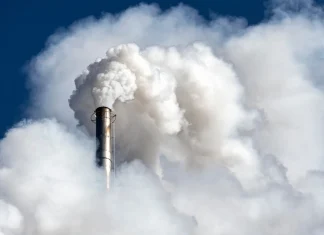
There is a particular kind of hush that descends on a place when two great elements meet: snow and fire. On the slopes of Mount Etna this Christmas, that hush was punctured by laughter, the crunch of skins on new powder and the distant roar of an ever-hungry mountain. Ski mountaineers threaded up crater-lined ridges in crisp, blue Sicilian air, stopping often to stare at columns of ash that puffed into the sky like ink in water.
“It’s very impressive to climb at this time,” said volcanological guide Giuseppe Curcio, breath condensing in the chill. “The contrast—the eruption, the snow, the sea just below—it’s an experience you don’t get anywhere else. It’s raw. It’s beautiful. It makes you feel alive.”
The image is almost cinematic: skiers in bright jackets against blackened pumice, silhouettes of small towns clinging to the mountain’s flanks, the Ionian Sea shimmering far below. Yet this is no postcard. For locals and scientists alike, Etna is not scenery; it is a living system that is watched, measured and negotiated with every day.
Alert Raised, but Life Goes On
Italy’s Department of Civil Protection raised the alert level for Etna from green to yellow yesterday, signaling the possibility of a rapid escalation of activity. Yellow is a cautionary shade — not immediate alarm, but an instruction to sharpen vigilance. The Civil Protection and the Istituto Nazionale di Geofisica e Vulcanologia (INGV) maintain continuous monitoring, with seismographs, gas sensors and thermal cameras trained on the mountain.
“Yellow means we expect more energetic activity is possible,” explained Prof. Marco Bellini of the INGV. “It’s our way of saying: pay attention. We might see stronger lava fountains, increased ash emission or changes in the seismic pattern. But it’s also important to avoid panic—most of Etna’s episodes are localised and do not impact populated areas drastically.”
Practical life, meanwhile, carried on. Catania Fontanarossa — one of Sicily’s busiest airports — reported normal operations, with officials cautious but confident that a minor ash fall would not immediately disrupt flights. “We monitor ash clouds continuously in coordination with meteorological services,” said Francesca Marino, head of airport operations. “Unless ash accumulation increases substantially, flights will operate as scheduled.”
On the Mountain: A Place of Rituals and Risk
Etna is a study in contradictions. It is at once a beloved backdrop for Sicilian identity and a threat that can rearrange life in an instant. The mountain rises to more than 3,300 metres and presides over eastern Sicily like an ancient, somewhat temperamental guardian. Its slopes are dotted with vineyards, citrus groves and tiny villages where stone facades and baroque church bells recall centuries of coexistence with fire.
At higher altitudes the landscape changes. Patches of black volcanic glass glitter underfoot. Steam curls from vents. The snowpack carries a fine dusting of ash that leaves a gray sheen on ski jackets and a faint metallic taste in the air. Guides like Curcio balance safety with the desire to share this rare scene.
“You know the risks,” he said. “But there’s also deep respect. We teach people where to go, how to read the mountain. We have radios, we check gas readings, and we never, ever take chances with sudden weather shifts or unstable slopes.”
Local Lives, Local Wisdom
In the towns beneath Etna, life is threaded with volcanic lore. At a small café in Nicolosi, a woman named Elena Russo wiped her hands on a flour-dusted apron and watched a postcard-perfect eruption feeds on her phone’s screen.
“We have ash on our balconies sometimes, and our grapes get a little dusting,” she said, smiling. “But the fruit here grows with the mountain. It makes the soil strong. My grandmother used to say: Etna gives and takes—mostly she gives.”
That duality—blessing and menace—defines the mountain’s relationship with communities. Farmers prize the rich, mineral soils. Tour operators thrive on the steady stream of hikers, photographers and skiers who come for the dramatic panoramas. Yet emergency plans and evacuation rehearsals are a routine part of civic life.
Why People Come: The Pull of Extreme Beauty
What draws skiers to skin up towards an active crater? Adventure, certainly. But there is also the curious human hunger to stand close to something vast and indifferent. The modern sport of ski mountaineering—where participants climb with skins and crampons, then descend untracked slopes—has found a fitting theatre on Etna.
“You feel tiny,” said Lucía Menendez, a visiting skier from Madrid, cheeks flushed from exertion. “And yet, you’re part of a story that’s older than any of us. It’s humbling.”
For photographers, the setting offers a rare color palette: basalt and snow, flame and sky, villages lit like constellations against the dark flank of the mountain. For volcanologists, every ash plume and lava flow is data, a clue to the mountain’s inner plumbing.
What to Know if You Go
- Mount Etna stands over 3,300 metres high and is among Europe’s most active volcanoes.
- Alert levels range from green (normal) to red (major activity); yellow indicates heightened vigilance.
- If planning a trip: book a licensed guide, carry a gas mask for ash, and check local advisories daily.
Broader Threads: Risk, Tourism and the Climate Question
Etna’s episodes are more than local news. They pose questions about how communities balance economic opportunity and environmental risk, how tourism can be both a lifeline and a liability, and how climate change may alter patterns of snow and eruption visibility.
Scientists are studying how warming winters could change Etna’s snowpack, with implications for both ecosystems and recreational seasons. Meanwhile, global air travel protocols have learned hard lessons from past ash crises—ash can damage jet engines and reduce visibility, so even marginal increases in ash emissions are taken seriously.
“Volcanoes like Etna force us to live with uncertainty,” said Prof. Bellini. “They remind us that geological time and human time are different. We have tools and science to reduce surprise, but not to eliminate it. That’s part of the human condition.”
Standing There—A Moment to Reflect
Watching the sunset throw long shadows over the ash-darkened slopes, it is hard not to feel small and lucky at once. The mountain’s eruptions are not spectacles in a theme-park sense; they are natural events that call for respect. Yet people still come—because there are moments here that alter a person’s sense of scale, of beauty, of what it means to live on a lively planet.
So, what would you do if you found yourself under Etna’s gaze? Step back and watch from the safety of the valley? Strap into skins and climb toward the steam and the sky? Whichever choice you make, the mountain will be there—speaking in ash and light, centuries old and profoundly alive.