When Soldiers Become Deputies: The Weight of the Insurrection Act on American Streets
On an ordinary weekday in Minneapolis, the hum of a city that has welcomed waves of newcomers for generations—Somali coffee shops, Hmong markets, and the steady pulse of blue-collar neighborhoods—was punctured by the sound of chants, press cameras, and the low rumble of federal vehicles.
“We were standing outside the mosque after Friday prayers,” recalled Amina Hassan, a Somali-American community organizer. “People were scared. Some mothers clutched their kids and whispered, ‘Is this how the country treats us now?’”
That fear, stoked by the threat of federal agents and the possibility they could be backed up by U.S. troops under a rarely used statute, is the moment Congress and the White House teased apart decades ago: the Insurrection Act. Once an abstract clause in legal textbooks, for many Americans it has become an anxious, immediate possibility—one that raises questions not just about immigration policy but about how we imagine the role of the military inside our borders.
What the Insurrection Act really does
At its heart, the Insurrection Act is a legal valve: it permits a president to deploy regular armed forces within the United States to restore order when governors cannot, or will not, do so. It is an exception to the Posse Comitatus Act of 1878, which otherwise bars the military from acting as local police. The threshold language—phrases like “insurrection” and “domestic violence”—gives presidents broad discretion, but also invites fierce debate about what level of unrest warrants soldiers on municipal streets.
“The Act is not a tourist statute,” said Professor Maria Delgado, a constitutional law scholar. “It’s meant for situations where the civil fabric is collapsing—rebellions, widespread violence. Using it in the context of civil protest or to back immigration enforcement is legally precarious and politically combustible.”
History as a guide—and a warning
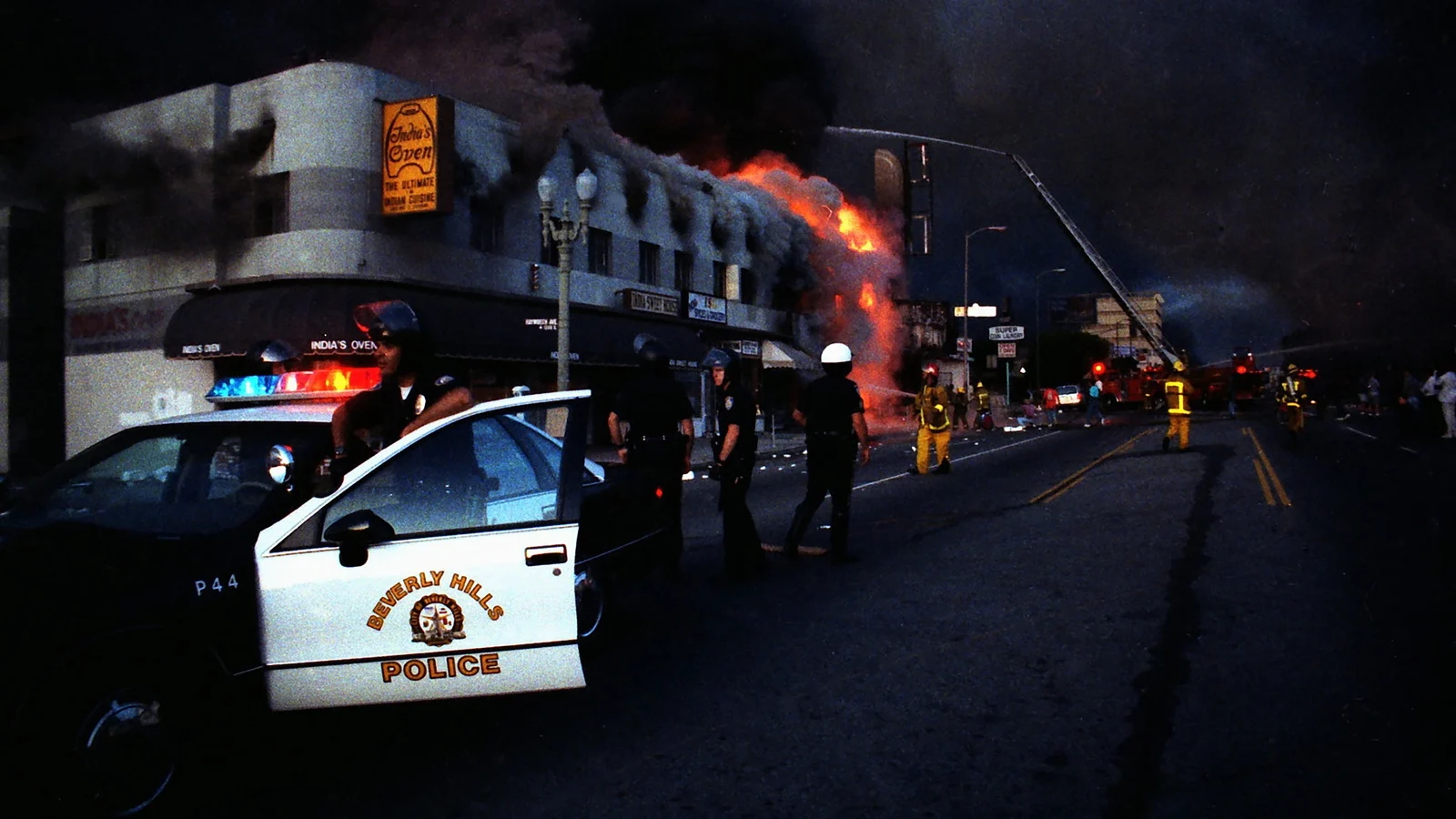
Americans have reached for this tool sporadically but symbolically. The first president to invoke federal military authority was George Washington, grappling with state-level rebellions in the early republic. Abraham Lincoln relied on such powers during the Civil War. In the 20th century, presidents have used federal force to enforce civil rights and restore order after major urban unrest—most notably in 1968 after the assassination of Martin Luther King Jr., and in 1992 following the Los Angeles riots.
- Late 18th–19th centuries: Presidents used federal troops to preserve union authority and quell armed uprisings.
- 1960s: Federal force deployed during civil-rights era unrest and riots.
- 1992: Troops called to Los Angeles after widespread unrest.
Those historical moments are not identical to the current flashpoints, but they illuminate a pattern: when social grievances, racial tension, and public disorder intersect, Washington’s response is never merely about law enforcement. It’s about signaling who controls the narrative of public order.
Faces in the crowd: how communities are feeling
In neighborhoods near the sites of immigration sweeps, the tension feels personal. “I’ve lived here 20 years,” said Jorge Ramirez, who repairs bicycles on a corner near where federal agents conducted a raid. “We work, we pay taxes. But now my neighbor avoids going to the grocery because she fears being stopped. That fear changes everything.”
Local business owners speak of empty pews at Saturday markets, fewer children playing in parks, and a shift in how people move through the city. “After dark, even the lights on Main Street feel different,” said Lila Nguyen, who runs a small Vietnamese bakery. “People come in, buy quickly, and go. The city has become smaller in our heads.”
Voices from government and the military
From the other side, some officials argue that federal intervention is a tool to safeguard rule of law. “When state authorities are overwhelmed, or when targeted operations are met with violence, the federal government has a duty to act,” said an administration official who spoke on the condition of anonymity. “That can include deploying military assets if necessary to protect officers and ensure the law is carried out.”
Retired General Thomas Erickson, who led domestic-support missions in natural disasters, warns of the practical and ethical pitfalls. “Soldiers are trained to defeat enemies, not manage civil disputes,” he said. “Putting them in the middle of political conflicts risks eroding public trust in the military, and that loss lingers long after the last convoy leaves.”
Legal and civic implications
Legal experts point to two interlocking concerns: the erosion of civil liberties and the precedent it sets for future administrations. The Posse Comitatus Act was crafted out of a historical memory of military overreach; the Insurrection Act is the narrow escape hatch. Stretching that hatch to cover immigration enforcement could blur lines that many believe should remain clear.
“Once troops are used to enforce administrative policies, it’s hard to put the genie back in the bottle,” Delgado said. “We must ask: who decides when a protest is an insurrection? And how are marginalized communities affected by the presence of armed forces in their neighborhoods?”
Numbers, scale, and the national picture
Immigration enforcement agencies have carried out thousands of arrests in recent years, and public demonstrations in several cities have sometimes turned tense or violent. Scholars at public-policy centers estimate that the Insurrection Act has been invoked roughly three dozen times in American history—a small number, but often at moments of deep national fracture.
These are not mere technicalities; they shape how people live. Consider that metropolitan areas with diverse immigrant populations—cities like Minneapolis–Saint Paul—are also places where trust between government and community is fragile. Once military boots cross municipal boundaries, recovery of trust will be arduous.
The bigger questions
When you hear about federal troops answering to domestic policies, what do you imagine for the social contract that binds a nation? Is this a corrective—a last resort that prevents chaos—or a dangerous normalization of force against civilians whose grievances may be rooted in systemic neglect?
As the debate rages, it’s worth stepping into the human landscape for a moment: the mosque elders, the night-shift nurses, the teenagers who learned to play soccer in a field now shadowed by extra patrols. They are not abstractions. Policy decisions ripple into daily routines, into whether a parent feels safe taking a child to the dentist.
What comes next?
Expect court challenges, political theater, and earnest community organizing. Some governors have signaled resistance to federal interventions; others have opted to cooperate when local law enforcement says it lacks capacity. Meanwhile, civil-society groups are mobilizing legal aid, hotlines, and rapid-response networks to support those affected by sweeps.
“This is about preserving our institutions,” said Reverend Elena Cruz of a community ministry. “If we accept soldiers in our streets for disputes that could be settled through law and civic engagement, we are deciding to change the terms of democracy.”
So as you read headlines about statutes and executive decisions, remember the people on the ground—the vendors, the parents, the kids—whose lives will be the measure of any policy’s success or failure. What kind of country do you want to live in when civic disorder meets an armed response? The answer will shape the stories we tell for generations.