Smoke on the tarmac: a moment that said everything
He jogged like a man trying to outrun an awkward conversation. There was a cigarette pressed between his lips, a half-smile tugging loose as cameras snapped. Lars Løkke Rasmussen, the seasoned Danish foreign minister and onetime prime minister, offered a lighter and a pack across the short distance to Vivian Motzfeldt, Greenland’s minister of foreign affairs. For two minutes, journalists held their breath; for the world, the clip was perfect—small, human, and wildly revealing.
It was the kind of scene that lodges in the imagination: a cigarette as diplomatic balm, a tiny gesture broadcast across continents. But the moment was also the visible edge of something far less quaint—a diplomatic misfire that would ripple from Nuuk to Washington and into the capitals of Europe.
The conversation that didn’t match the headlines
Inside, a meeting with senior U.S. officials had gone sideways. On one side, Denmark believed it was addressing specific American security concerns—overflight corridors, base access, assurances about Russian naval movements. On the other, the White House left a different scent in the air. By the following day, the dialog had been recast on an official White House feed: the working group, they said, would examine how the United States might acquire Greenland.
Imagine waking up to a bulletin that frames your island not as a people with ties, traditions and governance, but as an object of ownership. That is the jolt Greenlanders felt. “We were not offered—only discussed,” Motzfeldt would later tell reporters, her voice measured but stunned. “What happened in that room is not what was promised.”
Two understandings, one table
Misreadings happen in diplomacy all the time, but rarely do they involve the suggestion that a friendly superpower might purchase territory. The divergence in interpretations—security cooperation versus a discussion about transfer of sovereignty—reverberated not only through press briefings but through living rooms and fishing harbors across Greenland.
Why Greenland matters now
To anyone who has seen a map, Greenland is immediately arresting. It is the world’s largest island, roughly 2.16 million square kilometers of icy expanse—bigger than Mexico—and yet home to only about 56,000 people. Nearly 80% of the land surface wears a permanent ice sheet. For a century, its strategic value has hinged not on population centers but on geography: proximity to North American and European air and sea lanes, the presence of long-standing military infrastructure, and, increasingly, the shifting arithmetic of climate and resources.
Climate change is rewriting the Arctic’s playbook. Sea ice is retreating, new maritime routes are opening, and the thaw has put long-buried mineral and hydrocarbon prospects back on geopolitical radar. All of this feeds interest from great powers. But what looks like a strategic windfall to distant capitals is a daily reality of disruption for Greenland’s Indigenous communities—fishing patterns altered, coastal hamlets feeling the first licks of the ocean where ice used to stand guard.
Europe draws a line in the snow
What followed the Washington drama was not mere commentary: it was action. Initially, European officials floated the idea of a NATO mission to the Arctic—an effort ostensibly to reassure Washington that northern security was being taken seriously. The subtext was always clearer: deployment by NATO would make any unilateral American move fraught, forcing the U.S. to confront allied forces on the ground.
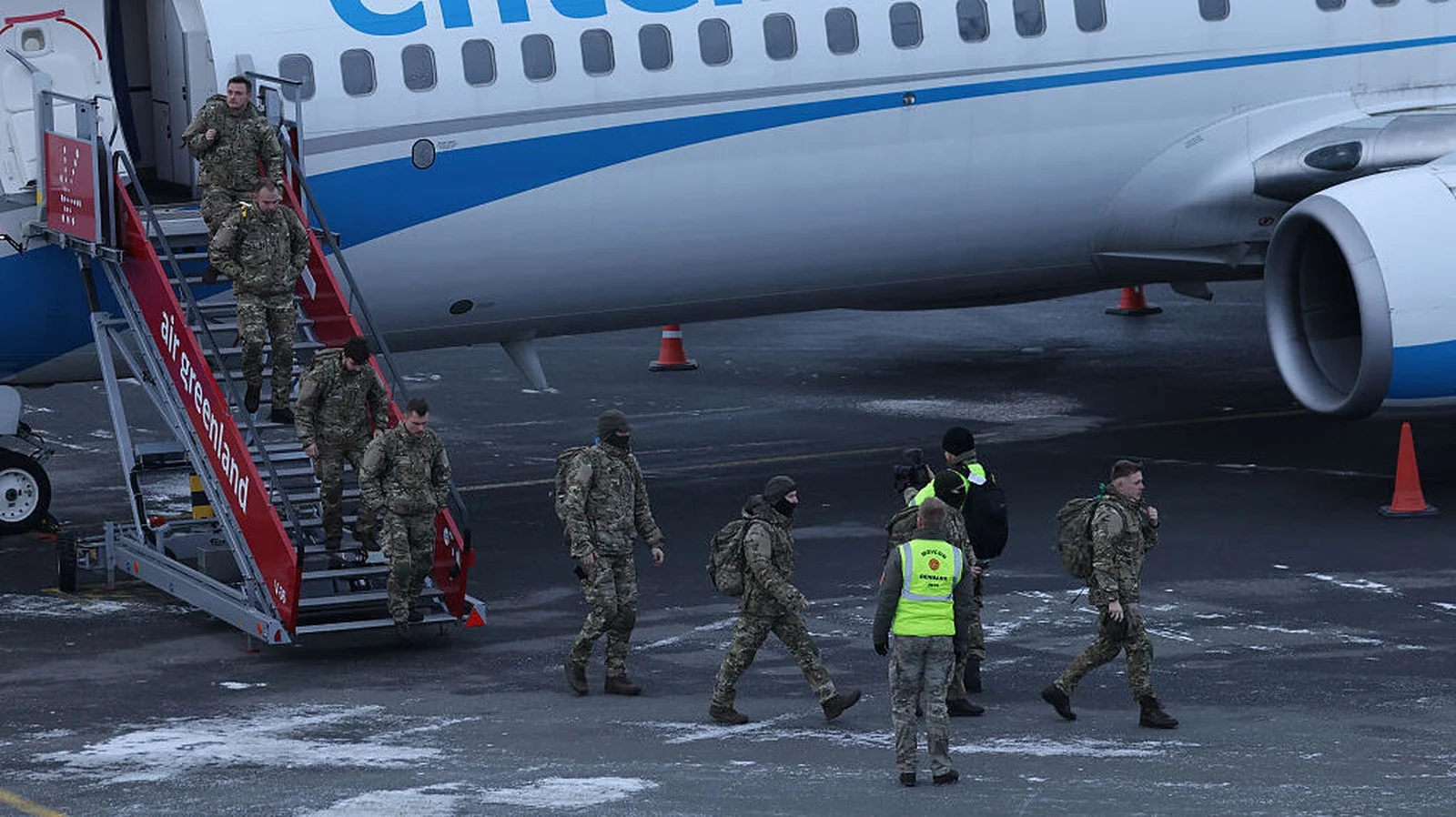
When that scope proved politically cumbersome—NATO decisions require unanimity—the response morphed. Denmark, invoking its duties within the Kingdom, announced “Operation Arctic Endurance.” Within days, a handful of European militaries were on Greenlandic soil. France and Germany each sent roughly a dozen personnel; Sweden, Norway and the Netherlands dispatched small officer contingents. Britain, true to form, sent a single officer—enough for a gag on social media, but symbolic nonetheless.
Numbers alone underplay the message. These were not tourists with rucksacks; they were planners and liaison officers, boots connected to doctrine, standing beside Greenlandic authorities. “It was never about parades,” an unnamed French official told me. “It was about reminding a friend—and a global audience—that sovereignty and partnership cannot be treated as commodities.”
Voices from Nuuk and beyond
On a grey afternoon in Nuuk, I sat at a small café where the coffee is strong and conversations are stronger. A fisherman, his hands still smelling of diesel, put it simply: “We do not need someone to come here and tell us who we are,” he said. “We need to be at the table.”
An elder in Qaqortoq, wrapped in a patterned parka, recalled stories of lands long negotiated by others. “Our fathers and mothers watched flags change before,” she said. “We learned early that maps are not neutral.”
And then there was the pragmatic voice of an economist at the University of Greenland: “Yes, there are resources. But they are largely under ice now, and extraction would be mammoth and controversial. The immediate security needs are simpler—search and rescue, weather stations, and predictable access arrangements.”
Old treaties, new anxieties
Many analysts pointed to existing arrangements: a decades-old defense framework gives the United States extensive access to Greenlandic bases, and Denmark has long been responsible for the kingdom’s external affairs and defense. “If the concern is security, you already have mechanisms in place,” Senator Chris Coons, on a bipartisan delegation to Copenhagen, observed bluntly. “This isn’t a problem that needs to be solved by treaty swaps.”
Yet the episode exposes a deeper tension: what do allies do when the agent of potential threat sits in the chair they usually call a partner? How do you deter a powerful friend who speaks as if geography should follow ego? One U.S.-based scholar I spoke with summarized it: “This is less about runways and more about the psychology of possession—territory as trophy rather than theater of cooperative security.”
Questions for readers, and for the future
Ask yourself: when does strategic interest become imperial impulse? When does a map become a manifesto? These are not merely academic questions. They touch on the rights of Indigenous peoples, the resilience of small polities, and the limits of alliance politics.
Greenland’s crisis of the moment is a microcosm of broader global dynamics. Rising temperatures, new shipping lanes, and the scramble for resources have made the Arctic a stage for 21st-century geopolitical contest. The island’s small population—many of whom live by subsistence fishing and hunting—suddenly finds itself at the crossroads of climate change, global capitalism, and great-power rivalry.
Key facts to remember
- Greenland: ~2.16 million km²; population ~56,000.
- Ice sheet covers roughly 80% of the island.
- Existing defense arrangements already give the U.S. access to some Greenlandic bases.
- The Arctic is warming faster than the global average, accelerating interest from states and corporations.
What comes next?
Diplomacy can still steer us away from absurdities. A working group—that most fragile of diplomatic instruments—might yet become a forum for clarity: for clearly defined security guarantees, for respect of Greenlandic agency, for a shared Arctic governance architecture that favors cooperation over conquest.
But clarity requires listening. It requires recognizing that sovereign people, not commodity maps, must be the unit of decision. “We will defend our territory,” a senior Danish official told the press in terse terms. “That is not open to debate.”
Whether that defense will be a line in the snow or a new kind of partnership remains to be seen. For now, the image of two ministers sharing a cigarette outside the Danish embassy holds more truth than a thousand diplomatic briefs: fragile human connection amid geopolitical theater. The question is whether that human connection can be multiplied into a politics that resists the old fascinations of possession—and instead centers people, place, and the planet.
So I ask you: when the map calls something ours, do we have to answer? Or can we learn to look, instead, for what a community needs to survive and thrive?