In Yaoundé’s July heat, a global system trembles
There was a humidity in Yaoundé that morning that felt like a reminder: the world’s weather — political, economic, climatic — is changing. Under a sky the color of pressed linen, trade ministers from 166 nations filed into a conference center ringed by flamboyant trees and the distant hum of motorcycle taxis. They carried briefcases and worries. They came to talk about a system many once took for granted: global trade.
“This is not an ordinary ministerial,” said one diplomat from West Africa as she adjusted her scarf. “We’re not just negotiating tariffs. We’re negotiating the shape of the future.”
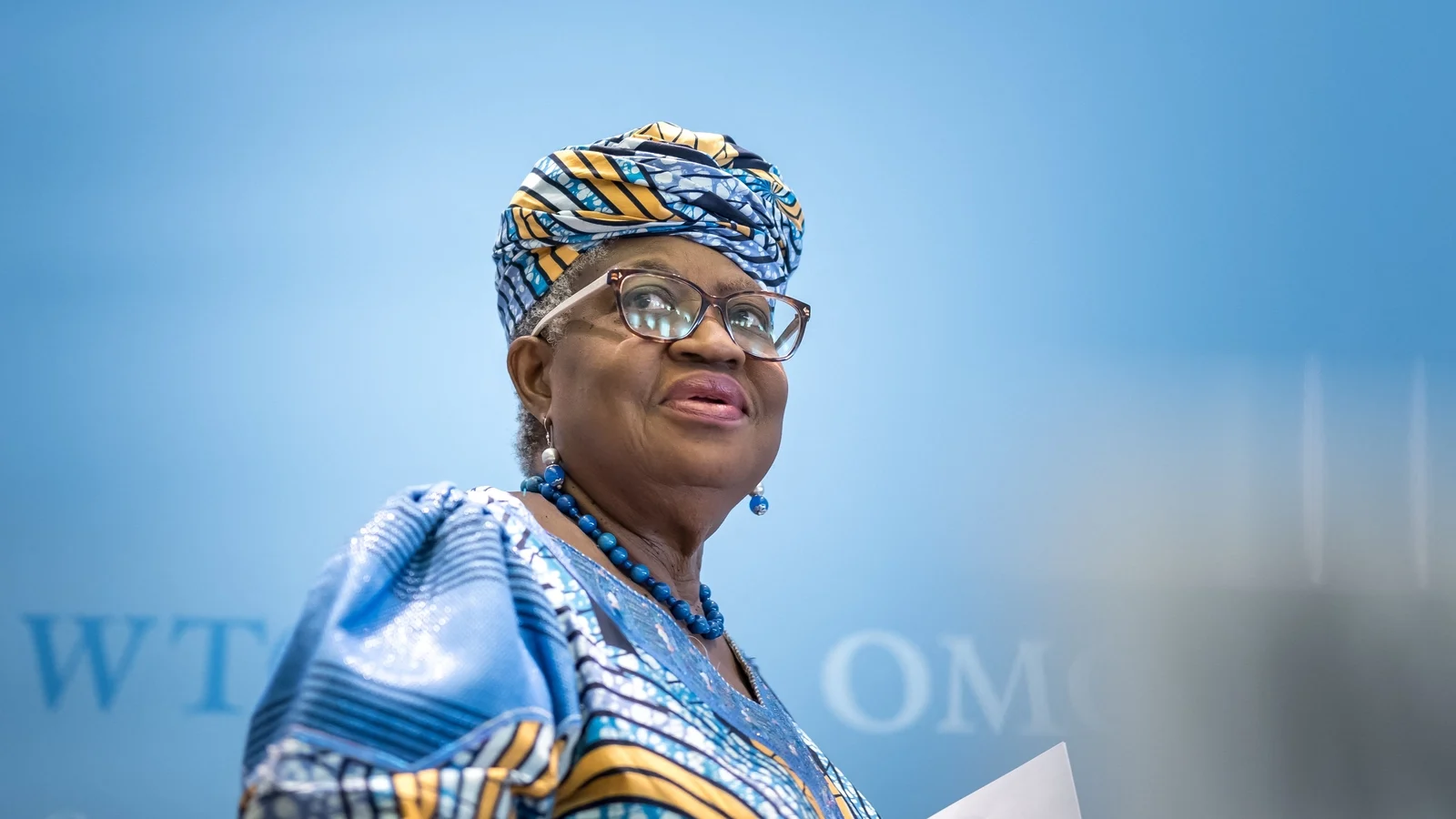
What greeted them was stark. From the podium, World Trade Organization Director-General Ngozi Okonjo-Iweala issued an alarm she said should be impossible to ignore: the global trading apparatus is experiencing disruptions “the worst in the past 80 years.” The words landed like a thunderclap, cutting through the polite hum of ministers and the flash of camera phones.
Why Yaoundé matters
This is only the second WTO ministerial held on African soil — Nairobi was the first in 2015 — and choosing Cameroon’s capital felt deliberate. “Africa is the continent of the future,” Okonjo-Iweala told the assembly, her voice equal parts challenge and invitation. “If we are to rebuild trust in multilateralism, this is the place to do it.”
Walking out of the conference center later, you could sense the symbolism: outside, a street vendor arranged ripe mangoes in a pyramid. A bilingual official from Cameroon, smiling but weary, pointed to the crowds and said, “Trade is not abstract here. It is how my neighbor earns a living and how her child goes to school.”
Fault lines: geopolitics, climate and technology
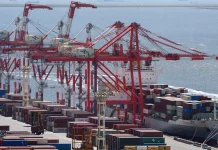
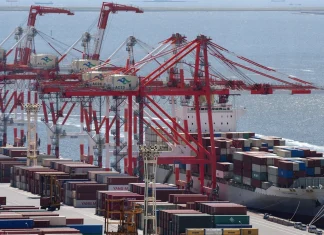
The conference is happening against a jagged backdrop. Conflicts from the Middle East to Ukraine and Sudan have jostled routes, raised premiums on shipping insurance, and sent spikes through the prices of energy, fertilizers and food. Supply chains that once flowed like clockwork now stutter or divert, forcing companies to rethink everything from sourcing to storage.
“We used to assume predictable sea lanes and steady supplies,” said a logistics executive who asked not to be named. “Now that assumption is fractured.” He tapped a tablet showing near-real-time shipping delays and added, “Companies are paying for insurance they never thought they’d need.”
For many nations, the sting is immediate. Farmers in North Africa and the Sahel, reliant on imported fertilizer, face narrower margins and lower yields. Island states dependent on fuel imports watch tankers with thinly disguised alarm. The WTO’s membership — 166 countries — is trying to thread a needle: keep trade open while protecting national security, jobs, and political stability.
The erosion of multilateral faith
Okonjo-Iweala did not mince words. “We cannot deny the scale of the problems confronting the world today,” she said, cataloguing pressures that range from strategic rivalry between major powers to an accelerating climate crisis and the dizzying speed of technological change.
Her plea was not only practical; it was moral. Multilateralism — the post-World War II architecture built to prevent the errors of the past — is being loudly questioned. Protectionist instincts, export controls, and unilateral sanctions are all part of a creeping fragmentation that threatens smaller economies the most.
“When the system is fraying, the poorest pay first,” said a development economist at a London university. “Trade has been a ladder out of poverty for many countries. If that ladder collapses, the consequences will be social, not just economic.”
Markets jitter as the Middle East casts a long shadow
It’s not only trade negotiators who are watching these developments. In Tallinn and Frankfurt, officials at the European Central Bank—tasked with guarding financial stability for a currency area of 350 million people—have issued blunt warnings. Luis de Guindos, the ECB’s vice-president, suggested that the recent conflicts in the Middle East could spark “systemic stress” in markets already tense from high asset valuations and concentrated risk in non-bank finance.
“This conflict could trigger the unravelling of interconnected vulnerabilities,” de Guindos said. The concern is straightforward: shocks to energy supplies and shipping lanes can ripple through commodity markets, raise inflation expectations, and put pressure on credit markets where private lending has ballooned in recent years.
Christine Lagarde, the ECB president, offered a measure of calm, noting there are reasons to hope a fresh inflationary wave will not match the severity of 2022. Yet traders have begun re-pricing the likelihood of interest rate moves, and bond markets, equities, and commodity benchmarks are all sensitive to headlines about the Strait of Hormuz — an artery that normally carries about a fifth of the world’s seaborne oil and gas.
What’s at stake
Dozens of ministers, negotiators, academics and entrepreneurs convened here are speaking, privately and publicly, about three big risks:
- Fragmentation: Bilateral blocs and unilateral measures that undermine predictable rules.
- Financial contagion: A shock to energy or shipping that spills into markets already stretched by complex, opaque credit structures.
- Food and energy insecurity: Disruptions to fertilizer, gas and crude that reverberate from ports to pantry shelves.
“We’re not in a drill,” said a West Asian trade official. “Every decision we take here will affect supply chains and the cost of living for hundreds of millions.”
On the ground in Yaoundé: voices you won’t hear in the briefings
At a cafe near the conference venue, an elderly Cameroonian teacher, Father Emmanuel, sipped coffee and watched delegates cross the square. “My students ask me why countries argue,” he said. “I tell them: because they have different histories, different fears. But the classroom is where we remember we share the same future.”
A young entrepreneur, Nouhoua, who runs a small agri-tech start-up in Douala, described the paradox: “Global trade disruption is a threat but also an opportunity. If markets fragment, local supply chains can grow. But we need access to technologies, financing, and predictable rules to scale. Without that, we’re stuck.”
Questions to sit with
As you read this from wherever you are — a coastal town, a mountain city, a commuter train — ask yourself: what does a more fragmented world look like for you? How much price risk on your grocery bill would make you look twice at global trade as a policy priority?
The Yaoundé gathering is more than a negotiation. It is an argument about whether humanity will face shared challenges collectively or retreat into narrower, short-term protections. It is about whether trade will be used as a tool for resilience or as a cudgel in geopolitical contests.
After the speeches: the hard work begins
Ministers will leave Yaoundé later this week with pages of communiqués and perhaps some narrow agreements. But the real test won’t be the press conference or the handshake photos. It will be the follow-through: rebuilding trust, clarifying rules for emerging technologies, and creating safety nets for countries most exposed to shocks.
“We can stitch this back together,” Okonjo-Iweala said, not with boastfulness but with craftsmanship. “But it will take courage, creativity and the willingness to see others’ vulnerabilities as part of our own.”
That is the challenge facing not just negotiators in Yaoundé, but citizens everywhere: to treat global trade not as an abstract statistic but as a chain whose links are shared. Will we patch the links, or will we let them fray? The answer will define the decade ahead.