A fragile filigree of peace: what the Mar-a-Lago talks mean for Ukraine
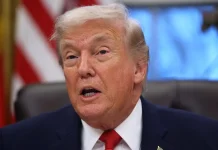
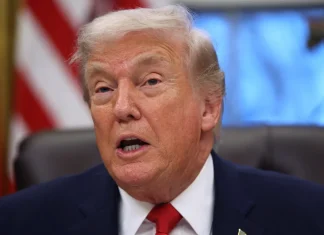
Sunlight skimmed across the Atlantic as two leaders — one in a navy suit pressed to perfection, the other in a simple, dark coat that has become global shorthand for wartime leadership — sat under the palms of Mar-a-Lago and spoke about ending Europe’s most brutal war in decades.
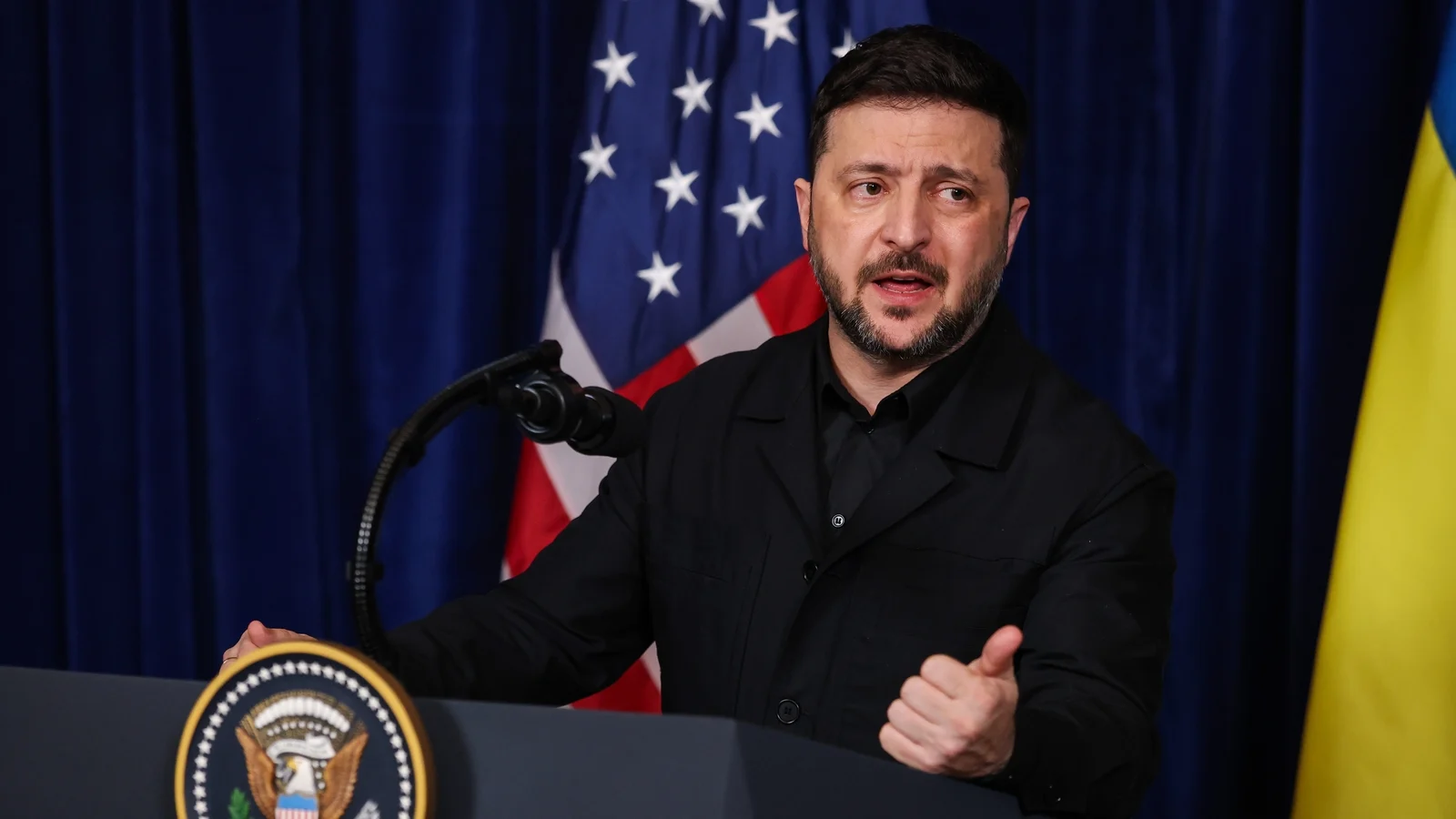
It was a scene that felt almost cinematic: flags, cameras, the distant wash of ocean. Yet beyond the choreography lay hard, gritty questions that will decide whose homes stand and whose maps are redrawn. Volodymyr Zelensky told reporters he wants Kyiv to host a follow-up meeting of advisers from Europe and the United States “in the coming days” to craft the legal and security scaffolding of any deal. The American president said the two were “getting a lot closer, maybe very close” to an agreement — but added a sober caveat: Donbas remained a thorny, unresolved issue.
Sunshine, power suits — and the echo of missiles
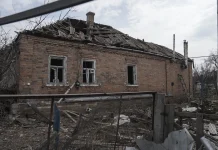
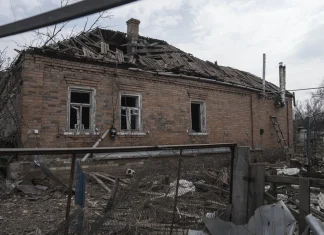
It’s tempting to let the setting soften the story: an ornate resort, marble halls, and well-timed smiles. But while cameras rolled, Ukraine’s cities were not untouched by war. The weekend before the meeting, Russia launched hundreds of missiles and drones across the country, cutting heat and electricity for thousands in Kyiv and beyond — a stark reminder that talks occur against a background of real suffering and constant risk.
“You can meet in the most beautiful room in the world,” said Olena, who runs a small bakery near Maidan in Kyiv. “But when our ovens are cold, and my customers are lighting candles to eat bread, that beauty means little.”
What was actually on the table?
Leaders described movement on two of the toughest knots: security guarantees and the future of Donbas. Each side used different language. Mr Zelensky spoke of an agreement being reached on security guarantees; the U.S. president was more cautious, saying negotiators were about “95% of the way there.” European leaders, notably France’s president, also signaled progress, with a “Coalition of the Willing” — nations pledging concrete contributions to Ukraine’s defense — expected to meet in Paris in early January to nail down details.
But what does “security guarantees” mean? For Kyiv, it must be more than platitudes — it must translate into credible deterrence against future aggression, economic support and rapid military aid if hostilities recur. For others, it looks like a mix of bilateral treaties, multinational forces, and financial pledges. “Words on paper are not enough,” said Dr. Miriam Alvarez, a security analyst at a Washington think tank. “Ukraine needs mechanisms: who responds, when they respond, and with what force and legal authority.”
The Donbas dilemma
If security guarantees are the scaffolding, the Donbas is the foundation everyone fears might crumble. Russia insists on full control of the Donbas; Kyiv insists on freezing the map at front lines it holds today. The United States, trying to carve a middle path, has floated the idea of a special free economic zone in territory if Ukrainian forces withdraw — an idea heavy with complications about sovereignty, law, and enforcement.
“This is not a chessboard where you can move a pawn and hope everyone applauds,” said Anatoly, a volunteer medic from Kharkiv who lost his brother near Donetsk last year. “People died for every inch. You cannot sell an inch of land like a plot at auction.”
- In 2014 Russia annexed Crimea and since the full-scale invasion began in 2022, Russia has taken control of significant areas across eastern and southern Ukraine.
- Estimates cited in recent reporting put Russian control at roughly 12% of Ukrainian territory overall, including large portions of the Donbas.
Zaporizhzhia, nuclear fears, and shared control
Even the fate of a single power station became a geopolitical flashpoint. U.S. negotiators proposed shared control over the Zaporizhzhia nuclear plant as part of wider guarantees — a sign of the extraordinary technical and symbolic questions on the table. The International Atomic Energy Agency brokered ceasefires to permit power line repairs and reduce the risk of a catastrophe. “We are working to keep nuclear sites safe — that trumps politics if we are honest,” one IAEA official said on condition of anonymity. “A misstep there would harm everyone.”
Mr Trump said progress is being made and hailed the fact that the plant had not been bombed recently. Moscow, for its part, spoke approvingly of these talks; Kremlin aides praised the U.S. president’s mediation efforts on social media.
Voices of skepticism
Not everyone in Kyiv or in the rooms where decisions will be ratified is convinced. Ivanna Klympush-Tsintsadze, a Ukrainian MP and chair of the committee on EU integration, said she felt no closer to peace after the Florida talks. “The optics were positive,” she told a morning radio show, “but I don’t see the substance that would prevent tanks from rolling again.”
Her worry captures a wider unease: any agreement that looks like territorial concession could fracture Ukrainian society and potentially fail in parliament — or worse, be rejected by the public in a referendum, which President Zelensky says would be required for any deal involving territory.
Beyond two men in a room: international dynamics
The meeting in Florida was both bilateral theater and a wider diplomatic event. European leaders dialed in. The EU’s 60-day ceasefire proposal has been debated across capitals. France promised to host a coalition meeting. The United Kingdom and other NATO members stressed the importance of “ironclad security guarantees,” language meant to reassure Kyiv and domestic audiences alike.
There are also questions about follow-through. Who pays for reconstruction? Who guarantees the guarantees? And what happens if Russia’s advance continues on the battlefield — as Moscow has recently claimed new territorial gains?
What comes next — and why it matters to the world
In the days ahead, Zelensky wants Ukraine to host advisers to formalize the legal texts. That may sound bureaucratic. It is not. That drafting room will be the place where promises harden into commitments — where phrases become enforceable obligations, where timetables are set, and where the rights of millions are either protected or put at risk.
So what should we watch for?
- Clarity on what “security guarantees” looks like in practice — troop deployments, rapid response clauses, or financial pledges?
- A clear, verifiable plan for Zaporizhzhia and other critical infrastructure that reduces nuclear and civilian risk.
- Transparent mechanisms for any changes to front-line maps, including who oversees transitions and how civilians’ rights are protected.
“Peace cannot be a pause that leaves the seeds of future war,” Dr. Alvarez said. “If it is to hold, it must change incentives on the ground.”
For ordinary people in Ukraine, this is not abstract. It is the difference between returning to a damaged home or never returning at all. It is the electricity that keeps a hospital warm, the school that can reopen, the fields that may one day sprout wheat again. For the rest of the world, the stakes are geopolitical: precedent about territorial integrity, nuclear safety, and the rules that govern international conflict.
As the palm trees kept their patient watch in Florida and power grids flickered thousands of kilometres away, one question hung over the proceedings: can stitched-together guarantees and diplomatic good will survive the pressures of the battlefield? If you were in Ukraine, what would you demand from any treaty that claims to be “peace”?
The answers will determine not just when the guns fall silent, but whether, when they do, quiet will mean safety or merely a lull before another storm.