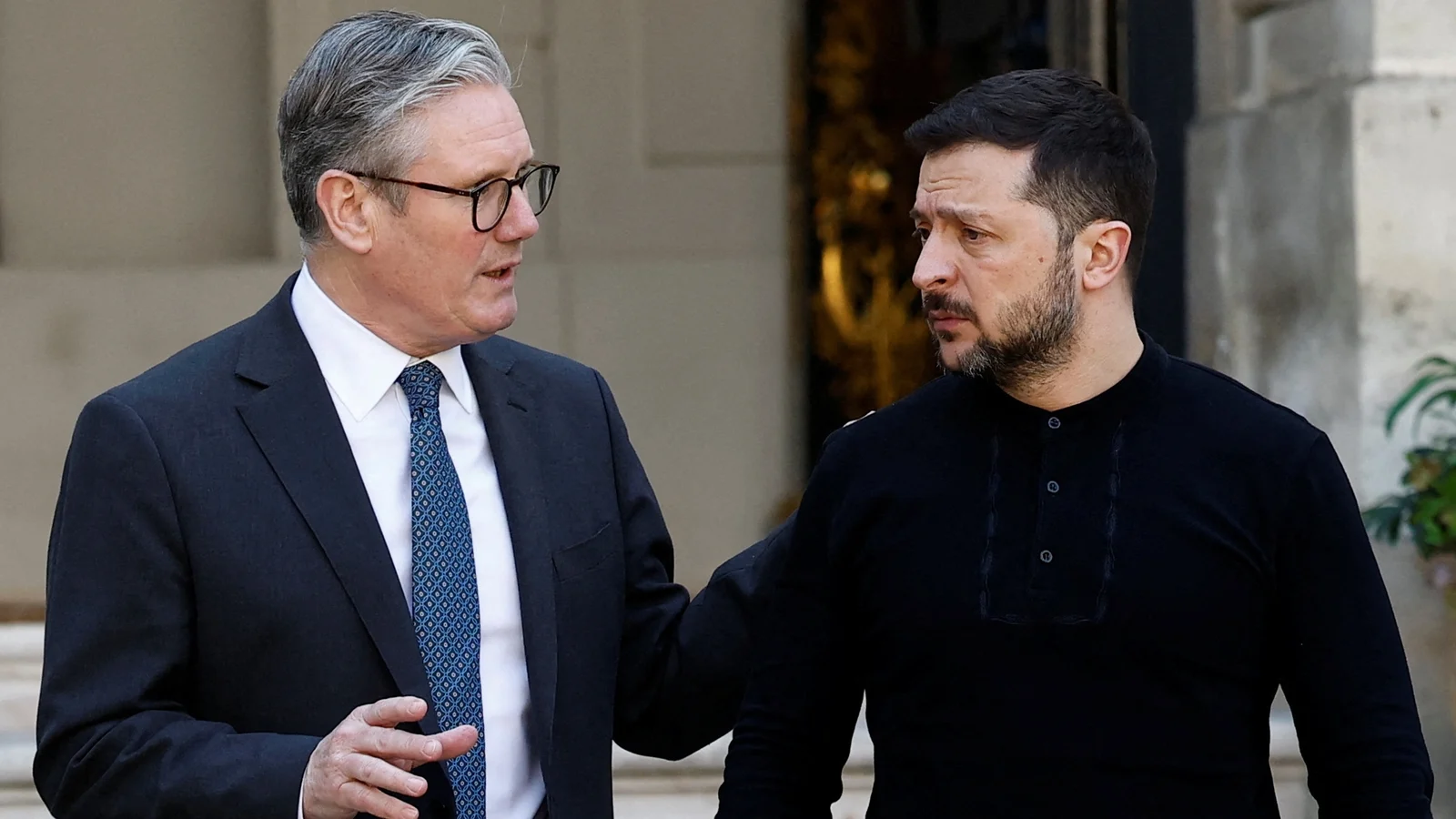
In London’s gray light, a fragile diplomacy takes center stage
The rain sluiced off the polished black cabs and the flags along the Mall, as a small convoy eased toward Downing Street. The spectacle was not the usual pomp; it felt quieter, taut with an urgency that no single handshake could dissolve. Today, Kyiv’s president arrives in London to sit across a table from European leaders who are trying to stitch together a roadmap out of a war that has stretched nearly four years and scarred a continent.
What you see on television—flashes, podiums, tightly choreographed smiles—only hints at the quieter work that must be done. Behind the cameras are negotiators with graphs, maps and war diaries; behind the teleprompters are families who have lost homes, farmers who cannot sow fields, and soldiers who wait in muddy trenches. This meeting, convened by Britain and attended by Germany and France, is meant to turn fractured proposals into something Ukraine will accept and Russia might consider. It’s a narrow, dangerous corridor to walk through.
From Miami to London: a diplomatic relay
Just days earlier, delegations from Kyiv and Washington had held intense talks in Miami. They ended without a public breakthrough, but not in failure—at least not yet. Kyiv’s negotiators and their American counterparts agreed to keep talking. “We came home with homework,” one Ukrainian aide told me. “The work is technical, painful and political. Everyone must swallow a lot.”
Those Miami discussions were shadowed by a controversial U.S. proposal that has rippled across capitals. At its heart: a deal that would ask Ukraine to cede control of certain territories it has been unable to reclaim on the battlefield in exchange for security guarantees that stop short of NATO membership. The idea has provoked furious debate in Kyiv and among allies.
“We’re being asked to trade land for promises,” a Kyiv-based military analyst said. “Promises matter—but they are not the same as boots, tanks, or the legal protection of an alliance.”
What’s on the table—and what’s not
Details are difficult to pin down publicly, as much of the negotiation remains classified and intensely political. Broadly, the U.S. framework as reported would offer Ukraine a set of security guarantees—multilateral guarantees, sanctions enforcement mechanisms, and stationing of defensive assets in neighboring NATO countries—but would stop short of admitting Ukraine into NATO proper. Some versions of the plan suggest air defense assets or fighter jets could be based in Poland to act as a forward shield.
For many Ukrainians, the idea of surrendering territory is almost unthinkable. For some Western leaders, the calculation has been: is a painful compromise better than an endless, grinding war that costs more lives? It’s a moral calculus and a strategic one. “We must be honest about the trade-offs,” said a Western security official who asked not to be named. “This is not a silver bullet. It’s a risk-management exercise.”
Voices from the ground: fear, defiance, fatigue
Back in Kyiv, the mood is a knot of pride, suspicion and exhaustion. A café owner in Podil who’s been hosting veterans for tea and conversation told me, “We’ll take peace. But not on terms that erase our future. My brother fought in Donbas. He cannot imagine that land being handed away like a bill on a table.”
At the same time, Kyiv’s officials insist they are negotiating in good faith. “We want peace,” a senior Ukrainian negotiator said. “We also want a peace that allows our children to plan their lives—without checkpoints and without air alarms. That requires guarantees. Words alone aren’t enough.”
And outside the capitals, there’s blunt concern. “This is not just a bilateral problem,” said a London-based European policy expert. “If Moscow is rewarded for conquest, the norms that keep Europe stable are shredded. That’s why even countries not directly involved are watching closely.”
The elephant in every room: politics at home and abroad
Diplomacy rarely happens in a vacuum. The U.S. debate over the plan has been noisy and inconsistent. Since returning to office, President Trump has alternated between outreach to Moscow and demands that Kyiv show gratitude for American engagement. The back-and-forth has left Ukrainian leaders weary of mixed signals.
At home in the United States, lawmakers and commentators juggle competing priorities—energy markets, sanctions, the political optics of ceding ground, and the strategic goal of containing an emboldened Russia. Across Europe, the calculus is equally complex: maintaining solidarity with Ukraine, protecting domestic politics, and preventing a wider conflagration.
“Leaders talk grandly about peace,” said a French diplomatic aide. “But political incentives constrain them. Electoral calendars, energy bills, migration—these things shape what peace they can realistically promise.”
What the next steps look like
Here’s what diplomats say needs to happen next:
- Technical mapping: Clear, verifiable steps that spell out what territory and what prerogatives are negotiable, and how civilians in disputed areas will be protected.
- Security architecture: Concrete guarantees—timelines, enforcement mechanisms, and rapid-response options—so promises become obligations.
- Sanctions and carrots: A mechanism to deter violations, including automatic triggers for sanctions, alongside incentives for compliance.
- Domestic buy-in: Ukrainian leaders must make the case at home, explaining the trade-offs; allied capitals must likewise explain why compromise may be necessary.
None of this is quick. None of this is tidy. Negotiations are messy because they touch raw losses—homes, graves, livelihoods. People on both sides of this conflict have paid dearly.
Why this matters beyond borders
Ask yourself: what happens if the talks fail? Or if they succeed but leave a legacy of bitterness? The outcome will ripple far beyond Kyiv or Moscow. It will shape global norms about territorial integrity, influence deterrence strategies from Asia to Africa, and test whether the international system can enforce bargains when stakes are existential.
Europe’s future stability, the credibility of allied guarantees, the fate of millions displaced by war—these are all bound up in the next round of conversations. “We’re not just bartering land,” said a veteran diplomat in Berlin. “We’re negotiating the terms of order in an era when great-power rivalry returns to the center stage.”
On the pavement, the human story endures
As negotiators prepare their briefings and leaders polish their lines, ordinary life continues. In a Kyiv bakery, a woman pulled a fresh loaf from the oven and shrugged, “Talks will go on. We’ll eat bread. We hope for peace. That’s all.”
That is the question at the heart of the diplomacy in London: can elites and generals and presidents find a way to make a fragile peace that ordinary people recognize as justice? Or will the terms of any agreement leave a wound that reopens? As the planes cross the Channel and the corridors of power fill with talk, the people caught in the middle wait. They deserve clarity. They deserve a future.
What would you be willing to accept to end a war? Would you trade ground for guarantees? How much trust does a nation need to surrender to strangers’ promises? These are the questions negotiators must answer, and ordinary lives will reflect the answers for decades.