Easter smoke, oil smoke: A fragile pause and the politics of energy in a world at war
There was a hush in Kyiv on Holy Thursday — the kind that comes when church bells drown out the distant thunder of artillery and people move through the city with candles cupped against the cold. In Lviv, soldiers sat side by side at a long table, fingers stained with wax as they decorated pysanky, those egg-shell canvases of red and black and sunflower yellow that carry prayers as much as color.
It was in that season of ritual and uneasy peace that Ukraine’s president made a stark request: reinstate full oil sanctions on Russia now that a US-brokered ceasefire with Iran has eased immediate pressure on the Strait of Hormuz. “We cannot watch the battlefield be reshaped by petro-dollars,” said a senior adviser in Kyiv. “If the waterway reopens, so will the money flows. That funding buys bullets. It pays for tanks.”
Where the world’s oil meets geopolitics
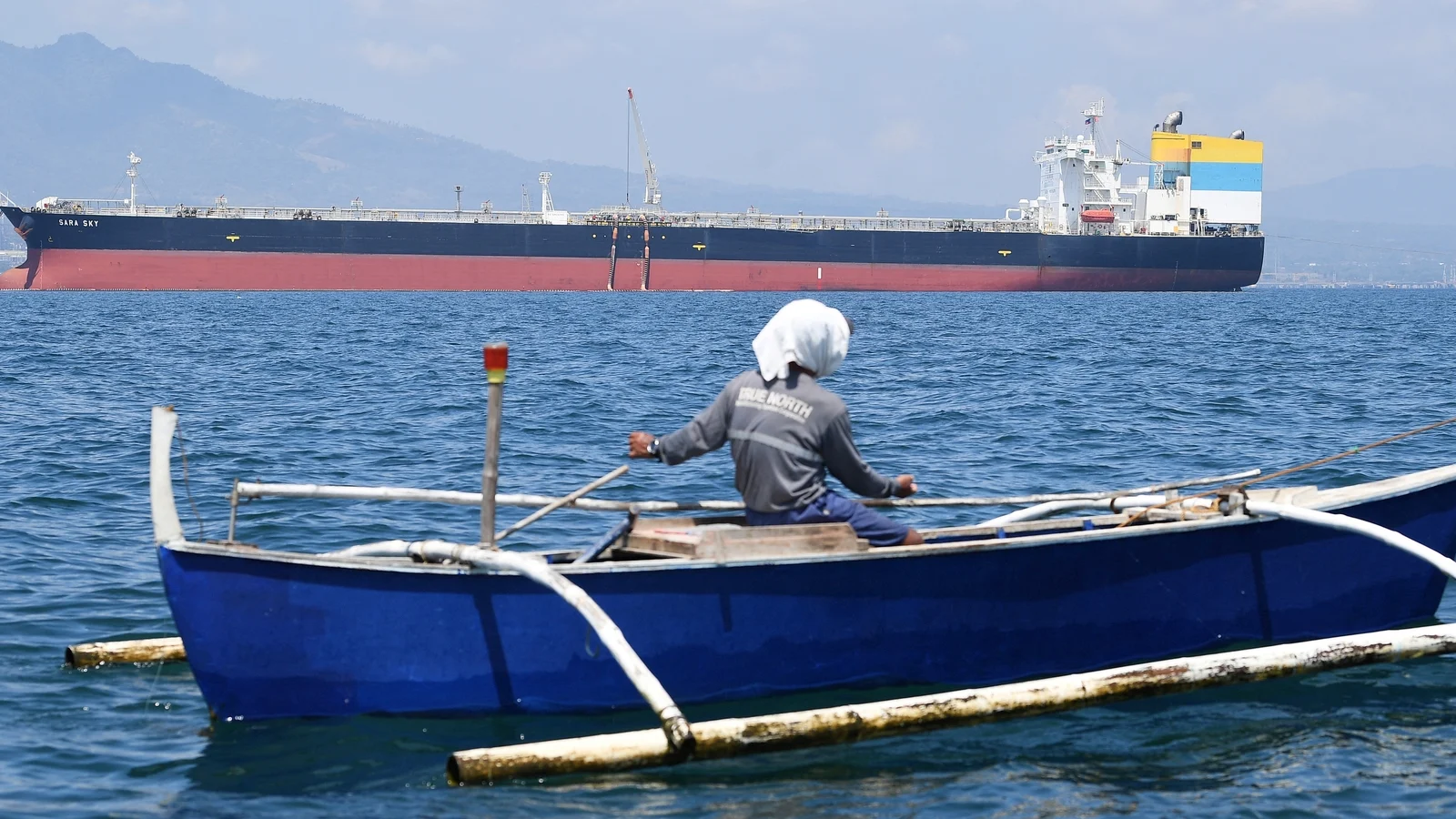
The Strait of Hormuz is no mere line on a map. Roughly one-fifth of the world’s seaborne crude and condensate threads through its narrow throat every day, binding the markets of Tokyo, Rotterdam and Mumbai. When earlier clashes in the Middle East drove tanker insurance premiums and crude prices skyward, Washington temporarily loosened restrictions that had kept some Russian oil off the market — a limited waiver allowing shipments already at sea to be sold until 11 April.
That reprieve was small in bureaucratic terms but large in consequence. Higher oil prices since the opening of conflict in the Middle East have done what sanctions, blockades and years of war could not: fatten Russia’s treasury. Kyiv contends the cash is ploughing into Moscow’s war machine. “We saw the spike in prices and immediately heard from partners: ‘Can you pause strikes on energy infrastructure?’” a Ukrainian defence official told me. “That request didn’t come out of compassion for Moscow. It came from fear the global market — and poorer countries — couldn’t bear another price shock.”
Partners, pressure and the choice to strike
Ukraine has intensified attacks on Russian logistical nodes over the past weeks, striking refineries, fuel depots and, repeatedly, the Baltic ports of Ust-Luga and Primorsk — arteries for Moscow’s oil exports. The logic is brutal in its simplicity: choke the revenue, diminish the capacity to wage war. But now, with oil prices dovetailing with diplomatic manoeuvres in the Gulf, Kyiv says it received direct requests—from “political to military levels”—to temper its long-range attacks on energy targets.
“We were asked, politely but firmly, to consider the broader effects of our operations,” said a member of Ukraine’s strategic planning team. “We weighed the lives saved by denying revenue to Moscow against the global pain of another energy shock. There are days when every choice looks like a loss.”
From drones to deserts: Ukraine’s quiet export of know-how
Beyond tanks and artillery, one of the war’s stranger by-products is the spread of counter-drone expertise. Ukrainian crews — hardened by years of battling Iranian-made Shahed drones over Kyiv, Kharkiv and the Donbas — have been quietly deployed to the Middle East. Dozens of anti-drone specialists were sent to at least four countries to help shore up defences after tit-for-tat strikes between Israel, the US and Iran sparked a wave of retaliatory drone attacks.
“This was not a parade of trainers; these were rapid-response teams,” said a commander who returned from the region. “We didn’t go to run drills; we went to stop aircraft from raining down on hospitals and markets. Yes, they were shooting down Shaheds. That technology is ugly, cheap, and ubiquitous — and we learned how to fight it very quickly.”
One hospital worker in a coastal city, speaking on condition of anonymity, described the relief when a Ukrainian team helped install detection systems. “It felt like someone had turned the lights back on,” she said. “You stop checking the sky every five minutes. You sleep a little better. That’s invaluable.”
A 32-hour truce — and the human cost that makes it necessary
For 32 hours this Easter, guns fell silent. Russia announced a ceasefire from 16:00 on April 11 until the end of April 12 “in connection with the approaching Orthodox feast of Easter.” Kyiv said it had put a truce proposal via the United States and was ready to reciprocate.
The pauses in fighting have been brief and brittle for the past four years, and both sides are quick to accuse the other of breaches. Still, the scenes under the domes of St Michael’s and other cathedrals were real: families lighting candles, the scent of incense, soldiers leaning without their helmets to sign the names of the fallen in prayer books. “For a few hours, people were not frontline commanders or displaced women,” said a volunteer who ferried food to border shelters. “They were just people who remembered what peace feels like.”
The grinding, costly calculus of four years of war
This is Europe’s deadliest conflict since World War II: hundreds of thousands of lives lost and millions uprooted. Fighting that once surged across wide swathes of territory has settled into a costly stalemate in many sectors of the front. Analysts at the US-based Institute for the Study of War observe a slowing of Russian advances since late 2025, attributing part of that deceleration to disruptions in communications that once helped Moscow coordinate drone attacks. The ban on access to certain satellite services and restrictions on messaging platforms have had unpredictable battlefield effects.
Still, the map is uneven. Russia controls just over 19% of Ukraine’s territory — much of it captured in the opening months of the invasion — and threatens cities such as Kramatorsk and Sloviansk in Donetsk oblast. Negotiations aimed at ending the fighting have repeatedly faltered. “Concessions demanded by Moscow are tantamount, in our view, to surrender,” President Volodymyr Zelensky told EU envoys this week. “We will not trade sovereignty for temporary calm.”
Why this matters to you — and to the global economy
When world leaders bargain over sanctions and ceasefires, ordinary people feel the aftershocks in their wallets, in buses that stop running because diesel is scarce, in families that can’t heat their homes. The tension between blocking a belligerent’s revenue stream and keeping global energy markets stable is raw and political. Developing economies are especially vulnerable when supply routes groan under the weight of geopolitics; richer nations can absorb price shocks more easily.
So ask yourself: if you had to choose between higher fuel bills for a while and potentially prolonging a war, which would you pick? Would your answer change if your neighbour’s child had been killed by a shell funded with oil money?
Lines of continuity — drones, dollars and the slow work of peace
Two images linger. One is simple: an elderly woman in a Kyiv church tying a red thread to a pysanka and whispering a name. The other is strategic: a tanker threading slowly through Hormuz, an invisible artery pumping capital into a conflict thousands of miles away. Between them sit diplomats, generals and people like you and me — all trading in risk and hope.
“Wars don’t end in the headlines,” a peace activist who works with returned soldiers said. “They end in kitchen tables, in rebuilding towns, in the slow return of schools. Ceasefires give us time for that small, monumental labor.”
The ceasefire for Easter might be a 32-hour pause or it might be an inflection point. Reimposing energy sanctions, continuing the fight against drone proliferation, and seeking ways to thread humanitarian corridors into broader peace talks — these are choices that will define the next year. For now, the candles burn. The shells are quiet. For a little while, people reclaim what everyone on a map wants: the ordinary rhythms of life.