Guns on the Water: A Night of Strikes, a Coast of Questions
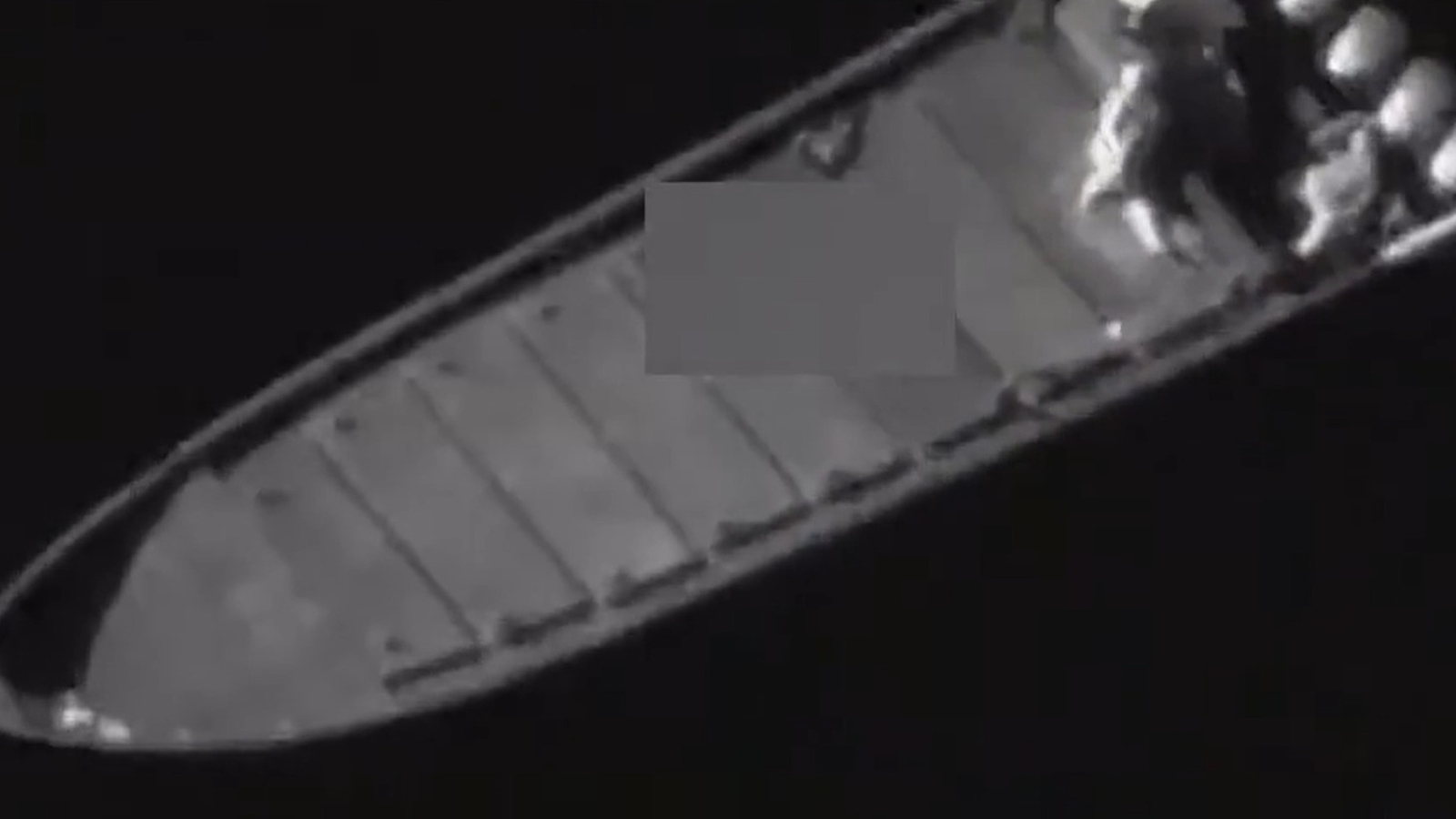
Late yesterday, a grainy video circulated by the US military landed like a stone in calmer seas: three small boats, two apparently motionless, one skimming across a black ribbon of ocean, and then the flash of ordnance. Within hours, US Southern Command said 11 people were killed — four on each of two vessels in the eastern Pacific and three on a third in the Caribbean — and that no US forces were harmed. The clip shows figures moving on deck moments before the strikes; it leaves you with the twin sensations of certainty and unease.
“We took decisive action against three vessels that posed a threat to regional security,” a US Southern Command spokesperson said in a terse statement accompanying the footage. “These were targeted in self-defense and in coordination with partner nations.”
What the Pentagon Video Tells Us — and What It Doesn’t
Watch closely and the sequence is chillingly simple: the silhouette of a panga boat, someone on the bow, the burst of an explosion, then fire and debris. On two of the boats people appear to be moving about before they are struck. One boat seems to be trying to outrun its fate. The video is meant to prove resolve. It is also a partial truth.
Since early September, when Washington says it began a campaign to intercept suspected drug-smuggling craft at sea, more than 140 people have been reported killed and dozens of vessels destroyed, according to the military’s own tallies. That string of strikes has met with applause in some corners as an aggressive chokehold on traffickers; in others it has stirred alarm over legality and proportionality.
Voices from the Shoreline
Along a small seaside hamlet in northern Colombia, a man who declines to give his name because of local tensions stands barefoot on a sun-bleached pier and looks at the horizon. “We live by the sea,” he says, pulling the rim of his hat down against the glare. “Sometimes the boats carry fish. Sometimes they are carrying trouble. But we cannot be targets from the air.”
In a port market, a vendor named María runs her hand over a cooler of fresh snapper. “The ocean gives us life,” she says. “If the ocean becomes a battlefield, who will buy my fish? Who will feed my children?” Her voice catches when she talks about the relatives of local skippers who have vanished without explanation. “We deserve answers,” she says.
An expert view
“Kinetic strikes at sea raise complex legal and moral questions,” says Professor Elena Márquez, an expert in maritime law at a university in Madrid. “Under international law, the use of lethal force is supposed to be tightly constrained. If people on those boats were not presenting an imminent threat — if they were civilians or unarmed crew — then these strikes may well cross into extrajudicial territory.”
Labels, Definitions, and the Fog of War
The US administration has increasingly framed its campaign as a fight against “narco‑terrorists,” language meant to fold criminal networks into a national-security threat. That rhetorical shift is consequential: it changes how Washington justifies cross-border operations and how allies and adversaries react.
“Once you brand an adversary a ‘terrorist,’ a whole different set of legal and operational tools becomes available,” says a retired military planner familiar with counter-narcotics work. “But legal labels do not erase the need for evidence and proportionality.”
Human rights groups and international lawyers have been outspoken. Several organizations say previous strikes appear to have killed civilians and point to a lack of publicly disclosed evidence that the targeted craft were involved in drug shipments. “When you cannot show that the people you killed posed an immediate threat, you are in danger of committing extrajudicial killings,” says Nadia Rahman, advocacy director for a global rights group.
On the Map: The Eastern Pacific and the Caribbean
The waters where these incidents unfolded are not random. For decades the eastern Pacific and the Caribbean Sea have been major conduits for narcotics leaving South America bound for North America and Europe. Small, fast boats — pangas and similar craft — are often used to ferry product, crews, or supplies. So too are larger vessels and, increasingly, encrypted communications and complex maritime networks.
- Since early September: the US military reports more than 140 people killed and dozens of vessels destroyed in strikes on suspected smuggling boats.
- Three boats struck in the latest operation: two in the eastern Pacific, one in the Caribbean; footage shows people moving on deck prior to impact.
- US naval posture: a substantial flotilla operating in the Caribbean, though the carrier central to that force has been temporarily redeployed to the Middle East amid other global tensions.
Local color: life alongside a trafficking highway
In the bustling seaside towns, the economy hums between legitimate commerce and shadowy opportunity. Men with sun-browned faces patch nets and clandestine couriers swap stories in corner cafes. A language mix of Spanish and Creole flows through markets. And as nights grow longer, fishermen light lanterns and listen for the distant thrum of outboard motors that may mean a catch — or a confrontation.
Diplomacy, Deterrence, and the Risk of Escalation
There is a strategic calculus here. By striking at sea, the US says it can choke traffickers before drugs ever reach land, reducing violence in cities far from the shore. The deterrent effect is real to some: captured shipments, disrupted routes, and a ledger that officials point to with pride.
But the costs are harder to measure. The optics of strikes that produce civilian casualties can fan outrage in the region and feed narratives of heavy-handed intervention. They can complicate relations with coastal countries whose sovereignty and citizens are affected. And they can set precedents others might follow.
“If states use force beyond their borders without clear legal basis, we enter a less stable maritime environment,” says Dr. Hakeem Okoye, a security analyst who studies transnational crime. “International norms exist for a reason.”
What Should We Demand — and Expect — Next?
As the smoldering wreckage of the latest strikes cools in the public imagination, certain questions will not go away.
- Will the US release forensic evidence proving these vessels were actively engaged in trafficking?
- Will families of those killed be given information, access, or compensation?
- Will regional partners demand greater oversight or independent investigations?
“Transparency is essential if these operations are to retain legitimacy,” says a veteran diplomat who has worked on Caribbean security issues. “Secrets do not build trust.”
So where do we stand? On the surface, a decisive action: weapons fired, targets hit, a commander’s briefing completed. Beneath that, a tangle of human loss, legal ambiguity, and geopolitical risk. The ocean has always been a mirror; in it we see not only the flash of ordinance, but the reflection of our priorities.
When militaries turn the sea into a battleground against trafficking, who keeps watch for civilians? When states broaden the definition of a threat, who defines the limits? These are not just legal or technical questions; they are moral ones.
So I ask you, reader: if the goal is to make communities safer on land, are we confident that strikes like these are the best path? And if evidence is the currency of legitimacy, when will we be shown the books?
The waves will keep rolling, and the boats will keep coming. What we decide now about transparency, due process, and the sanctity of life at sea will shape those waters for years to come.