The Quiet Horror Off Crete: Twenty-Two Lives Lost After Six Days Adrift
The Mediterranean can look like glass and lie like glass. On a gray morning off southern Crete, the sea gave up survivors and hid the rest—bodies, it seems, taken from the wooden truth of the boats and tossed into the deep by men who profit from despair.
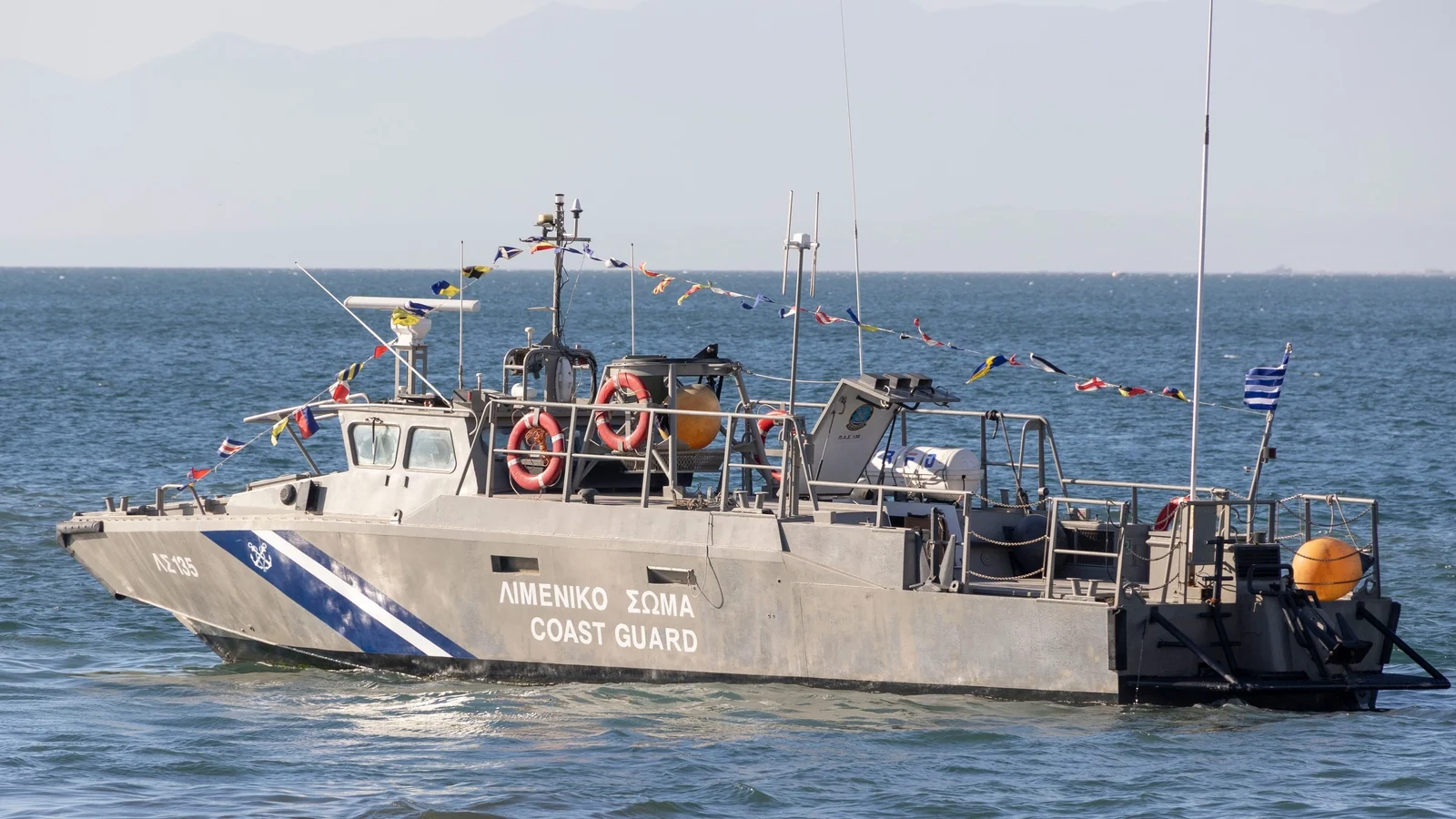
Twenty-two people are reported dead after six days aboard a rubber dinghy that set out from Tobruk, in eastern Libya, bound for Greece. Twenty-six others were rescued by a Frontex vessel and taken aboard; two of them were later hospitalized in Heraklion. Survivors say the corpses were thrown overboard on the orders of the smugglers. Greek authorities have arrested two men, aged 19 and 22 and described as South Sudanese, on charges including negligent homicide and facilitating illegal entry.
“We had nothing left to give”—a survivor’s account
“We were six days without water, six nights praying for rain,” a survivor told a coastguard interviewer in Heraklion, voice raw and hands shaking. “When people fell asleep, they didn’t wake. The trafficker said we could not bring them.” Names withheld for safety, the survivor’s face was puffy from crying and salt; the humiliation and exhaustion were as visible as the bruises on his arms.
A coastguard spokesman described the odyssey succinctly: the boat lost its way and, battered by unfavorable weather and shortages of food and water, passengers perished from exhaustion. “According to testimony,” he told reporters, “the bodies of those who died were thrown into the sea on the orders of the traffickers.” The vessel was about 53 nautical miles south of Ierapetra when the Frontex ship reached it.
Local eyes on a global tragedy
In the port town of Ierapetra, fishermen who have been reading the sea for generations watched the rescue unfold like a repeat of summers past. “You can smell when a boat has been through the night too long—fear has a taste,” said Nikos, a 62-year-old fisherman who has pulled migrant dinghies into his nets before. He paused, then added, “We mend nets and we mend boats, but we cannot mend governments that let people cross like this.”
At a small kafeneio (coffee house) near the harbor, older women serving strong Greek coffee whispered about the names of places they recognized—Tobruk, Libya, a city blighted by war and lawlessness. A waitress tucked a stray lock of hair behind her ear and said, “They come because there is nowhere else. But we cannot watch them vanish.” The human compassion here is abundant; the solutions are not.
Numbers that should disturb us
The latest statistics from the EU border agency and international observers paint a stark, accelerating picture. Frontex reported that the number of migrants dying while attempting to reach EU territory more than doubled in the first two months of this year compared with the same period last year. The International Organization for Migration (IOM) recorded 559 deaths in the Mediterranean during January and February, up from 287 for the same months in the previous year.
These figures are not abstractions; they are bodies—unsent back, uncounted by some, and mourned by families who often never receive confirmation. In December, Greek authorities recovered only two survivors from a partially deflated vessel southwest of Crete; 15 more were presumed drowned and never recovered. These incidents are not anomalies but part of an increasing toll that the region is paying.
Why the crossings continue—and why they become deadlier
There are many reasons people risk everything on these voyages. War, persecution, and grinding poverty push families into the hands of increasingly vicious smuggling networks. Libya has become a particular flashpoint: chaos at sea, multiple armed groups on land, and a coastline turned into a launchpad for migratory routes to Europe.
“Smugglers are not just drivers in dinghies; they are businesses with a ruthless bottom line,” said Maria Kallias, a migration researcher based in Athens. “When enforcement tightens and front routes close, smugglers move to longer, riskier crossings. That raises the mortality rate. It’s predictable and preventable—if political will matched rhetoric.”
Experts also point to climate-driven displacement—droughts and failed crops in parts of the Sahel and Horn of Africa—and to the enduring pull of Europe: jobs, family reunification, and the hope for asylum. But that hope is being battered by harsher sea conditions and increasingly fragmented rescue regimes.
Policy responses and moral dilemmas
Against this human wreckage, the European Parliament has moved to tighten asylum and migration rules. In late March, lawmakers endorsed a controversial package that includes the creation of “return hubs”—facilities outside the EU intended to process and send migrants back to third countries. Supporters say the hubs will deter dangerous crossings; critics call them inhumane and warn they outsource responsibility to states with poor human rights records.
“You cannot build safety by outsourcing danger,” said Lena Ortiz, policy director at a European rights organization. “Return hubs risk trapping people in limbo and could expose vulnerable people to further abuse. The Mediterranean has become a graveyard precisely because we externalize our borders instead of investing in legal pathways and protection.”
An EU official familiar with the proposal, speaking on condition of anonymity, defended the move as a pragmatic attempt to disrupt smuggling networks and manage flows. “People die at sea,” the official said. “We need mechanisms that work—on the ground, in transit countries, and in cooperation with neighbours.” Many solutions are partial; many are contested.
What can be done—and what are we willing to pay?
There are no easy fixes. Humanitarian groups call for increased search-and-rescue capacity, safe legal routes for asylum, and targeted disruption of trafficking networks. Governments argue for deterrence and stricter borders. Between those poles sits the human cost: children who drown, mothers who dig graves with their hands, survivors who relive the same panic each night.
So I ask you, reader: when a rubber boat drifts away from Tobruk, whose responsibility is it to guide it to safety? When the sea becomes a ledger of lives, how do we balance deterrence with dignity?
Back in Heraklion hospital, two survivors—still trembling—were being treated for dehydration and hypothermia. Outside, the sea rolled on, indifferent yet full of stories. Fishermen resumed mending nets. The kafeneio filled again with murmured condolences and cups of coffee. Life, on the island, goes on. But elsewhere, for families who learned of the missing only when names and numbers trickled through, a silence opened.
We should remember those who did not reach shore not as statistics but as people with names, with songs, with futures stolen. That remembering must push us toward policies that reduce risk—not merely manage it—and toward international cooperation rooted in protection, not punishment.
When borders harden, the sea does not soften. It swallows. It keeps its secrets. What we do next will determine whether the Mediterranean remains a corridor of hope or a ledger of failure. Which will we choose?