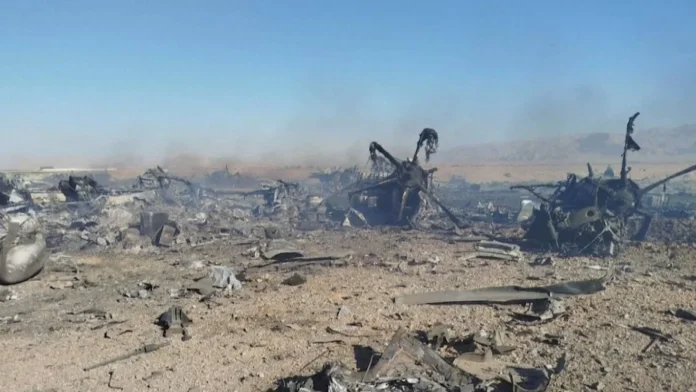
Iran says US aircraft destroyed in pilot rescue mission
I’m ready to craft that vivid, human-led feature — but I don’t see the original news content you mentioned. Could you paste the article or link you want rewritten?
If you don’t have it handy, pick one of these options and I’ll proceed:
1) I’ll rewrite from a specific source you provide (paste text or link). I will retain factual accuracy to that piece while transforming voice, structure, and style into an immersive blog post.
2) You want an original, dramatized feature inspired only by the headline (“Iran says US aircraft destroyed in pilot rescue mission”). I can create that, but I’ll need permission to use imagined quotes, scenes, and some invented contextual detail — and I’ll clearly mark anything fictional.
3) I can write a careful, factual overview based on publicly known, verifiable events (if you tell me which incident/date you mean). I’ll avoid inventing facts and will cite the limits of my sources.
Tell me which you prefer, and if you choose option 1, paste the article text or link. Also say if you want any particular angle (human interest, geopolitical analysis, regional culture, veteran perspectives, etc.).
The capital of Iran has been repeatedly struck since the war broke out on 28 February
A plane, a portrait, and a city that would not be the same
When Mohammad Reza Pahlavi climbed aboard his jet at Tehran’s Mehrabad Airport in January 1979, he carried with him more than a suitcase. He left behind a nation heavy with contradiction: gleaming boulevards that masked simmering discontent, modern factories that had created a new urban poor, and old mosques that still hummed with a different kind of authority.
By sundown, the city had begun to unmake itself. Statues toppled. Banknotes were scrubbed of his face. Men and women who had felt invisible for years poured into streets and squares, lit not only by the headlights of cars but by a fierce, incandescent hope. “It felt like the sky had opened,” said an elderly Tehran shopkeeper I imagined standing on the pavement that night. “You could hear people crying and laughing at the same time.”
From land reform to landslides: the deep currents beneath revolution
The Shah’s program of rapid modernization—known as the White Revolution of the 1960s—changed Iran with dizzying speed. Land reforms, literacy campaigns, and the extension of suffrage to women tore at centuries-old social orders, and for some they delivered opportunity. For many others, particularly peasants uprooted by land consolidation and migrants who swelled Iran’s cities, those promises went unfulfilled.
“When villages emptied, people didn’t land in middle-class apartments,” explained a historian I imagined in Tehran’s University of Tehran, voice faded by cigarette smoke and a stack of photocopied articles. “They landed in shanties, in the margins of a city whose wealth they fueled but whose doors remained closed to them.”
Enter Ayatollah Ruhollah Khomeini: expelled in the mid-1960s, he was at first a figure of clerical grievance. Yet exile—from Turkey to Iraq and eventually to a small town outside Paris—only broadened his reach. From a modest house in Neauphle-le-Château he sent cassettes and messages that galvanized a dispersed population. The revolution was, crucially, not conjured out of thin air. It had roots—mosques, seminaries, and the ulama’s social networks—that the Shah had never fully uprooted.
Why institutions matter
When scholars talk about revolutions, they rarely mean only guns and tanks. They mean organization: an apparatus that can mobilize, feed, shelter and, above all, give people a language to explain their anger. In 1979, the clerical establishment—anchored in Qom and woven through bazaars and neighborhoods—provided that language and the means to act.
“You knock on the door of a mosque and you find three things: a prayer, a teacher, and a phone tree,” an imagined seminary teacher told me. “Those are the things that win streets.”
Fast forward: why change feels easier to call for than to deliver
Now consider the present, and the problem becomes less romantic and more structural. Across the past four decades the Islamic Republic remodeled Iranian life in ways that make a repeat of 1979 unlikely in reverse. The state did not simply replace faces; it rewired institutions.
One clear difference is that the current ruling architecture is less reliant on a single palace or a single wealthy elite that can pick up and flee. The Revolutionary Guards—known as the IRGC—and associated paramilitary forces like the Basij are embedded in politics, the economy, and local governance. Estimates by various analysts suggest that IRGC-linked companies control a sizable chunk of Iran’s non-oil economy, from construction to telecoms, though the exact figures are opaque. More plainly: the regime’s power is interwoven with many facets of everyday life.
Repression has grown more sophisticated, too. The state now combines legal tools, mass surveillance, and cycles of co-optation and punishment to crush organized dissent. The traumatic memory of crackdowns—most visibly during the 2009 Green Movement and again after the 2022 protests following the death of Mahsa Amini—has left civil society fragile. Human-rights organizations documented hundreds of deaths and thousands of arrests during those upheavals; such experiences do not easily vanish.
“People want change, but fear has weight,” said a young woman I pictured in Tehran’s Valiasr district. “You can put hope in your pocket, but you cannot hide it from plainclothes men.”
The iron law of no exit
There is another, often overlooked detail that separates 1979 from today: the rulers of the past had escape routes. The Shah had villas abroad, bank accounts, and a ready exile network. Today’s leaders do not. Years of sanctions, asset freezes, and international isolation mean there are few comfortable exits for those at the top. Surviving the system is, for many of them, indistinguishable from surviving personally.
“They fear not just political defeat, but prosecution, loss of livelihood, and retribution,” said an imagined former diplomat in exile. “When the prize is one’s freedom, the prize tends to be defended fiercely.”
So what does change look like, if not theatrical collapse?
If the spectacle of a jet pulling away and a system crumbling is historically powerful, it is also rare. Meaningful transformation tends to be slow: the patient work of rebuilding institutions, protecting independent media, fostering credible political alternatives, and creating safe spaces for civic action. Without those, external forces—bombs, sanctions, or exhortations—can at best pressure, and at worst harden resolve, stigmatize dissent, and deepen suffering.
Ask yourself: would an abrupt removal of leaders deliver the kind of society most Iranians say they want—security, dignity, and a say in governance? Or would it hand a fractured nation to the highest bidder of chaos? These are not rhetorical stances; they are practical dilemmas nations and international actors face when contemplating intervention.
Place, people, and the pulse of possibility
Walk today through Tehran and you will find contradictions at every corner: luxury car showrooms opposite dilapidated staircases, high-tech startups buzzing beside age-old tea houses, a graffiti mural that nods to hope while the satellite dishes keep watch. Young Iranians, who make up a large share of the population—roughly half are under 35—carry ambitions that confound the old categories of left and right. They are connected, educated, and impatient.
“We do not want the past returned and we do not want a foreign blueprint installed,” said a university student I imagined, fingers stained from a late-night protest mural. “We want a country that trusts us enough to let us lead; is that too much?”
That question, more than any headline about toppled statues or targeted strikes, may be the one that determines Iran’s future. Revolutions can change regimes in a night. Building a polity that can last takes generations. The dramatic scene of a plane lifting off is seductive, but the real work is quieter: the slow, stubborn reconstruction of trust, institutions, and civic life.
So when we read the headlines calling for regime change, let us ask not only whether change is possible, but what kind of change is being sought—and who will actually build it.
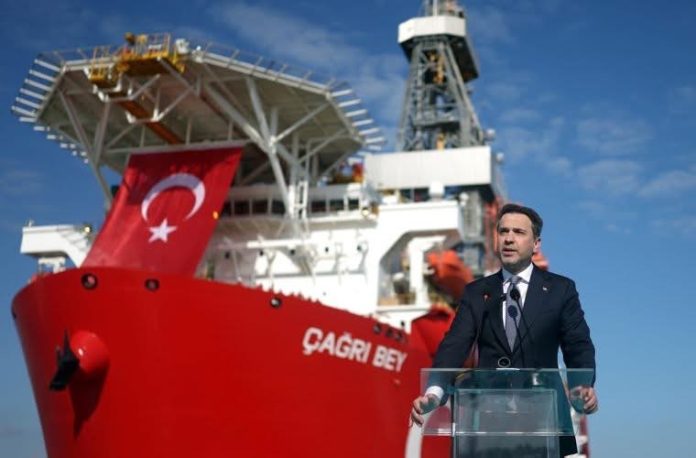
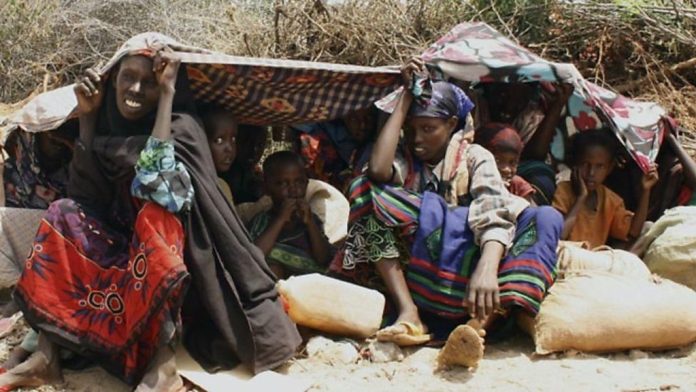
Apr 05(Jowhar)-Dowladda Turkiga ayaa si rasmi ah u shaacisay in markabka qodista shidaalka ee badda, Çağrı Bey, uu Jimcaha soo gaari doono biyaha Soomaaliya, si uu u bilaabo ololihii ugu horreeyay ee qodista shidaalka ee xeebaha dalka.
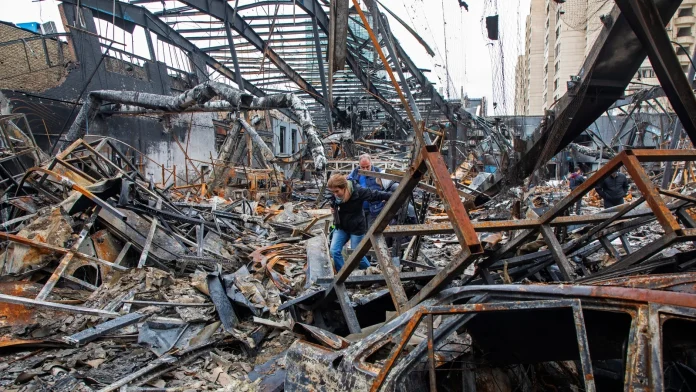
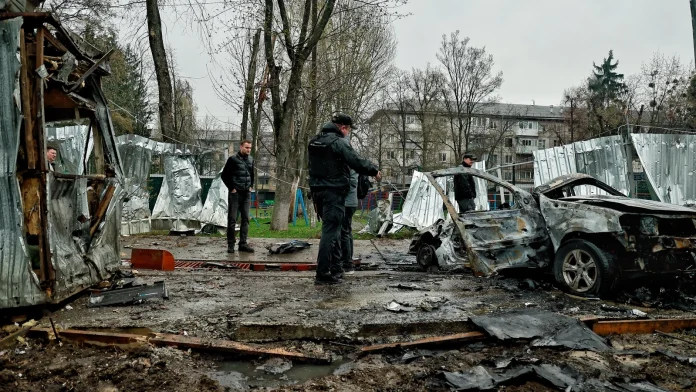
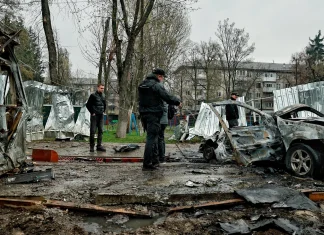
Five killed, 19 injured in Russian attack on Ukraine
Nikopol at Dawn: A Market Silenced by a Drone
The sun was just finding its way across the Dnipro, turning the river into a strip of molten silver, when the market in Nikopol—normally a noisy quilt of voices, clattering stalls and frying oil—was ripped apart by a drone strike.
Five people died. Nineteen others were wounded. Among the injured was a 14-year-old girl in critical condition, hospital staff told local authorities. The prosecutor general’s office called the attack “yet another war crime,” and the regional governor, Oleksandr Ganja, named the victims as three women and two men.
Walk through Nikopol any morning and you will smell coffee, sunflower oil, and fresh bread. You will see women in headscarves bargaining over cabbages, fishermen hauling crates by the river, and teenagers on the edge of school, clutching backpacks. This is a frontline town—its skyline punctured by the knowledge that across the river, a few kilometres away, lies territory held by occupying forces. The omnipresent question—will today be the day?—is spoken in small, resigned gestures more often than in words.
Scenes from the Rubble
“She sold dumplings here for twenty years,” said Maria, 42, crouched beside a ruined stall, her apron still clotted with grease. “People came for her vareniki every Saturday. Now there’s just a blanket and two shoes. How do you explain that to a child?”
Bodies were pulled from the rubble by volunteers and rescue teams within hours. An ambulance siren became the town’s new morning chime. Eyewitnesses described a shower of broken glass, smoke curling up over the stalls, and the low, stunned murmur of people who had been hit in the only place they trusted to buy food.
“Markets are where life is lived,” said Ihor, a teacher who helped carry the wounded. “They are not military targets. Yet here we are, keeping count of names instead of making plans for the spring harvest.”
Across the Border: Violence Returns the Favor
Meanwhile on the Russian side of the frontier, the port city of Taganrog in the Rostov region reported its own tragedies. A drone and missile attack killed one person and seriously wounded four, regional governor Yuri Slyusar said. Falling debris also struck a foreign-flagged cargo vessel in the Sea of Azov, igniting a fire; air defences were reported to have intercepted other incoming drones over Taganrog Bay.
“A missile hit a commercial facility,” Slyusar wrote. “We are treating the wounded as critical.” He did not specify who launched the attack.
For residents of both countries, this tit-for-tat violence has become a brutal rhythm. Kyiv has carried out strikes into Russian territory in response to cross-border attacks and strikes that, since the full-scale invasion in February 2022, have been almost daily for many communities. Each strike begets another; each civilian casualty piles on the collective trauma.
The Wider Toll
How many people have been hurt by this war? The numbers stagger. International monitors and humanitarian agencies estimate that since February 2022, millions have fled their homes and tens of thousands of civilians have been killed or injured. Whole towns have been transformed into zones of caution, their marketplaces, schools and hospitals turned into potential targets.
“When conflicts move into the cities, infrastructure becomes a battlefield,” said Olena Kovalenko, a security analyst who tracks aerial warfare. “Drones are cheap, quiet, and increasingly capable. They turn everyday public spaces—market stalls, bus stops, apartment courtyards—into vulnerable points in seconds.”
That calculus is visible in Nikopol. The town’s proximity to the occupied bank of the Dnipro makes it a regular target. The river, which should be a lifeline, has instead become a front line—its banks surveilled, its crossings perilous.
Local Lives, Global Patterns
What is happening in Nikopol is not just a tragic local event; it is a manifestation of larger shifts in modern warfare.
Urbanization of conflict: Fighting now happens in dense civilian spaces, where the lines between combatants and civilians blur.
Proliferation of drones: The use of unmanned aerial systems by state and non-state actors has democratized aerial bombardment.
Maritime risk: Attacks in and around the Sea of Azov add another layer of danger for commercial shipping and the global supply chains that rely on these routes.
“This is an era where you don’t need a fleet to hit a port,” Kovalenko said. “You need a drone, patience, and a GPS signal.”
Human Stories Beneath the Headlines
At the town’s community center, volunteers gathered donated clothes and blankets. A math teacher organized lists of names. An elderly man, who asked only to be identified as Petro, put his hand to his chest and said, “We grew up with this river. We got married here. Our children learned to swim here. Now the sound of a drone makes me think the worst.” His voice broke on the last word.
These intimate scenes are easy to overlook when the world is scrolling through breaking-news alerts and satellite images. Yet they matter. They are the small centers of life that war touches—and often shatters.
Legal and Moral Ripples
The prosecutor general’s office in Kyiv labeled the market attack a war crime. International law is supposed to offer some protection: targeting civilians is prohibited, and parties are required to distinguish between military objectives and civilian objects.
Legal experts warn, however, that gathering evidence in the field is an uphill task. “Documenting intent, proving command responsibility—these are complex, resource-intensive processes,” noted Dr. Marta Sokol, a human-rights lawyer. “But they are essential if accountability is to follow conflict.”
Whether any case stemming from Nikopol will yield prosecution remains to be seen. Meanwhile, the bodies are buried, the injured are treated, and the small mercies of neighbors continue: a shared loaf of bread, a hand on a shoulder, an offer to watch a child when parents are hospital-bound.
What Do We Do Next?
Ask yourself: how do you measure compassion in wartime? Is it the international sanctions and statements of condemnation, or the neighbor who arrives with a thermos of soup? Both matter. Institutions set the rules; people sustain life.
For residents of Nikopol and Taganrog, the questions are immediate and practical—Where will we buy food tomorrow? How will children get to school? For those farther away, the questions are larger and moral—How do we respond to suffering we see on a screen? How do we keep the focus on civilians, not just front-line positions?
There are no easy answers. There are, however, choices: to listen, to give, to press leaders for diplomacy, and to keep bearing witness. In the end, stories like Nikopol’s ask us to remember that war is not only a contest of missiles; it is a contest over memory, decency, and the right of ordinary people to live ordinary lives.
After the Smoke Clears
By nightfall, the market square in Nikopol was eerily quiet. A single lamp flickered above the rubble. Volunteers still moved quietly, clearing glass and salvaging what they could. Somewhere, a radio played an old folk song, and for a moment the melody softened the edges of grief.
“We will rebuild the stalls,” Maria said, eyes fierce with a resilience that is both weary and stubborn. “We have to. Markets are who we are.”
Her words linger—both a promise and a challenge. As readers, what will we do with that promise? Will we carry it beyond the headline, into the next conversation, the next donation, the next vote? Or will the momentum of outrage fade like so many morning headlines?
For the people of Nikopol, the answer is not theoretical. It is the slow, stubborn work of putting life back into the places where it was taken away.
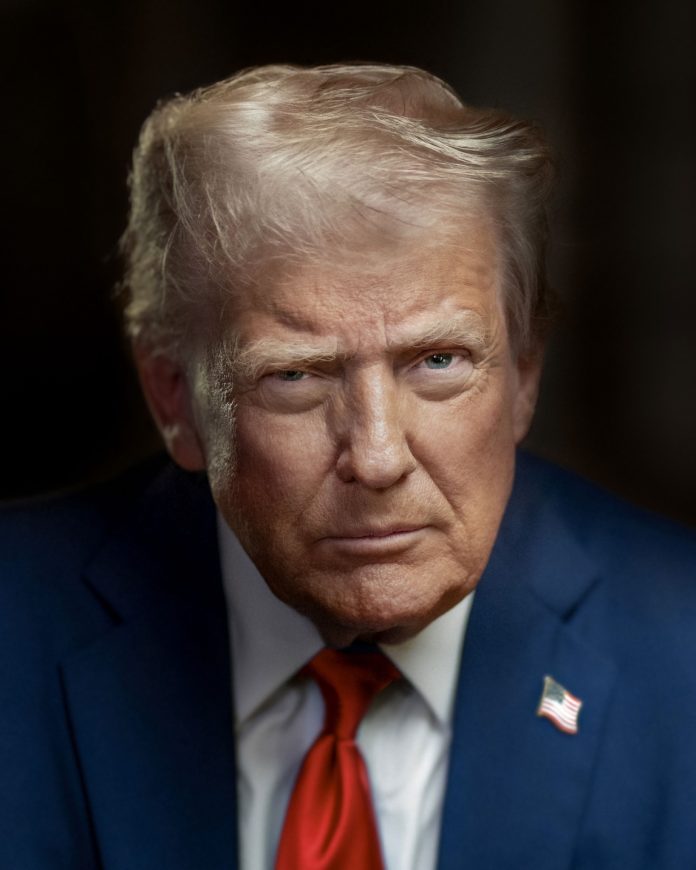
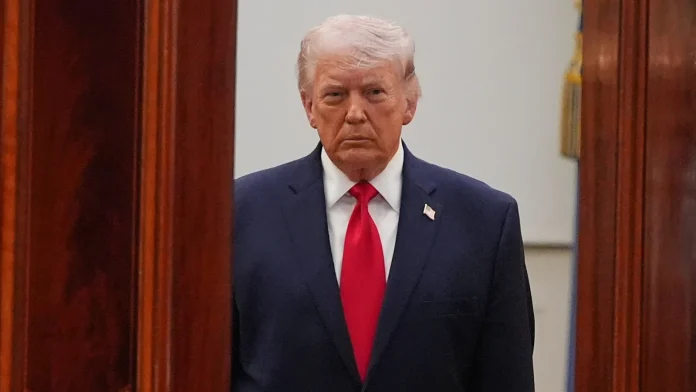
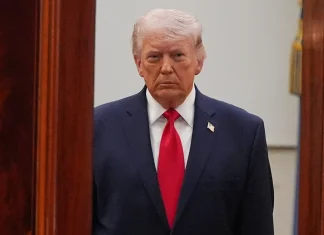
Donald Trump touted the US military's successes in the conflict but questions remain about whether he has truly achieved the main goal he laid out at the start of the war
A Rescue in the Mountains, Smoke Over the Gulf: How a Single Day Unraveled the Calm
There are days when history feels less like a headline and more like the brittle clack of a distant storm—sudden, loud and impossible to ignore. One such day unfurled over the Persian Gulf and the ragged ridgelines of Iran: an F-15 crew was reported down, a daring recovery mission pulled an airman from hostile terrain, and, far below, the evening sky above Kuwait darkened with smoke after drone strikes on critical infrastructure.
The drama began where desert meets sea and geopolitics meets everyday life. “We got him!” President Donald Trump later declared on his social feed, a short, triumphant message that summed up hours of frantic planning and aerial horsepower. Officials said one pilot had been rescued previously; the second airman—the one who had been hiding in the mountains and evading capture—was recovered after what U.S. sources described as a meticulously choreographed search-and-rescue operation involving dozens of aircraft.
Behind the Rescue
Imagine being pinned against craggy rock and wind-whipped scrub, aware that hostile forces are closing in. “He was never truly alone,” the President wrote, emphasizing the around-the-clock monitoring and coordination that steered rescue crews into the danger zone. U.S. briefings framed the mission as a rare feat: two pilots retrieved separately, deep in enemy territory, in what one official called “a textbook display of joint air power and resolve.”
“It was tense—all of us held our breath,” said one unnamed rescue team member in a debrief cited by American sources. “We flew low, fast, and close. The terrain was brutal, but we had the best medevac and firepower covering us. We do not leave anyone behind.” The rescued airman was reported injured but in stable condition.
Smoke and Silence in Kuwait
While the rescue played out hundreds of miles away, Kuwait—typically a quiet, wealthy node on the Gulf—woke to sirens and the acrid smell of burning electronics. The Shuwaikh complex, home to the Kuwaiti oil ministry and the Kuwait Petroleum Corporation (KPC) headquarters, was struck by a drone attack that ignited fires and inflicted “significant material damage,” according to state media and ministry statements.
Kuwait’s electricity and water ministry announced that two power generation units were taken offline after strikes targeted power and desalination facilities. The outages cut into services that hundreds of thousands rely on, even as officials reported the fortunate news that there were no casualties. “We were lucky this time,” said a hospital nurse near Shuwaikh. “But luck runs out. The vulnerability is terrifying.”
Voices from the Ground
On a side street near the complex, a cafe owner brewed coffee and watched smoke curl over the skyline. “People here worry about basic things: the kids, the shop, the rent,” she said. “Now we worry about the electricity, the water, whether the gulf will close again and if the prices will rise. It hits us in our daily life.”
A Kuwaiti civil servant who requested anonymity told me, “We are in shock. The buildings are damaged—but worse is the message: even places we thought were protected are in reach. The line between war and home feels paper-thin.”
The Wider Escalation: Strait of Hormuz and a Global Jitter
This week’s flashpoints sit inside a larger, worrying arc. The U.S.-Israeli campaign against Iran has broadened over six weeks; Iran has responded with strikes on Israel and Gulf states hosting American forces. Crucially, Tehran has at times aimed to choke the Strait of Hormuz—the narrow waterway through which roughly one-fifth of the world’s seaborne oil and liquefied natural gas passes. When that channel is constricted, global markets feel it in real time.
Energy markets, which rely on the steady movement of crude and gas, are particularly sensitive. Even the threat of prolonged closures sends ripples through shipping, insurance costs, and national budgets. “If shipping through the Hormuz route is curtailed, you don’t just feel it in fuel prices—you feel it in food transport, in industrial input costs and in the fragile economies of import-dependent nations,” said Dr. Hanan Qureshi, a maritime economist at a London thinktank.
Those stakes explain the rhetoric. President Trump issued a stark ultimatum—his previous 10-day window apparently narrowed—and Israeli officials signaled readiness to hit Iranian energy infrastructure within days if Washington gave the nod. Tehran, in turn, warned of a regional inferno should the conflict accelerate.
What a Closure Means
About 20% of global seaborne oil flows through the Strait of Hormuz in normal times (a figure often cited by international energy agencies).
Disruptions can drive up shipping insurance premiums, reroute tankers via longer paths, and pinch already volatile commodity markets.
Power and desalination plants in Gulf states are critical—any damage threatens water and electricity security for millions in a region where desalination provides a large share of drinking water.
Human Costs and Global Consequences
Beyond raw numbers are people—families who queue for water when plants are offline, merchants who watch supply chains stutter, emergency responders who mend the wounded and the infrastructure alike. The war, now in its sixth week, has already claimed thousands of lives and sent shockwaves through global markets. The possibility of oil infrastructure attacks—announced as a credible option by Israeli strategists—threatens longer-term economic damage that could spill across continents.
“This is not a purely local quarrel anymore,” Dr. Qureshi warned. “It’s an economic contagion. Markets, already fragile after years of pandemic disruption and a warming planet, can’t afford another sustained supply shock.”
Questions That Remain
Will the rescue of the downed airman mark a turning point in morale and resolve, or will it simply add fuel to a widening fire? Can diplomacy reassert itself before the strategically vital Strait of Hormuz becomes a choke point for the global economy? And perhaps most pressing: how do ordinary people—those who run small businesses or tend hospital wards—recover their sense of safety when the theater of war intrudes upon daily life?
On the streets of Kuwait City and in the shadow of the Gulf’s oil terminals, those questions are not abstract. They are urgent. “We want the politicians to fix this,” said a mechanic at a workshop near the harbor. “We want to work. We want our children to have a normal life. Is that too much to ask?”
Where We Go from Here
For now, the immediate drama has subsided—the pilots are safe, fires are contained, and official statements ebb and flow. But the conditions that produced the crisis remain: a volatile regional conflict, fragile infrastructure, and a maritime chokepoint with outsized influence on global livelihoods.
In the weeks to come, watch for three things: whether energy facilities become targets, how long the Strait of Hormuz remains partially or fully closed, and whether diplomatic channels—public or back-channel—can thread these disparate dangers into a ceasefire. Until then, the Gulf’s shimmering heat will conceal a deeper, colder truth: in a globalized world, no windless waterway is merely someone else’s problem.
Apr 05(Jowhar)-Xildhibaano ka tirsan Baarlamaanka Soomaaliya oo ka soo jeeda Koonfur Galbeed ayaa soo saaray baaq deg-deg ah oo ay ugu yeerayaan hay’adaha samafalka inay si dhaqso ah u gaarsiiyaan gargaar bini’aadannimo deegaannadaas.
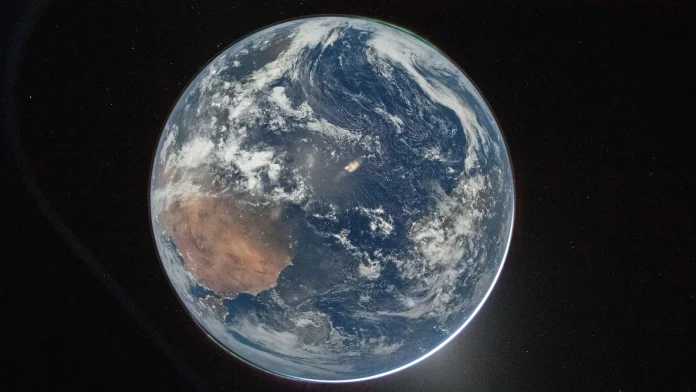
The astronauts spent their first hours in space performing checks and troubleshooting minor problems
Moonbound: Riding the Quiet, Thunderous Pulse of Artemis II
There are moments when a single sentence can feel like a rope thrown across centuries. “The Moon is definitely getting bigger,” one of the Artemis II astronauts reported — and in those words you can hear more than a trajectory: you can hear wonder, a small human voice against the great hush of space, pushing a story forward that began long before any of us were born.
A simple observation that carries weight
On day three of a ten-day voyage, as the Orion capsule slips farther from the familiar blue and nearer to the pale living thing that has watched over sailors and poets for millennia, the crew announced they had passed the halfway mark between Earth and the Moon.
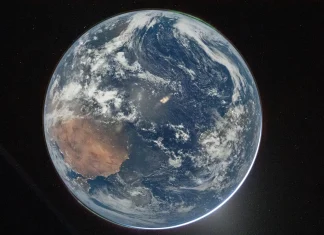
It sounds technical — a waypoint in a celestial dance — but imagine it: a four-person crew, strapped inside a ship that has never carried humans before, peering out at a planet that is shrinking into a memory and a Moon that swells with each heartbeat. NASA shared the view: a full portrait of Earth, deep ocean blues and drifting clouds, captured from inside Orion. The images were, in the words of a NASA official, “amazing.”
Who is on board — and why it matters
Artemis II is not only a mission of hardware and math. The crew — commander Reid Wiseman, pilot Victor Glover, mission specialist Christina Koch and Canadian astronaut Jeremy Hansen — represents a deliberate widening of possibility.
This flight is a string of firsts and reopenings: the first crewed mission to the Moon since 1972, the inaugural crewed flight of NASA’s Space Launch System (SLS), and a lineup whose diversity is itself a statement about who gets to belong in the sky. “We continue to learn all about our spacecraft as we operate it in deep space with crew for the first time,” Lakiesha Hawkins, a NASA official, said during a recent briefing. “It’s important to remind ourselves of that as we learn a little bit more day by day.”
The small miracles inside a small capsule
Space travel is glamour on the outside and a stubborn, patient apprenticeship on the inside. In the early hours the crew checked systems, resolved a communications hiccup and fixed a balky toilet — the tiny domestic dramas that remind you astronauts are people, too, who must live well enough in a capsule for exploration to be possible.
They fired Orion’s engine in a burn that lasted just under six minutes, the precise shove that nudged them out of Earth orbit and onto a three-day transfer to the Moon. The burn was routine in the calculus of rocketry and miraculous in human terms: a manufactured moment when velocity, timing and trust must align.
Scenes from inside and outside
Senior mission pilot Victor Glover described the growing clarity of lunar features as they drew nearer. “We took some pictures earlier today,” he said, “and after putting them on the computer to look closer, we found a feature — the Orientale Basin — and we were able to see the entire thing. And yes, the Earth is quite small and the Moon is definitely getting bigger.”
Jeremy Hansen, the Canadian crew member, offered a line that captures the surreal sensation of these trajectories: “It felt like we were falling out of the sky back to Earth. I said to Reid, ‘It feels like we’re gonna hit it.’ It’s amazing that we’re actually going to go around and miss this thing.”
From the launchpad to the public gaze
At Kennedy Space Center in Florida the day of the launch, the orange-and-white SLS rose through morning haze in a thunderous plume. Spectators along Cocoa Beach and Cape Canaveral still talk about the smell — a sting of ozone and hot propellant — and about the way the sky trembled as if remembering past Apollos. “My grandfather watched the Apollo launches,” said Maria Ortiz, a beachside resident. “We watched this one together on a screen, and I felt like we were making history again.”
Why this mission is more than a joyride
Artemis II is a stepping-stone: a ten-day mission designed to test systems and procedures that will underpin a planned crewed landing in 2028. If all goes according to plan, these astronauts will set a new human-distance record — traveling farther from Earth than anybody has before, more than 402,000 kilometres — and bring back data and imagery that scientists will use to refine future landings.
For lunar geologists, even photographs from an orbital flyby can be gold. “Seeing the Orientale Basin — it’s one of the most pristine multi-ring impact basins in the solar system,” said Dr. Maya Singh, a lunar scientist at the Lunar and Planetary Institute. “High-resolution imagery from crewed missions helps us calibrate orbital maps, ground-truth remote sensing data and plan potential landing sites.”
Costs, politics and the push of commerce
The mission also sits atop a tangle of budgets, schedules and geopolitics. SLS has endured years of delays and billions of dollars in cost overruns, and this mission’s timing has been amplified by a mix of national ambition and international rivalry. Contemporary coverage has framed Artemis as a response to other nations’ lunar ambitions, and U.S. political pressure has pushed timetables as policymakers and presidents emphasize symbolic milestones.
At the same time, NASA’s strategy increasingly mixes public will with private capability: contractors and commercial partners are central to the agency’s hope of putting humans back on the Moon and, eventually, sustaining a presence there. That partnership model raises questions about responsibility, access and who will benefit from a return to the lunar surface.
What this voyage asks of us
So where does this leave us, watching from a small blue planet? Do we look up and recall how fragile our orbiting shell is, or do we see the Moon as a new frontier where resources and power will be contested? Perhaps both.
Artemis II asks us to sit with complexity: to feel the simple awe of a circle that grows in your window and to hold the political and economic realities that trail in that awe’s wake. It asks us to consider who gets to write the next chapter of space exploration — and whether our look back at Earth while orbiting the Moon will change how we treat it.
In the quiet hours between mission updates, when the capsule cruises and the Earth becomes a pale blue coin, you can almost hear the future taking shape. The astronauts’ voices come through short transmissions and brief, human sentences: wonder, logistics, an occasional joke. “Lock in, we’re Moonbound,” NASA wrote on its social feed, and for the tens of millions watching, that felt like an invitation.
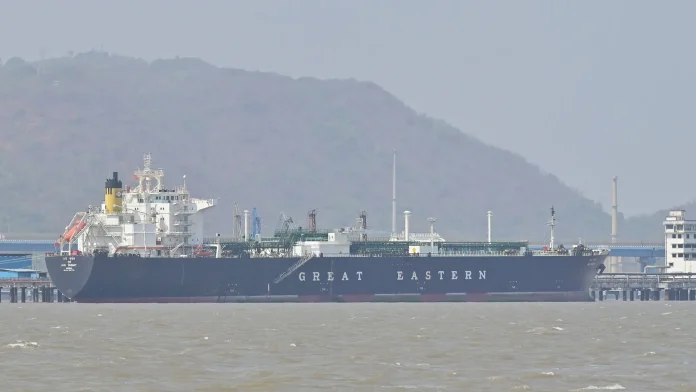
LPG tanker Jag Vasant that arrived clearing the Strait of Hormuz seen at the Mumbai Port
When the pumps hiss: Europe feels the Strait of Hormuz in its veins
On a wet morning in Mulhouse, a man in a fluorescent jacket watches a single bead of petrol fall from a nozzle and thinks of Tehran, not the weather.
Across Europe, small, ordinary moments—filling a tank, switching on a heater, signing for a bag of feed—have begun to carry the weight of geopolitics. The wars and policy rows playing out more than 6,000 kilometres away in the Gulf are arriving in the form of higher bills, anxious supply charts, and a new, unfamiliar economy of caution.
“We used to complain about price hikes in winter,” says Anna Byrne, a dairy farmer outside Kildare, Ireland, wiping soil from her palms. “Now I check the shipping news before I decide how much fertilizer to order. It’s strange to have the fate of my fields tied to battles I’ll never see.”
Energy shock: the numbers that are reshaping choices
What’s actually changing
For 30 days of open conflict, the ledger is blunt: roughly €14 billion extra added to the European Union’s fossil fuel import bill, according to Brussels estimates. Traders and ministers say oil has surged around 60% and gas roughly 70% in price swings that have little respect for national boundaries.
Europe’s energy map is complicated by one simple fact: oil is priced globally and gas increasingly behaves like an auction. Even when most EU oil and gas come from non-Gulf suppliers, a dwindling world supply and a frenzied global bidding war push prices up for everyone.
“It’s the market’s cruel arithmetic,” says Marco Santini, an energy strategist in Milan. “A tanker diverted to the highest bidder leaves a hole where a contract once was. And that hole is felt on household meters and in factory orders.”
Things are uneven. Spain’s push into renewables—solar fields blooming across Andalusia and wind turbines carving silhouettes off the Atlantic coast—has rewarded it with projected wholesale electric prices that experts say could average around €66 per megawatt-hour for 2026, roughly half what Italy might expect. Italy, more dependent on imported gas for electricity, sits on a more exposed ledge.
Why Europe cannot simply shrug
There are structural vulnerabilities. Liquefied natural gas (LNG) is mobile: tankers can start, stop, and steer toward the highest offer. The EU sources only a small fraction of its gas from Qatar—about 4% overall and 8% of LNG—but with that producer’s shipments curtailed, the margins for diversifying shrink.
Brussels has started to speak like an emergency room doctor: rationing questions are being asked. Ideas floated by international agencies—work from home advisories, fewer flights, driving restrictions by license plate rotation—sound like a throwback to pandemic life. They are not yet policy, but they are on the table.
Fields under pressure: fertilizer, food, and farmers’ calendars
There are more than energy worries; the farming season has its own ticking clock. One-third of global ammonia and urea—two chemicals central to artificial fertilizer—transits the Strait of Hormuz. When gas is scarce or expensive, fertilizer follows, in both price and availability.
“We bought forward last autumn because Brussels’ new carbon rules were coming on stream,” says Eoin Gallagher, an Irish import manager, referring to the Carbon Border Adjustment Mechanism (CBAM). “Now those same pre-buys are a mixed blessing: neat for stock levels, but no protection against a supply shock.”
Irish officials estimate their fertilizer stocks bought ahead of the CBAM transition will meet roughly 60% of farmers’ needs by mid-sowing season. That gap looms for growers whose planting calendars cannot be delayed.
Brussels faces a dilemma. Suspending environmental levies would ease prices in the short term, but it risks undermining long-term investments in cleaner production—the very changes that the EU wants industry to make.
Brussels’ balancing act: immediate relief vs. long-term resilience
European Commission officials speak in two registers: short-term triage and long-term strategy. In practice, those registers are shouting at each other.
Commission proposals this week focused on tactical tools—releasing oil from strategic reserves, legally curbing abusive pricing at forecourts, and placing unused carbon permits into a reserve to be unleashed if carbon prices spike. They stopped short of sweeping suspensions of emissions rules or the CBAM.
“We must ensure fairness now, but not by erasing the incentives that got us to cleaner industry,” one senior EU diplomat told me quietly. “Otherwise we are trading away tomorrow’s independence for today’s relief.”
Allies and adversaries: the diplomatic tightrope
There is another theatre: defence and diplomacy. The United States, eyeing domestic politics and global credibility, has urged allies to help keep the Strait of Hormuz open. European capitals, led by a mix of caution and principle, have been skittish.
Spain closed its airspace to certain military flights. Italy denied access to a Sicilian airbase for non-logistical raids. Austria—grounded by its neutrality—barred overflights. These gestures are at once political signals and practical refusals.
“Europeans don’t want to be dragged into a war that was not of their choosing,” says Liana Fix, a senior fellow at a European think tank. “But energy disruption and refugee flows are not abstract risks. If you sit out, you forfeit influence.”
Local voices: on the street and by the quay
At a small port near Fujairah, a stevedore named Hassan watches vessels queue like anxious commuters. “Insurance goes up, captains delay, cargo waits,” he says. “We measure time in containers now.” The UN has logged dozens of attacks and thousands of ships affected in the recent flare-ups—statistics that become human when you walk the docks and see the idle cranes.
In Sofia, a taxi driver complains about longer shifts to cover rising fuel costs, and in Marseille a fishmonger worries about increased freight charges that will squeeze his margins. The war’s arithmetic is personal: higher diesel, more expensive feed, pricier bread.
So what should Europe do?
Faced with a geopolitical squeeze, Europeans are being asked to choose between short relief and strategic change. There is no single answer, but options worth serious consideration include:
Accelerating domestic renewables and grid upgrades to blunt gas dependencies;
Deepening strategic petroleum and gas reservoirs with coherent EU-wide coordination;
Supporting farmers with targeted subsidies or temporary CBAM adjustments that do not blunt long-term decarbonisation;
Building diplomatic channels with regional players, including Iran, that keep lines open for de-escalation.
What would you choose if you were sitting at a national cabinet table—protecting today or reshaping tomorrow? It’s a real, hard choice facing millions of Europeans who prefer policy decisions to be invisible and predictable.
The bigger picture: a lesson about dependence
If the pandemic taught Europe painful lessons about supply chains and competition for scarce goods, the Gulf crisis is reinforcing an older truth: strategic vulnerability is expensive. Dependence on fossil fuels from distant and unstable chokepoints makes policy reactive. Investing in resilience—whether in renewable energy, diversified supply chains, or diplomatic muscle—costs now but could spare the continent far greater expense later.
In the end, the scene at the petrol pump or the quiet of a fertilizer warehouse on a cold morning are reminders that geopolitics is not a gallery for distant viewing. It’s a living, breathing force that shapes kitchens, farms, factories, and the temperature in our homes. Europe’s task is to decide how much of its fate it will cede to faraway straits—and how much it will take back, day by day, policy by policy.
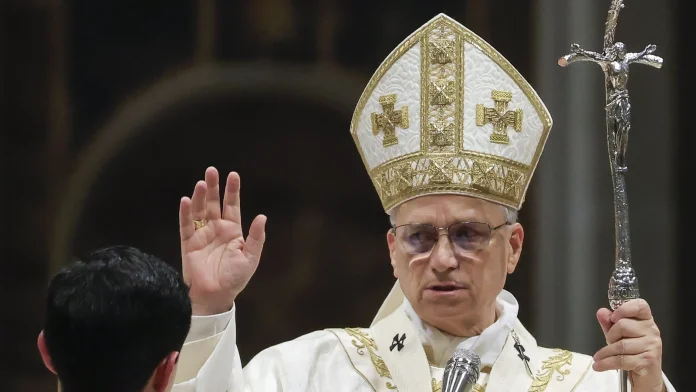
Pope Leo XIV delivers his blessing to the faithful at his first Easter Vigil in St Peter's Basilica at the Vatican
When Bells Sound in a Time of War: Easter Under a Shadow
On a crisp spring morning, St Peter’s Square should have felt like an embrace: a sea of faces craned toward the white silhouette of a pontiff, the air thick with incense, the vibration of ancient bells carrying a single, stubborn message—Christ is risen. Instead there is a hush threaded with headlines. This Easter, the world’s Catholics gathered beneath a new flag: Pope Leo XIV’s first celebration of the feast as pontiff, watched by millions around the globe, but watched through a lens clouded by conflict in the Middle East.
At 9:30am Irish time the pope celebrated Mass on the Vatican’s open stage before several thousand faithful. At 11am he pronounced the Urbi et Orbi blessing—the traditional “to the city and the world” invocation—an appeal that normally lands soft and hopeful on the ears of many. This year, it felt more like a summons: not only to faith, but to conscience and to the uneasy work of peacemaking.
“We came for the resurrection, and we found a question,” said Maria Fernandes, a volunteer from Lisbon who had traveled with a parish group. “We are used to joy here—laughter and children running under the colonnades. Today people kept glancing at their phones, at the screens. You could see the war in the way they held their hands.”
Prayer Amid Proximity to Violence
Pope Leo has been unusually direct about the conflict. In the days leading up to Easter he called repeatedly for an end to the violence in the Middle East and even urged world leaders to seek an “off-ramp” from escalation—an appeal directed, publicly and pointedly, at the U.S. administration. His Easter Vigil homily pressed the imagery of heavy stones: “Even today, there are tombs to be opened,” he said in a message shared widely on the Vatican’s social channels, inviting the faithful to consider the heavy burdens of mistrust, fear and resentment that lock societies in cycles of suffering.
Those words landed differently in different places. In the Vatican they echoed like an ethical challenge; in Jerusalem they felt, heartbreakingly, literal.
Closed Doors at the Holy Sepulchre
In the winding alleys of Jerusalem’s Old City, the Church of the Holy Sepulchre—sites of worship and pilgrimage for centuries—stood largely shuttered. For the first time in living memory, some services were held behind closed doors; pilgrims were kept away from the tomb regarded as the heart of Easter belief. Israel announced restrictions on large gatherings in response to ongoing security threats after the onset of strikes between the United States, Israel and Iran that began on February 28.
“The sepulchre is empty, not because of miracle, but because of a curfew,” said Jack, a 52-year-old resident of the Old City, who asked that his surname not be used. “It’s a strange grief. You come here to touch the stones that tell a story of new life. Now the stones are just stones.”
Latin Patriarch Cardinal Pierbattista Pizzaballa, who has long been a pastoral voice in the region, noted poignantly in his Easter Vigil homily that silence has a weight of its own in this wounded land. Authorities prevented him from celebrating Mass in the church on a prior occasion—a decision that drew international criticism. “The silence here is not a peaceful one,” he told congregants. “It is broken by the distant sounds of a war that sows fear and tears.”
The Village That Kept Its Candle Burning
South of the borderlands, the Lebanese village of Debel—an area with a Christian majority—sat in an uneasy ring of sound: the steady thrum of artillery and the sharp staccato of mortar rounds. Homes were cut off, supply lines frayed, and families huddled in the thin safety of shared rooms. Yet the village prepared, as villages do, for its rites.
“We will have bread and we will bless it. We will light a candle at dawn,” said Joseph Attieh, a town elder, speaking by phone amid the roar of nearby bombardment. “We are terrified. We have not slept. But we put our trust in God—that is the only light we keep.”
It is a small, human image—loaves, a candle, a prayer—that binds the global to the intimate. While presidents and generals argue over strategy on screens, families in places like Debel carry on the rituals that make life bearable: breaking bread, naming the dead, refusing to give up on hope.
Faith, Diplomacy, and the Global Gaze
There are roughly 1.4 billion Catholics worldwide, a demographic fact that underscores how much weight a papal voice can carry on days like this. Yet influence is different from power. Diplomats and analysts say spiritual leaders can nudge public sentiment, inspire humanitarian responses, and shame or bless policies—rarely do they order ceasefires.
“Religious leadership has moral authority, not military leverage,” explained Dr. Amina Khalil, a Middle East analyst based in Geneva. “But moral authority shapes narratives. When a widely followed religious figure highlights the human cost of war, it can mobilize international pressure in surprisingly concrete ways—funding for relief, diplomatic mediation, even shifts in public opinion that force politicians to reassess options.”
The Vatican’s language this Easter was unmistakable in its urgency. The pope’s public entreaties, his use of social media, and the visual of a pontiff standing before an anxious square all played into a larger strategy: keeping the human impact of conflict in view so the world does not get used to it.
What Are We Willing to Lose—or Save?
As you read this, you may be several time zones away from a basilica or a battlefield. You might be sipping coffee and glancing at headlines, or standing in a packed church. I invite you to imagine the two scenes overlapping: a child lighting a candle while a town elder names the dead by the faintest light of a phone screen; a crowded nave where a woman checks messages from a son in uniform.
Who do we save first? What do we preserve as sacred? These are not merely theological questions; they are political and practical, ethical and immediate. The choices made in war rooms ripple into pews and kitchens. They determine whether a father in Debel wakes tomorrow.
Hope, Not as Naïveté but as Practice
There is no tidy resolution at the end of this Easter morning. Yet in every closed church, every family preparing a humble feast, and every leader who uses their pulpit to plead for ceasefire, there is evidence of a stubborn human refusal to normalize violence. Pope Leo XIV’s blessing will be played back on television screens and in living rooms; for some it will be a comfort, for others a call to action.
“Hope is not a passive thing,” said Sister Ana, a missionary who has worked in refugee camps along Lebanon’s border. “Hope makes plans. It asks for help. It feeds the neighbor. This is a season to practice hope as if it were a muscle—we must exercise it so it does not atrophy.”
So what will you do with today’s message? Offer a prayer, make a call to your representative, donate to relief efforts, or simply listen to someone who is carrying weight you cannot imagine. In a world where the drumbeat of geopolitics often drowns out the quiet work of mercy, perhaps the real miracle is collective attention: choosing, together, to turn toward the places where doors have been shut—and to try, humbly and persistently, to open them again.
Moonbound: Riding the Quiet, Thunderous Pulse of Artemis II
There are moments when a single sentence can feel like a rope thrown across centuries. "The...