When Power Crosses a Line: Venezuela, Oil and the Unsettling Pause Between War and Law
Late into a humid Washington night, the Senate chamber hummed with a rare and uneasy consensus. Fifty-two senators voted to advance a resolution designed to stop President Donald Trump from launching further military action against Venezuela without Congress’s express approval. The tally—52 to 47—was as much a legal skirmish as it was a political rebuke, a flash point where constitutional muscle met presidential impulse.
“This isn’t about politics,” a Republican senator who supported moving the measure forward told me afterward. “It’s about preserving the idea that going to war is not a unilateral decision.”
Outside the marble and oak of Capitol Hill, the word that seemed to travel fastest was oversight. Inside, the debate was precise and procedural. The vote was procedural, meant to move a so-called war powers resolution toward a final floor decision. If it becomes law, it would prevent the president from ordering further military operations in Venezuela without a fresh mandate from Congress. But the path from resolution to law is thorny: the House would have to agree, and a presidential veto would require two-thirds majorities in both chambers to override. In the present balance, that looks unlikely.
“Much longer”: the president’s vision — and the man in Caracas
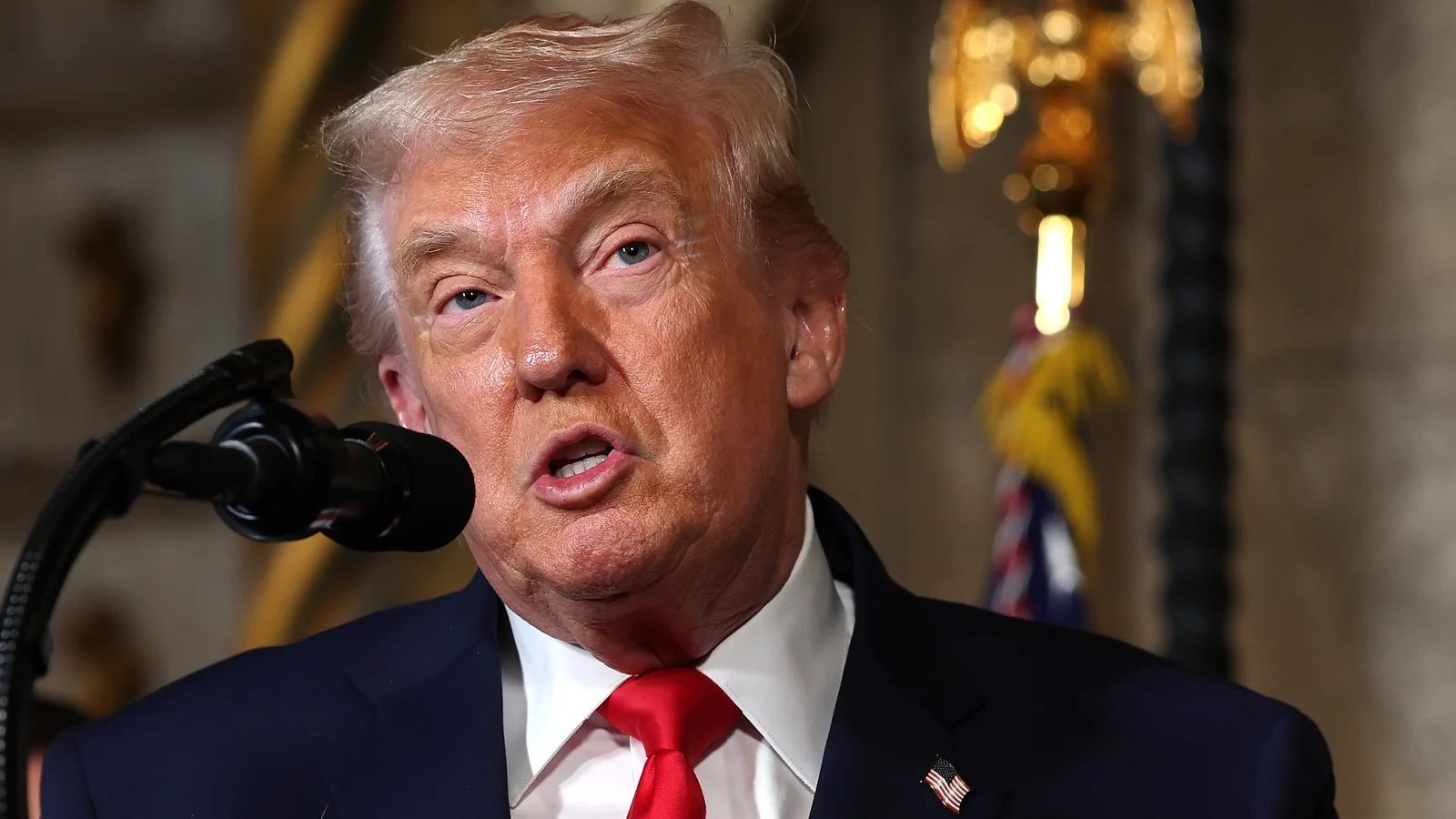
In interviews that accompanied the drama on Capitol Hill, Mr. Trump sketched a future of extended American oversight in Venezuela. Asked how long the United States might supervise the country and control its oil revenue, he offered an answer that was as sweeping as it was vague: “Only time will tell… I would say much longer.”
He promised reconstruction—“We will rebuild it in a very profitable way”—and unveiled plans to refine and sell up to 50 million barrels of oil that had been stuck under a U.S. blockade. In the same breath he said U.S. oil companies would spend “at least $100 billion” to raise Venezuelan production, and he invited Maria Corina Machado, a leading opposition figure, to Washington next week.
By morning in Caracas, the political landscape was scrambled. President Nicolás Maduro had been captured in what officials described as a night raid the previous weekend, and Delcy Rodríguez, a longtime Maduro loyalist, was being presented as the interim head of state. Jorge Rodríguez, the National Assembly president, told state media that a significant number of foreign and Venezuelan prisoners would be freed “during the day” as a unilateral gesture of peace. The opposition and human rights groups had long demanded these releases.
“They have taken everything from us already,” said Mariela, a schoolteacher in eastern Caracas who asked that her surname not be used. “What we ask now is dignity for those still imprisoned.”
On the streets and in exile: voices of a fractured nation
The mood in the city was a strange mixture of jubilation, fear and weary skepticism. In the Sabana Grande market, a vendor who sells arepas—her life soundtrack the hiss of hot oil and the negotiation of prices—stopped mid-transaction to talk.
“We have not known peace in years,” she said, wiping her hands on her apron. “If America is coming with bread, with jobs, then many will welcome that. But we remember promises. We remember hunger. You cannot buy trust with crude.”
Across borders, in Miami’s Venezuelan diaspora neighborhoods, the conversation was different but equally intense. “We want Maduro gone,” said Jorge Alvarez, 42, who arrived in Florida in 2017. “But occupation? Control of our oil? Who speaks for the people who stayed?”
The question of representation is raw. Local rights group Foro Penal estimates there are 863 political prisoners in the country—activists, opposition figures, journalists and protesters detained since the disputed 2024 election. That figure has become a key rallying point for opposition groups demanding amnesty and accountability.
Oil, geopolitics and a ledger of consequences
Venezuela sits above the world’s largest proven crude reserves—hundreds of billions of barrels under weathered soil and rusting infrastructure. For decades, oil was a national promise and, later, a curse: mismanagement, corruption and sanctions helped hollow out the economy even as pump jacks dotted the horizon.
Today, about 8 million people from Venezuela live abroad, a migration crisis that has reshaped families and countries across the hemisphere. Crude is the axis of much of the recent strategy. Mr. Trump’s plan to refine and sell up to 50 million barrels stuck in Venezuela would be a quick economic lever, he argues. He has invited executives from major U.S. oil companies to the White House to discuss investment and reconstruction.
But turning barrels into stability is not simply engineering. It is politics in gear, with oil as the steering wheel. The companies reportedly expected at the meeting—ExxonMobil, ConocoPhillips and Chevron—have decades of experience in Venezuela’s fields, pipelines and refineries, but the operational and reputational risks are huge.
“Even if you can pump oil tomorrow, you cannot rebuild institutions overnight,” said a senior energy analyst in Washington, who asked to remain anonymous due to the sensitivity of commercial discussions. “Infrastructure needs investment, security, rule of law—and community buy-in. Absent those, any revenue funnel is liable to leak into violence or kleptocracy.”
Congress, courts and the question of authority
The Senate’s vote is more than a rebuke to one president; it is a moment when the American system tugged on its constitutional reins. War powers are messy. Presidents like to move fast. Legislatures like to deliberate. The recent vote—bipartisan in its caution—reminds Americans and observers around the world that the decision to use force rests, in principle, beyond a single office.
“This is a cautionary moment,” said an experienced foreign policy professor. “History has shown that short-term tactical gains produce long-term strategic headaches. The Senate isn’t shutting down the president; it’s insisting that the public gets a say.”
Mr. Trump’s response on social media was sharp: he called those Republicans who joined Democrats “ashamed” for what he called an attempt to take away “our powers to fight and defend.” The partisan heat is real, and yet the narrow margins suggest a fissure inside his own party about the scope of presidential reach abroad.
What comes next
The world now watches a collision: a president promising years of oversight in a nation that has already suffered years of collapse; an opposition asking for prisoners and justice; hungry citizens and a diaspora asking whether sovereignty can be bartered for stability.
Will Congress lock the brakes? Will, as the president vows, investors pour in billions? Can Venezuela’s people reclaim agency over a destiny too often determined by outsiders?
Answering those questions will require more than votes and sound bites. It will require humanitarian planning, robust diplomacy, credible local institutions and careful, public-eyed oversight of any commercial or military moves. It will require listening to Venezuelans in Caracas and Caracas émigrés in Miami; to oil engineers and community organizers; to judges and the hungry, too.
For now, the nighttime glow on the Caribbean horizon is a mix of lights—some oil flares, some streetlamps, some searchlights. Whoever designs the next chapter must ask themselves: are we rebuilding a nation, or buying its silence? Who decides the price of its freedom?