From Hargeisa to the Security Council: A Small Port, a Big Diplomatic Ripple
When I first arrived in Hargeisa, the capital of Somaliland, the city felt like a place suspended between eras — dusty markets, neon barber signs, and a skyline of unfinished concrete that points skyward like a question. At a tea stall near the main mosque, men argued not about football or the price of khat, but about maps: who owns which line on the paper map of the Horn of Africa, and whether those lines can be redrawn at the behest of faraway capitals.
“We have always been Somaliland in our hearts,” said Musa, a coffee vendor whose palms still smelled of roasted beans. “Recognition is like a passport for our dignity.” His voice carried the mixture of relief and apprehension you hear when something longed for finally arrives — and with it, the fear of what might follow.
Why the World Suddenly Has Somaliland on Its Calendar
Somalia’s month-long turn at the presidium of the United Nations Security Council — its first in 54 years — has unexpectedly become the stage for a geopolitical tug-of-war that stretches from Tel Aviv to the Red Sea. In recent weeks, the council convened in emergency session, not about Somalia’s long-standing internal struggles, but to discuss recognition of Somaliland by Israel — a move that has electrified the autonomous region and alarmed Mogadishu and its African partners.
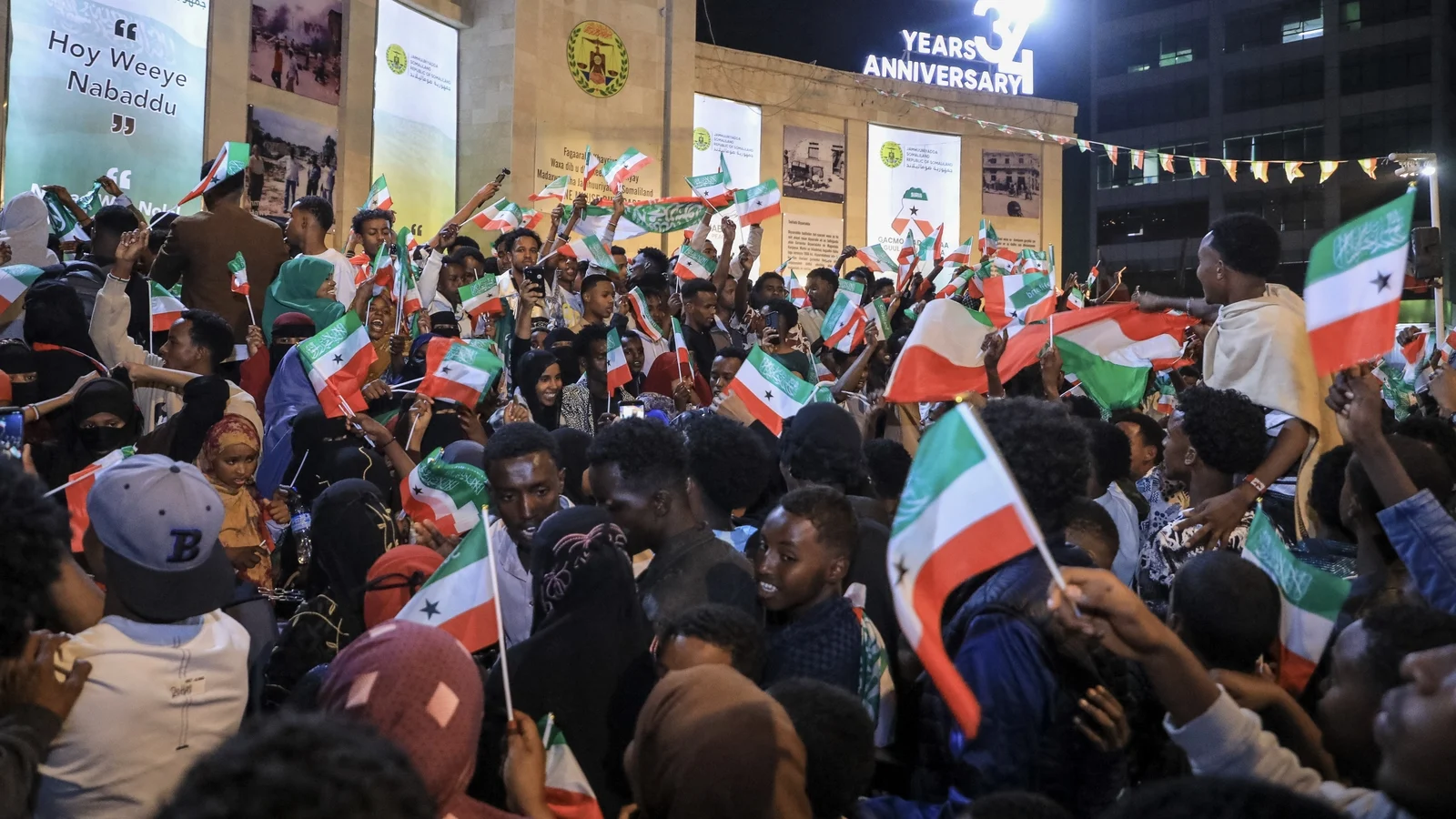
In Hargeisa, the mood is celebratory. Banners flutter from car windows, and locals speak of the prospect of new embassies, investment in ports, and the legitimacy they crave after three decades of de facto independence. “This is not just a political stroke,” said Amina, a local entrepreneur who runs a textile stall. “For my daughters, it means travel documents and the chance to study abroad without bureaucracy.”
But for Somalia’s representatives in New York, the development has been framed very differently. “This was injected into the international arena to divert attention from what is happening in the occupied Palestinian territories,” one Somali diplomat told journalists in a tense briefing, accusing Israel of instrumentalising Somaliland for political gain at a time when Gaza and the West Bank dominate headlines and international outrage.
What Israel Hopes to Gain — and What It Risks
On the surface, Israel’s outreach to Somaliland seems like a typical expansion of diplomatic horizons: a small, strategic piece on the chessboard of regional influence. Last month, Israel’s foreign minister visited Hargeisa, the highest-level contact since recognition. The delegation was greeted with fanfare, officials traded speeches and cameras flashed — but beneath the ceremonial ribbon-cutting, the calculus was more complex.
“For Israel, Somaliland is both an opportunity and an experiment,” said a Middle East analyst based in London. “It buys Israel a foothold on the Gulf of Aden, potentially an alternative to the troubled southern route through Eilat — but it also comes with diplomatic cost.”
The calculus is not purely military. The Abraham Accords, once hailed as a breakthrough in Middle East diplomacy, encouraged Israeli engagement across the region on commerce, technology, and security. But after the trauma of war in Gaza and a polarized domestic scene at home — where some polls show the government’s approval tumbling — Israel’s diplomatic moves increasingly look like attempts to reframe its international image and secure new partners.
“When a government faces criticism at home and abroad, it tends to look for wins it can highlight,” said an international relations scholar who asked for anonymity. “New alliances can be presented as strategic creativity.”
At Sea: The Red Sea’s New Fault Lines
The geopolitics are anchored — literally — in maritime routes. Israel’s southern port of Eilat has faced a dramatic downturn in traffic after repeated strikes and interceptions in the Red Sea by Houthi forces based in Yemen. Shipping reports and local observers say activity through Eilat plunged by more than 90% at the height of the disruptions, squeezing an already fragile economic artery. The Houthis have fired drones and missiles, citing solidarity with Palestinians in Gaza, and have increasingly blurred the line between local rebellion and regional proxy warfare.
“You cannot operate like you used to,” said Ibrahim, a longshoreman at a port near Berbera, the major commercial gateway for Somaliland. “Ships avoid these waters, insurance is higher, and jobs disappear. If Somaliland wants to prosper, it needs stability at sea.”
For Israel, a relationship with Somaliland could mean a logistical base closer to the Bab el-Mandeb chokepoint, a way to project power or protect shipping lanes without relying on partner bases in Eritrea or Djibouti — where the calculus of mutual interest has also shifted in recent years.
Local Voices, Regional Risks
Not everyone in Somaliland is unreservedly enthusiastic. In the quiet backstreets of Hargeisa I met Nasra, a schoolteacher who worries about the price of newfound attention. “We welcome friends, but we must protect our peace,” she said. “Our people remember war. Any promise of security must not bring new conflict.”
From Mogadishu, arguments are harder-edged. Somalia’s government and the African Union warned that the recognition sets “a dangerous precedent,” arguing it could destabilise the fragile Horn of Africa, already battered by drought, displacement, and violent extremism. “Borders drawn by guns and diplomacy without consensus can unsettle an entire region,” a senior African Union official told me in Nairobi.
What This Means for the Palestinian Question — and for Global Norms
There is also a broader narrative at play. For critics, Israel’s move is less about the Horn of Africa and more about optics: a diplomatic sidestep designed to divert attention from Gaza and Israel’s domestic controversies. “It’s a form of strategic distraction,” an international law expert said. “But distraction does not erase responsibility.”
Some commentators argue that this type of diplomatic recalibration reflects a fractured global order — where old alliances are being re-wired and states are making transactional deals with less regard for long-term regional consensus. Is sovereignty a commodity to be traded when it suits powerful capitals? What happens to people on the ground when international law and local realities collide?
Choices, Consequences, and the Question of a Two-State Future
One of the most jarring tidbits to surface from this diplomatic zigzag was a suggestion reportedly floated in political corridors: relocating displaced Palestinians from Gaza to places like Somaliland. The idea was roundly rejected by Somaliland’s leaders and many international observers as impractical and morally fraught.
“You cannot resettle a national question into a territory that also has its own unresolved identity,” said a humanitarian worker. “It’s not just logistics; it’s dignity and justice.”
For many analysts, the episode is a reminder that the Israeli-Palestinian question remains the elephant in every Middle Eastern room. Even if new ties are formed and new ports gain importance, the absence of a clear pathway to peace continues to cast a shadow. “A two-state solution is complicated and elusive, but what is the alternative?” an academic at a regional think tank asked. “Fragmentation and displacement are not sustainable answers.”
Where Do We Go From Here?
Back in Hargeisa the tea stall has closed, but the questions the locals asked over countless cups linger. Will international recognition bring prosperity or entangle Somaliland in broader geopolitical rivalries? Can Somalia, the African Union, and the UN find a pathway toward dialogue that respects territorial integrity and the wishes of Somalilanders? And in a world where alliances shift faster than people’s lives do, who will be accountable when the wind changes again?
These are not easy questions. They have no tidy answers. But sitting across from Musa at the tea stall, watching him fold a newspaper that might tomorrow headline yet another diplomatic surprise, I felt the human pulse beneath the geopolitics. Recognition, after all, is more than a diplomatic stamp. It is the promise — and the peril — of a future people can believe in. How we choose to honor that promise will say as much about our global values as it does about the strategic ambitions of far-off capitals.