“Say Her Name”: A City Shivers, then Roars — Minneapolis and the Rising Outcry Over ICE
The air in Minneapolis felt like a held breath — thin, cold, and electric. Snow crusted the sidewalks and flattened the city’s usual colors into a muted palette of gray and brick. But when the crowd reached Powderhorn Park, muffled footfalls turned into a chorus: “Say her name!”
“Renee Good!” came the reply, a thousand voices folding the name into the winter sky. It was not just a chant. It was a funeral and a summons — a way to turn grief into visible, noisy demand.
What happened
On a frozen Wednesday, 37-year-old Renee Nicole Good was shot and killed in her car by an agent with Immigration and Customs Enforcement (ICE), sending shockwaves through Minneapolis and beyond. The fatal encounter unfolded as federal agents were carrying out an immigration operation that has become emblematic of a broader and more aggressive enforcement posture under the Trump administration.
Video released and circulated in the hours afterward shows the tense minutes before the shooting. In one clip, an agent approaches Good’s vehicle as she sits inside. “I’m not mad at you,” she tells him. Commands, a scuffle for space, then — according to local officials and witnesses — the sound of gunfire. Federal officials have said the officer fired in self‑defense; local authorities and community members say the footage undermines that claim.
How the city responded
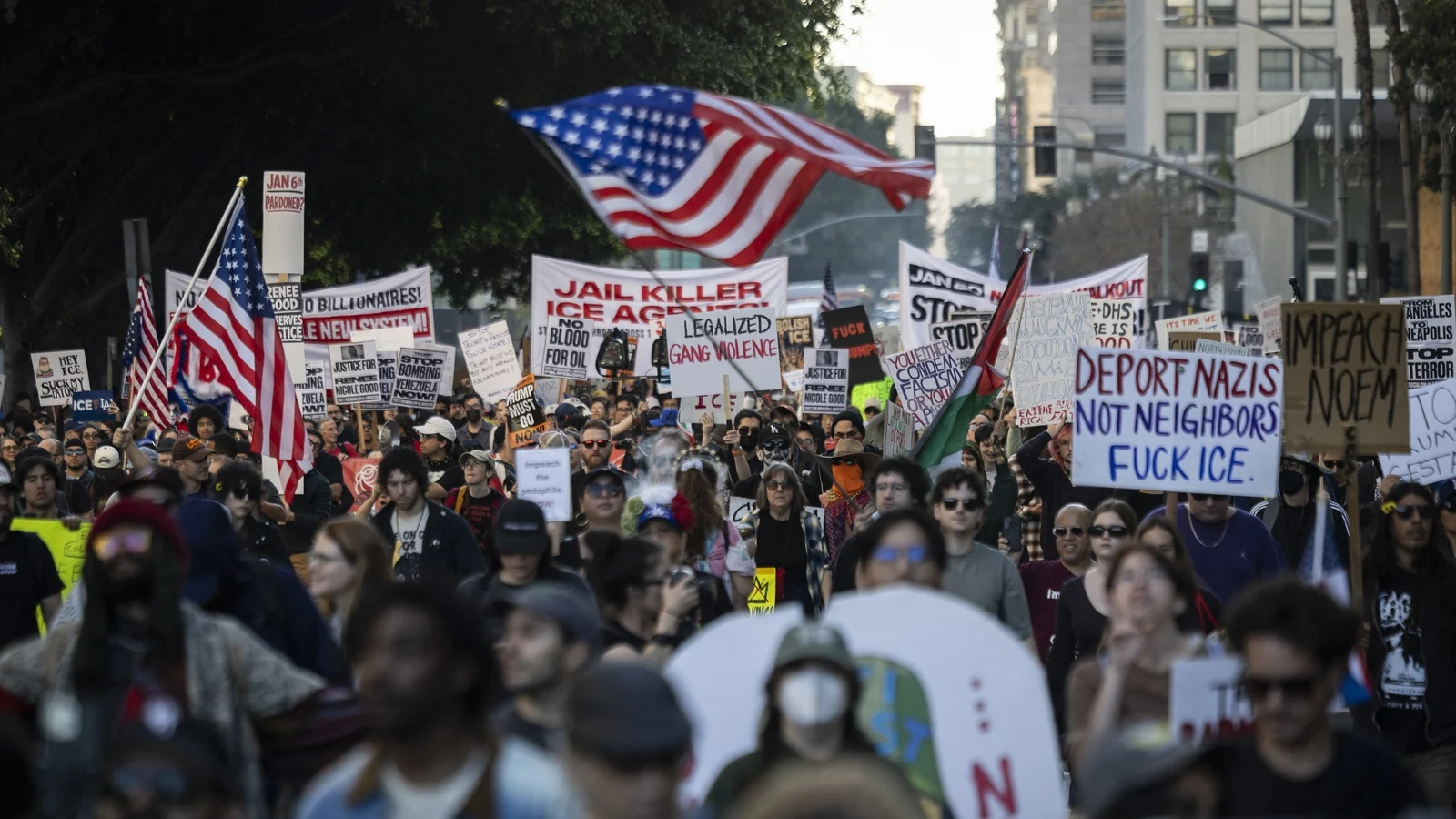
Within days, hundreds — then thousands — of people answered a call to protest under the banner “ICE, Out for Good.” Organizers said more than 1,000 events were planned nationwide. In Minneapolis, demonstrators bundled in scarves and parkas converged on the site near Powderhorn Park, their signs scrawled with blunt directives: “ICE OUT,” “No More Militarized Immigration,” “Justice for Renee.”
“We can’t let this become just another headline,” said Marisol Alvarez, a community organizer who helped coordinate the Minneapolis march. “Every time authorities kill someone, we have to remember the person behind the name. Renee was a mother, a neighbor, someone who laughed. We are here to make sure she is not erased.”
The broader pattern
Renee Good’s death is not an isolated incident in the public eye. Since the Trump administration ramped up deportation efforts, federal immigration enforcement has come under intense scrutiny. Media investigations and watchdog groups have documented multiple deadly or injurious encounters involving ICE agents and other federal officers. The Trace, a nonprofit that focuses on violence, reported this was the fourth person killed by federal immigration agents since the launch of that particular deportation campaign, with several others wounded.
To put the scale in context: ICE and its predecessor agencies have been major instruments of immigration control for decades. Annual removals have historically numbered in the hundreds of thousands — for instance, in Fiscal Year 2019 ICE reported roughly 267,000 removals. The agency’s footprint, its tactics, and its expanding use of armed, tactical teams have fueled debates about transparency, oversight, and the proper role of federal law enforcement in communities.
Voices from the streets
“My sister called me and was bawling,” said Drew Lenzmeier, 30, who drove into the city for the demonstration. “I came because I feel like our rights are being taken away. This feels like a slide to authoritarianism when federal agents shoot people like this in broad daylight.”
Alicia Johnson, a local hairdresser who brought hand‑painted signs to the march, paused as a line of protesters passed a makeshift memorial of candles and flowers. “Renee’s life mattered,” she said. “We treat people like they can be removed from communities without consequence. Families are torn apart. Kids are scared. You can see it in every neighborhood where these raids happen.”
Not everyone at the rally fit a single profile. There were longtime activists from the “No Kings” network that helped galvanize nationwide protests last year, students from nearby colleges, faith leaders who had arrived from other cities, and older residents who remembered past waves of civil rights organizing.
Official responses and contested narratives
The White House defended the agent’s actions, calling the officer’s account — that he fired in self‑defense — consistent with the video released by federal authorities. Officials even used the clip to assert the agent’s actions were necessary and lawful. But that narrative is disputed by local electeds and community advocates, who say the footage does not clearly show a threat that would justify lethal force.
Mayor Jacob Frey, in a statement to local media, urged patience while the federal FBI investigation proceeds but stopped short of offering an unqualified defense of the agent’s actions. “We need transparency and accountability,” a Minneapolis city council member, Aisha Khan, told me at the memorial. “This is a community issue, not just a federal operation. People deserve to know the truth.”
Questions of oversight
Tensions are heightened by frustration over jurisdiction. City and county leaders say they were marginalized as the FBI took the lead in the investigation — a dynamic that left many residents feeling sidelined just when they most wanted local authorities to protect their interests.
Nationally, critics say the structure of ICE — a federal agency with immigration enforcement and deportation authority but limited public oversight — invites confrontations that too often end badly. Proponents argue ICE is essential to border security and enforcing immigration laws. Which narrative will dominate is a battleground, fought in courtrooms, town halls, and the streets.
What this moment asks of us
Standing at the edge of the crowd, you could feel how public grief quickly morphs into political energy. Protest songs met chants. People blew whistles, banged on overturned pots, and marched toward hotels where some believed federal agents were billeted. A handful were arrested; they were released hours later. The scene — ragtag, determined, sincere — felt like a reminder that democratic pressure rarely sleeps.
But beyond the immediate calls for investigations and resignations is a deeper question: what kind of society do we want when it comes to borders, enforcement, and dignity? How should states balance rule of law with human rights? When an enforcement operation results in a death, how do we ensure accountability without immediately collapsing into reflexive accusations?
“This isn’t just about Renee,” Marisol Alvarez told me as the last of the marchers drifted away, their breath clouding in the night. “It’s about a system that treats certain people as expendable. If we let that stand, what’s next? Who’s the next person we decide we can take away?”
Takeaway
The protests in Minneapolis — and the solidarity actions in cities from Philadelphia to Boston — are more than reactions to one tragic incident. They are a public insistence that the machinery of enforcement be examined, restrained, and made transparent. Whether those demands lead to policy change, federal accountability, or sustained civic pressure will depend on how communities, attorneys, and lawmakers choose to act in the weeks and months ahead.
As you read this, ask yourself: where do you stand on the balance between security and rights? And when a voice calls out a name into a cold sky, will you listen?