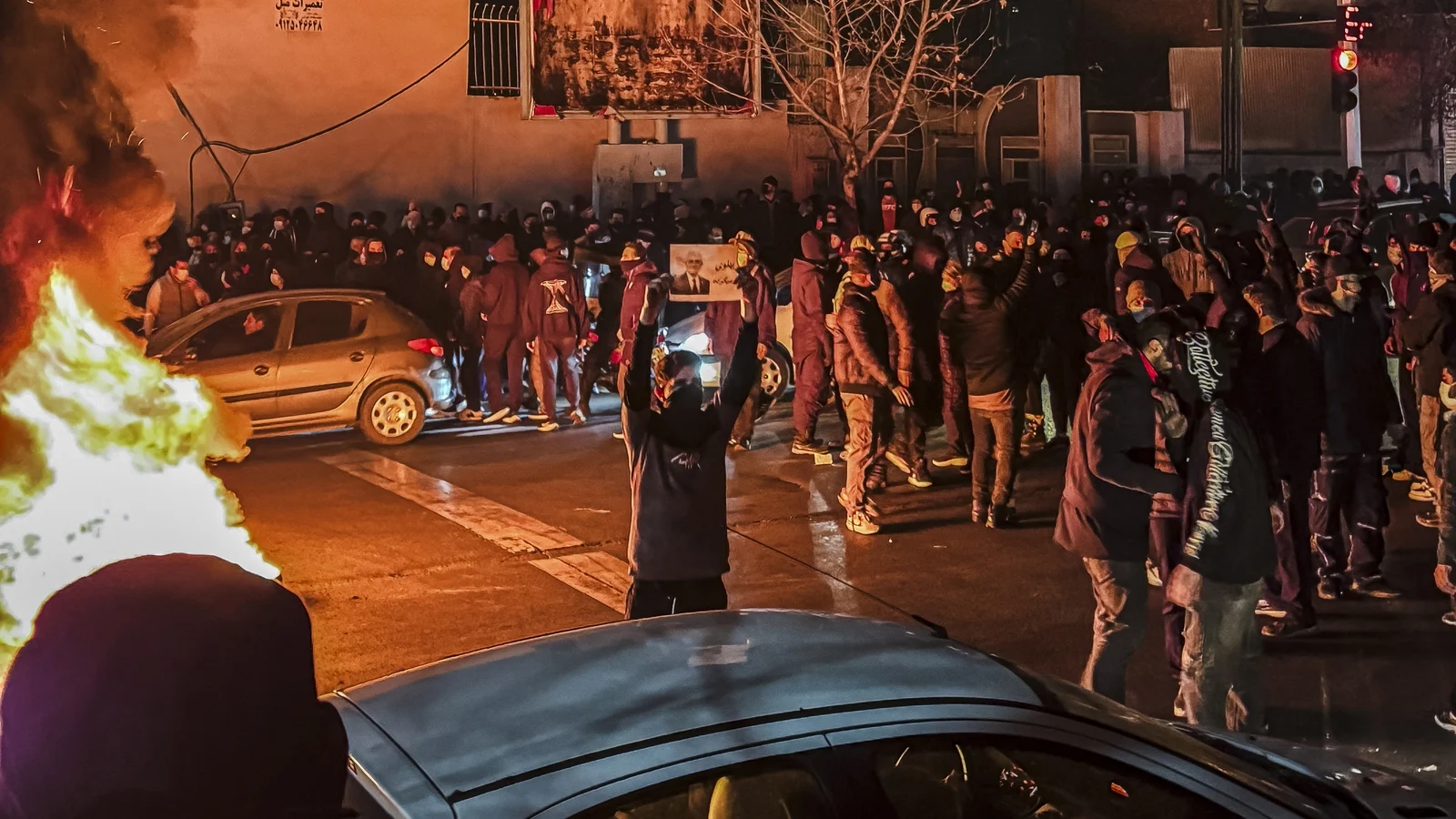
Streets of Fire and Hope: Iran at a Crossroads
On a cool evening in Tehran, smoke hangs low over Enghelab Square like a bruise. The air tastes of ash and determination. Makeshift barricades burn along side streets. In coffee shops, the usual hum of conversation has been replaced by whispered updates on the chants and the curfew times. Cars slow, drivers stare at speakers mounted on pickup trucks blaring slogans, and in the windows of apartment blocks, silhouettes — sometimes a defiant fist, sometimes a white cloth — appear like punctuation marks against the city’s skyline.
“We are exhausted, but nobody is going home,” says Sara, a 28-year-old nurse who stepped out from behind the hospital to distribute water to demonstrators. Her cheeks are flushed; her voice is steady. “This is about dignity as much as bread. You can’t treat people like they have no worth.”
The protests that have erupted across Iran are the sharpest domestic challenge the clerical establishment has faced in years. What began as local grievances — spiraling prices, joblessness, the squeeze of sanctions — has bloomed into something more expansive: an outpouring of public anger, anger at an opaque power structure, at a generation that feels boxed in.
Voices from the Square
By day, small groups gather to chant. By night, the numbers swell. A shopkeeper in the Grand Bazaar, who asked to be identified only as Reza, says business has dried to a trickle but he still comes out to join the crowds.
“You can be against everything and still be hungry,” he told me, fingering his wool cap. “We want to rebuild a life that lets us breathe. That scares those who have everything to lose.”
There are also quieter, more pained testimonies. A mother named Laleh showed me a photograph of her son, where he looks like a teenage boy just back from a holiday—until she points to the date scrawled in the corner. “He went out to protest for one hour,” she said. “We have heard — from friends, from the hospital — that many won’t come back.”
Counting the Cost
State institutions have acknowledged a deadly toll. An Iranian official speaking to state media said roughly 2,000 people had been killed amid the confrontations — the first time authorities admitted to such a large number in the wave of unrest. The same official blamed “terrorists” for killings of both protesters and security personnel, but offered no breakdown of the identities of the dead.
Numbers matter here because they are the raw currency of grief and of outrage. Independent verification is difficult when internet blackouts and restrictions on foreign journalists are in force, but human-rights groups and doctors inside Iran have been sending fragmented, painful accounts of hospitals overflowing and morgues running short of room.
Pressure from Abroad — A Chorus, Not a Chorus Line
The unrest has not unfolded in a vacuum. In Washington, the former U.S. president took to social media to urge Iranians to keep protesting — writing, “Iranian Patriots, keep protesting — take over your institutions!!!… help is on its way.” He said he had cancelled meetings with Iranian officials until the “senseless killing” stopped and announced a sweeping measure: 25% import tariffs on goods from any country that continues substantial trade with Iran.
“This is a pressure campaign designed to further isolate Tehran economically,” said a foreign policy analyst based in Brussels. “Tariffs are a blunt instrument, and in the short term they will stoke political friction between Western capitals and countries that buy Iranian oil or trade with Iran.”
Beijing was quick to criticize the tariffs, emphasizing its commercial ties with Iran, and Russia accused outside powers of “subversive external interference,” warning against any repetition of military action it called “aggression” earlier in the year. Leaders across Europe offered a mix of condemnation and calls for restraint: France denounced “state violence” targeting men and women demanding rights; Ireland’s Taoiseach said he would “prefer additional sanctions” given the government’s repression of protests; Germany’s chancellor issued a bold prediction that the regime might be in its final days.
What’s at Stake — A Quick Guide
- Human lives: reports of roughly 2,000 dead and many more injured.
- Political legitimacy: mass protests testing the endurance of a regime in power since 1979.
- Regional stability: potential spillover effects in the Middle East, with major powers watching closely.
- Economic pressure: sanctions, tariffs and disrupted trade could deepen domestic hardship.
Between Solidarity and Sovereignty
There is a geopolitical tug-of-war playing out around Tehran’s streets.
“External statements help, but they can also be a double-edged sword,” says Dr. Afsaneh Mirzaei, a Tehran-based sociologist who studies social movements. “If people in the streets are seen as instruments of foreign policy, it can reinforce the narrative used by hardliners: that dissent equals betrayal.”
Yet the protesters themselves insist their motives are homegrown. “We are not puppets,” says Amir, a telecoms worker who chants by day and helps organize medical supplies by night. “Look at our faces. We’re not asking for foreign flags — we are asking for basic rights.”
Culture, Creativity, and Defiance
In a city as layered as Tehran, protest has its own aesthetics. Poetry—an omnipresent art form in Iran—surfaces in chants. Women braid hair in public to share water and mutual support. Old revolutionary songs get remixed into defiant anthems by an online youth culture that mixes Persian rhythms with global hip-hop beats. There is a pervasive sense that these protests are not merely about policy but about the right to live fully in one’s own skin.
“When a people take to the streets, they bring their stories,” says Neda, a university student who has been documenting events on her phone. “There are grandparents who remember 1979, and toddlers who will never know anything else. This intergenerational anger is scary to some, but it’s also where possibility lives.”
Where Do We Go From Here?
Predicting the arc of history is a fraught business. Authoritarian systems have proven durable across decades; yet they are not immutable. Economic pain, combined with cultural shifts and the rapid flow of information, creates pressure points that can unpredictably snap. The world is watching: allies, adversaries, and ordinary citizens trying to make sense of images flashing across their screens.
Ask yourself: when people risk everything to be seen and heard, what responsibility do distant governments and global audiences have? Is support best expressed through sanctions, through diplomatic pressure, or by amplifying the voices of those on the ground? There are no easy answers.
As night falls and the barricades cool, another day of protests is announced. People refill canisters with water, bandage open wounds, and sharpen slogans into poems. They do this not out of naiveté, but because in their hearts a different future seems possible — just within reach. Whether it arrives will depend on the stubborn grit of the streets, the calculations of power at home and abroad, and the capacity of a global community to listen with more than just a headline in mind.