From Olympic Slopes to International Headlines: The Strange, Shadowed Life of Ryan Wedding
Imagine a man who once carved arcs of snow at 80 kilometres an hour in front of cheering crowds, now pictured handcuffed on a tarmac somewhere south of the border. The image jars. It feels like a script pulled from a novelist’s notebook: an athlete who became a fugitive, a life that seems to splinter into two almost incompatible biographies.
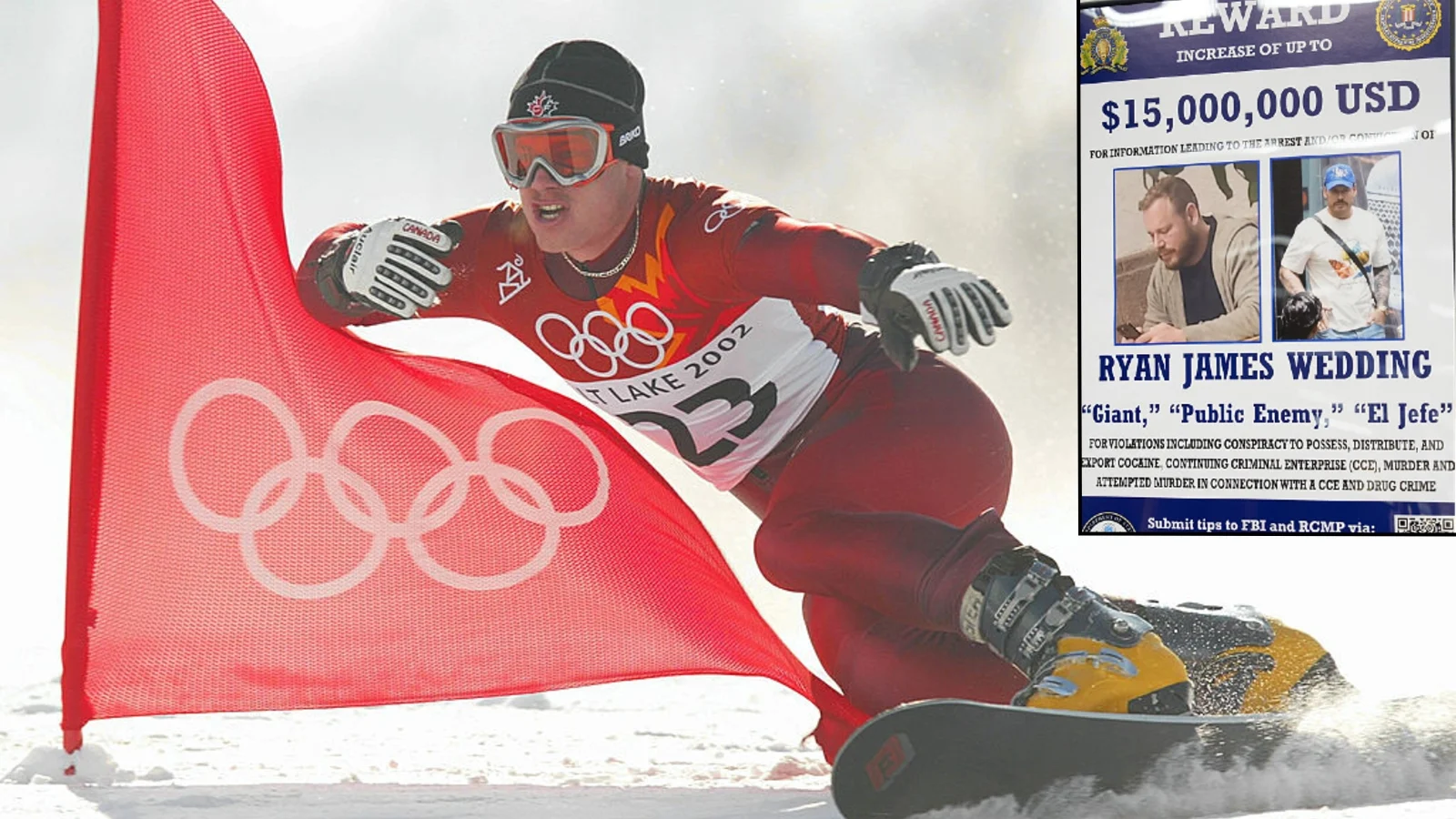
That, in essence, is the story authorities unveiled when they announced the arrest of Canadian-born Ryan Wedding — a former Olympic snowboarder — in Mexico. Wedding, 44, who represented Canada at the 2002 Salt Lake City Games and finished 24th in the parallel giant slalom, is now accused of running a transnational cocaine trafficking ring and implicated in murder charges, according to U.S. law enforcement statements.
The capture and what authorities are saying
Officials described a cross-border operation that ended with Wedding in custody in Mexico and being transported to the United States to face charges. He had reportedly been on the run for more than a decade and was listed among the FBI’s Ten Most Wanted. The U.S. State Department put a $15 million reward on information leading to his capture — a sum that signals how seriously authorities viewed this case.
“This is the kind of arrest that required patience, coordination and years of following threads that crisscross borders and oceans,” said a U.S. law-enforcement official involved in the investigation, speaking on condition of anonymity. “We followed financial flows, communications, and the people around him. That led to Mexico.”
Authorities say Wedding — known to associates by aliases like “El Jefe,” “Giant” and “Public Enemy” — was allegedly part of a Sinaloa Cartel operation that shipped hundreds of kilograms of cocaine from Colombia through Mexico and into Southern California and Canada. Seven alleged co-conspirators were arrested in Canada last November, among them individuals who worked as legal and logistical support for the scheme; extradition proceedings are reportedly underway.
How does an Olympian become a fugitive?
To hear former teammates tell it, Wedding’s descent into the underworld is not the stuff of overnight transformation. “You don’t wake up one day and become a cartel kingpin,” said a man who once trained with him in Calgary and asked not to be named. “There are fractures you only see afterward — debt, anger, the people who pull you in.”
But the juxtaposition is unnerving. The same hands that once balanced a board on icy rails are now alleged to have orchestrated shipments of cocaine measured in hundreds of kilos. The transformation invites a host of questions about identity, opportunity and the porous borders between sport, celebrity and criminal enterprise.
Voices from the places that mattered
In a dusty border market not far from where investigators believe some of the smuggling routes ran, vendors shrugged as if to say such headlines land here like seasonal storms: loud, then forgotten. “People come and go,” said Mariela, who runs a taco stall. “Some are athletes, some are tourists, some are dangerous. We sell tacos either way.” Her laugh is a small, human punctuation to a story that otherwise leans on indictments and wiretaps.
Down the block, a retired customs officer recalled the ingenuity of traffickers. “Over the years, the techniques evolve — hidden compartments, commercial shipments, the use of third parties,” he said. “What’s stayed the same is the hunger for profit and the human cost.”
Scale and context: why this arrest matters
The arrest is more than a celebrity-fugitive story; it spotlights the stubborn persistence of global drug networks that funnel hundreds of tonnes of cocaine annually toward North American markets. While yearly totals ebb and flow, international agencies consistently report that Latin America — particularly Colombia — remains the principal source of cocaine, with Mexico serving as a major transit and distribution hub.
Why should a reader in Tokyo, Lagos, Lagos or London care? Because those flows fuel violence, corrupt institutions, and public-health crises across continents. Cocaine trafficking is not merely a headline in North American papers: its ripple effects are global, shaping migration patterns, straining law-enforcement resources, and contributing to a market where synthetic and adulterated substances increasingly endanger users.
Allegations, not convictions
It’s critical to remember — Wedding faces allegations. In the U.S. legal system he is entitled to the presumption of innocence until proven guilty in court. Defense lawyers often argue that high-profile cases attract sensationalism that can muddy facts in the public imagination.
“The court of public opinion moves fast; the court of law moves more slowly,” said an experienced defence attorney in Toronto. “We will examine the evidence thoroughly. Allegations don’t equal guilt.”
The human cost behind the headlines
Amid the sketches of seizures, rewards and extradition paperwork, the human consequences ripple outward. Families on two continents watch court calendars. Communities where shipments pass become more dangerous, and law-enforcement officers in multiple countries risk their lives to track networks that are increasingly sophisticated.
“Every kilogram has a story,” said a drug policy analyst in Washington who studies trafficking corridors. “Behind the numbers are farmers, smugglers, users, kids who never had a fair start. When we talk about a single arrest, we must also ask what systems enabled the crime.”
Questions to sit with
What does it mean when an Olympic athlete is alleged to have become a central cog in a transnational criminal machine? What responsibilities do sporting bodies, governments and communities have to spot and intervene in the slow unravelling that can lead to crime? And how do societies balance the need for security against the presumption of innocence?
These are not rhetorical flourishes; they are invitations to think about prevention, rehabilitation and the social scaffolding that either catches people or fails them.
What’s next
Wedding’s fate now moves through legal hallways: extradition procedures, arraignments, discovery and, potentially, a trial. If convicted, the penalties for large-scale cocaine trafficking and murder are severe in the U.S., and the case could take years to resolve. The Canadian detainees arrested last year also face legal reckonings tied to the alleged network.
For now, the arrest closes a chapter in a chase that involved tips, surveillance and international cooperation — and opens another that will be written in court filings and witness testimony. It is a rare and strange story: one that stitches together snow-swept slopes and the shadowy corridors of global crime.
As readers, what do we do with a tale like this? We listen. We ask hard questions. We remember that every headline lives atop a deeper reality of people and choices, and we keep watch — not just for the fall of a single man, but for the structures that enable such falls to happen at all.
- Key facts: Wedding is accused of cocaine trafficking and murder, allegedly tied to shipments from Colombia through Mexico into Southern California and Canada.
- Reward: U.S. State Department reportedly offered $15 million for information leading to his capture.
- Previous life: Competed for Canada in snowboarding at the 2002 Salt Lake City Olympics (24th in parallel giant slalom).