When the Sky Fell Cold: How One Winter Storm Stretched Across a Continent
Airports turned into quiet cathedrals of lost plans. In ticketing halls, children clutched stuffed animals beneath scarves, business travelers stared at departure boards frozen mid-update, and flight crews folded up their schedules like maps that would never be used. More than 4,000 flights were scrubbed as a sprawling winter system—equal parts snow, sleet and bone-deep cold—raced from the Rockies toward the Atlantic seaboard, threatening to pin down life across two-thirds of the United States.
At 2 a.m. EST, PowerOutage.com counted roughly 217,000 customers without electricity, the bulk in Louisiana, Mississippi, Texas and Tennessee. Federal emergency declarations now blanket a swath of states—South Carolina, Virginia, Tennessee, Georgia, North Carolina, Maryland, Arkansas, Kentucky, Louisiana, Mississippi, Indiana and West Virginia—with at least 20 states plus Washington, D.C. announcing states of emergency. Transportation officials warned that up to 240 million people could feel the storm’s reach. Numbers like these don’t just describe a weather event; they sketch the contours of disruption.
Neighbors, Not Headlines
Walk into any neighborhood affected and the big statistics sharpen into human detail. “My generator stutters, then sings,” said Maria Jimenez, 62, from a dimly lit kitchen in Baton Rouge, where an oak tree bowed under a coat of ice. “I’m heating water on a camping stove, and my neighbor across the street brought over a pot of caldo. We’re fine as long as we’re together.” Her voice carried the strange warmth that surfaces when people confront the cold together.
In Greenville, South Carolina, a highway sign flashed an austere message: “DRIVE WITH CAUTION.” Local sanitation crews—bundled in reflective jackets, their breath steaming in the air—labored to clear sidewalks and push stranded cars out of suburban driftways. “We don’t get snow like this every year,” said Malik Thompson, a crew foreman, rubbing his gloved hands. “In the South, an ice storm can make a whole city stop. It makes you plan differently—your barbecue turns into a neighborhood tea party.”
Power Grids, Data Centers, and the Thin Margin of Comfort
The storm has strained more than thermostats. Grid operators took preemptive measures to ward off rotating outages. The Department of Energy issued an emergency order allowing the Electric Reliability Council of Texas to deploy backup generation to critical sites, including data centers. Dominion Energy, which serves a huge concentration of data farms in Virginia, warned that if ice forecasts hold, operations could face one of the largest winter impacts in recent memory.
“Our critical infrastructure is only as resilient as the weakest link,” said Dr. Aisha Khan, an atmospheric physicist who studies extreme-weather impacts on utilities. “When ice coats transmission lines and temperatures plummet, the risk of cascading failures rises. The question isn’t ‘if’ but ‘how quickly’ operators can isolate trouble and restore service.”
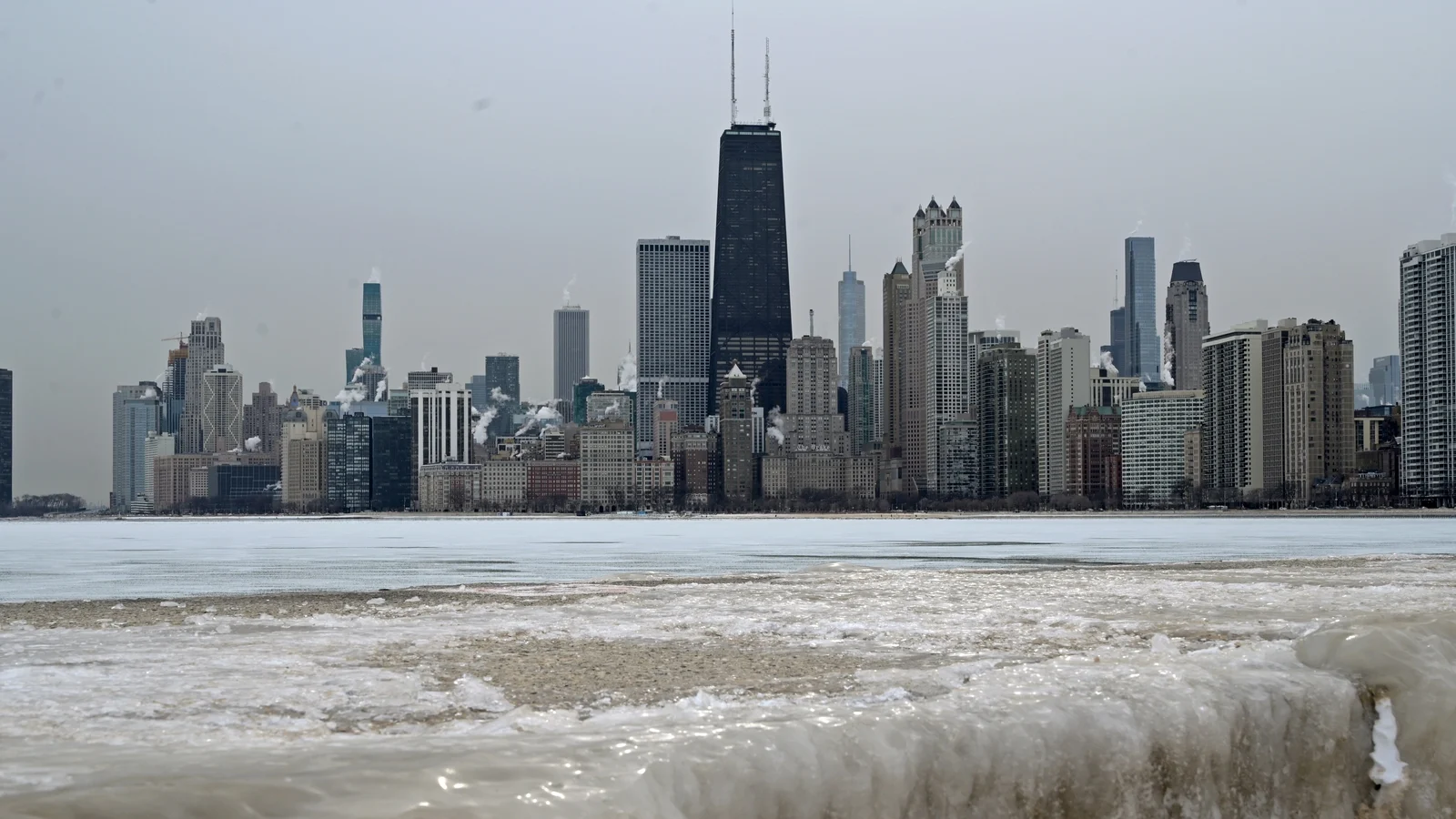
And time is a merciless currency. In the northern tier, the National Weather Service warned of wind chills plunging toward -45°C, conditions that can cause frostbite in minutes. New York Governor Kathy Hochul urged people to stay inside, reminding residents that “five or six minutes outside could literally be dangerous for your health.” Such warnings are not abstract; they translate into hospital triage, frozen pipes, and the brittle calculations of whether to pull an elderly neighbor into your living room.
The Long, Oval Reach of the Polar Vortex
At the heart of the blast of cold sits a stretched polar vortex: an Arctic pocket of low-pressure air that, when it elongates, funnels frigid air southward. Scientists caution that while natural variability plays a role, the increasing frequency of polar-vortex disruptions is a puzzle that may be linked to climate change. “The polar regions are changing fast,” Dr. Khan said. “That throws curveballs into the jet stream, and those curveballs show up as unusual winter extremes.”
The political conversation has been brisk, too. President Donald Trump issued federal disaster declarations for a dozen states and posted on Truth Social, urging Americans to “Stay Safe, and Stay Warm.” On the other side of the debate, public-health officials and environmental scientists used the storm as a reminder that extreme weather demands both short-term preparedness and long-term resilience investments.
Travel, Commerce, and the Ripple Effect
Airlines urged travelers to check itineraries; airports became holding pens for uncertainty. When flights pause, the economy shudders in tandem: freight delays, canceled surgeries because specialists couldn’t make it, perishable goods stranded in trucks. “We saw a domino effect in 2014 when a big snow squall hit Chicago; flights canceled there mean empty shelves elsewhere,” said Lena Rodriguez, a logistics planner in Atlanta. “In a globalized supply chain, weather in one place is a problem everywhere.”
And for communities in the American South—where many city services and infrastructure are built for milder winters—the shock is cultural as well as mechanical. Live oaks glaze into chandeliers of ice. High school football coaches debate whether to move practice to the gym. Churches turn into warming centers. The South’s relationship with cold is always negotiated anew during a storm like this.
Practical Steps and Human Choices
When forecasts go dire, preparation matters. Simple actions—insulating pipes, checking on elderly neighbors, having a charged phone and a week’s supply of nonperishable food—can mean the difference between a hard night and a crisis.
- Check local emergency alerts and confirm evacuation or warming center locations.
- Keep a list of emergency contacts and one hard copy in case phones fail.
- Avoid driving unless absolutely necessary; black ice and downed limbs make travel deadly.
- If you must run a generator, place it outdoors and away from windows to prevent carbon monoxide poisoning.
Beyond the Storm: A Call to Rethink Resilience
Storms like this expose more than chilled pipes; they expose our choices. Which communities have robust heating assistance programs? Which utilities have upgraded lines and tree-trimming budgets? Which cities have warming shelters that are both accessible and well-publicized? The answers point to inequality as much as meteorology.
“Natural disasters don’t hit everyone equally,” said Kareem Ali, director of a community nonprofit in Memphis. “The folks who are most at risk are often the ones with the least capacity to prepare. That’s a policy decision, not fate.”
As the snow piles and the ice-laden trees bow, ask yourself: who will you check on? What can your city do differently next season? How do we transform a moment of shared discomfort into long-term change? The storm will pass, as storms do. But the choices we make now—about infrastructure, emergency response and community care—will determine whether the next one is merely a headline or a catastrophe.
Tonight, across split-level homes, apartment towers and farmhouse kitchens, people are lighting candles, wrapping pipes, and knocking on doors. They are the quiet counterweight to the statistics: neighbors trading blankets, volunteers running soup to the housebound, airline ground crews staying late to help travelers find a bed. These are the small acts that make a cold world warmer. Will you be part of them?