A New Chapter: When Two Billion People Suddenly Shared a Marketplace
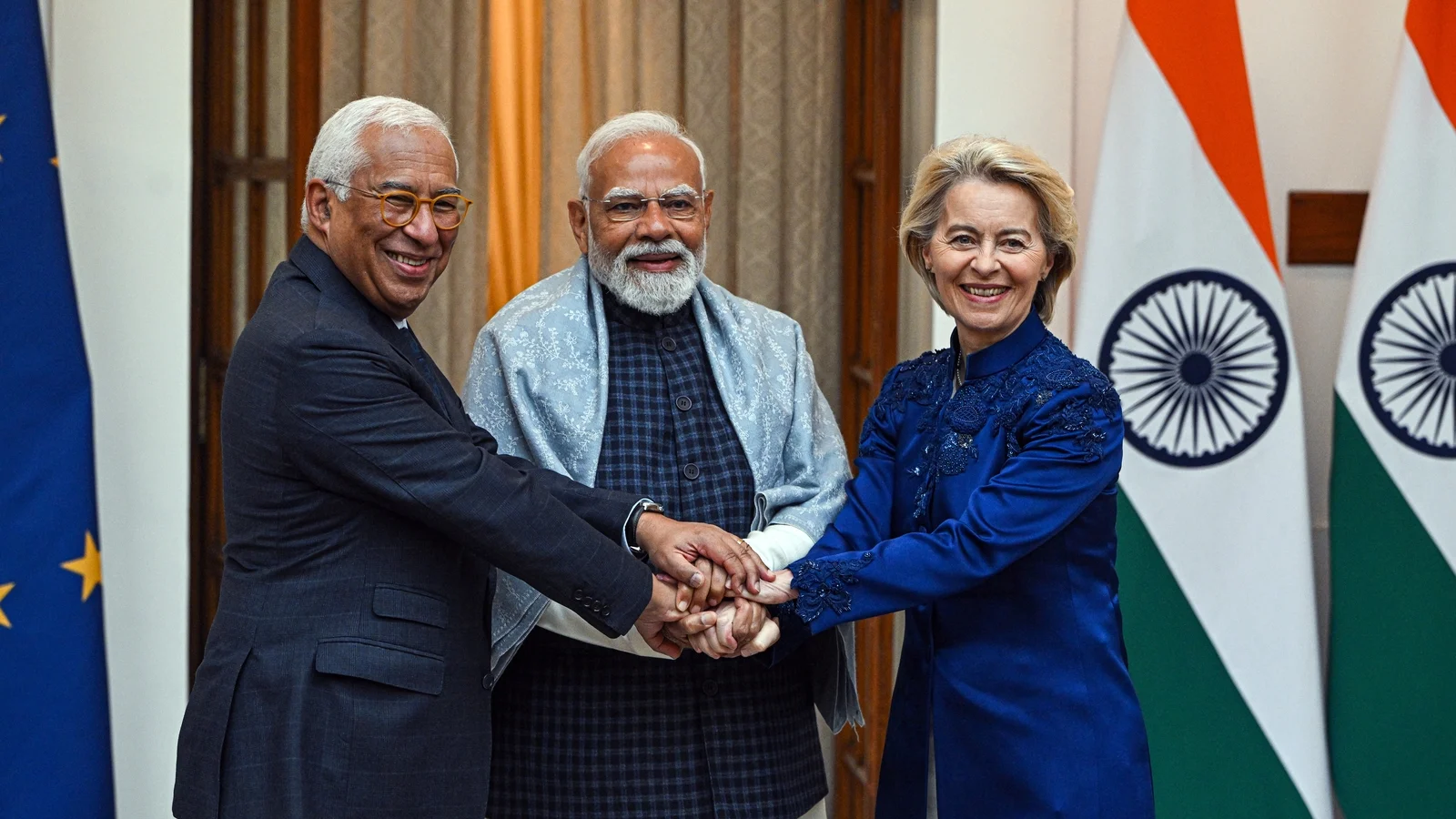
There are moments in trade history that feel quiet on the surface but seismic underneath—the kind that rearrange supply chains, reshape factory floors, and change the lives of street vendors and start-up founders alike. On a crisp winter day in 2026, Brussels and New Delhi quietly signed what many are already calling a monumental pact: a sweeping trade agreement that stitches together the European Union and India into a de facto free-trade area impacting roughly two billion people.
It is not just a line on a map. It is an invitation: European wines and precision machinery alongside Indian textiles, software services and spices, meeting on store shelves, in ports, and on digital platforms with fewer tariffs, simpler rules, and—above all—more predictable relations.
How We Got Here: Two Decades, One Determined Thrust
The path to this accord was anything but straight. Negotiators first opened dialogue nearly twenty years ago, then drifted in fits and starts—diplomatic weather patterns shaped by geopolitics, domestic politics, and economic storms. Talks were relaunched in earnest in 2022 after a nine-year pause, accelerating as global trade partners scrambled to diversify relationships in an era of rising protectionism.
“We came into this knowing the obstacles,” said Meera Iyer, a trade analyst who followed the talks from Mumbai. “India has long guarded its markets; the EU has strict rules on standards. The breakthrough came when both sides began thinking beyond tariffs—about digital rules, sustainability, and mutual recognition of standards.”
What’s in the Deal—and Why It Matters
Details are still being legally vetted—a process expected to take five to six months—yet governments on both sides say the package could be rolled out within a year. At its core, the deal promises significant tariff reductions and better access across a raft of sectors, from automobiles and machinery to textiles and digital services.
Trade between India and the EU already runs deep: approximately $136.5 billion in the fiscal year that ended in March 2025. This new framework aims to accelerate that flow, offering India expanded market access for labour-intensive exports while giving European producers improved competitiveness in a market long buffered by high Indian tariffs—cars, for instance, have faced duties reportedly as high as 110% in some cases.
Voices from the Ground
Walk through any mid-sized Indian industrial town and you’ll find people already imagining what could change. In Surat, where textile mills hum day and night, factory owner Ravi Kapoor says he is cautiously optimistic.
“If tariffs fall, I can imagine new orders coming in,” Kapoor said, wiping a streak of dye from his forearm. “We’ve been competing on price and speed. Easier entry to Europe could mean more jobs here. But we also need training and investment—cheaper access won’t automatically solve quality gaps.”
Across the Mediterranean, in the French city of Lyon, Élodie Martin runs a boutique that sells Indian scarves and European silks. “This deal could make life simpler—less paperwork, more variety,” she smiled over a cup of coffee. “It’s also a cultural exchange. People here are curious about Indian crafts, and Indians are buying French cheese—we’ll all gain in small but meaningful ways.”
Experts Weigh In
Economists point to both opportunity and challenge. “For India, the immediate gain is increased exports in labour-intensive sectors,” said Ajay Srivastava, a former trade official. “For Europe, certain manufacturers get price advantages in India thanks to tariff relief. But success depends on implementation, effective safeguards, and investments in standards compliance.”
Trade scholar Dr. Lina Kovács adds a geopolitical lens: “This isn’t just economics. It’s a signal of strategic diversification. After a period of strained relations with some traditional partners, India and the EU are hedging—building resilience into their trade networks.”
Local Color: Markets, Meals, and Manufacturing
Imagine a typical Saturday morning in a small market in Delhi: vendors negotiating prices for bulk fabric, a chaiwallah swapping gossip about incoming European shipments, an app-based delivery scooter weaving past. That microcosm captures what trade really means—endless, practical connections that ripple outward.
Or picture a port on Europe’s Atlantic coast where containers of mango pulp await customs clearance, destined for patisseries in Nantes, while containers of German machine parts are unloaded for a factory near Pune. Trade manifests as refrigerators humming with imported cheese and textile stores brimming with Indian handlooms.
Bigger Patterns: A World Rewiring Trade
This deal sits among a flurry of recent agreements: the EU’s own pacts with Mercosur and other partners, and India’s separate arrangements with Britain, New Zealand and Oman. Nations are reweaving trade networks in response to unpredictable tariff threats, supply-chain shocks from climate events and pandemics, and shifting political alliances.
“We’re seeing a broader trend toward regionalization with a global flavor,” said Marta Ruiz, a Brussels-based trade strategist. “Countries want multiple reliable partners. This makes trade more resilient, but it can also fragment global standards unless there’s coordination.”
Questions and Concerns: Who Wins, Who Worries?
No agreement is a panacea. Farmers, small manufacturers, and environmental groups will scrutinize the terms closely. Will reduced tariffs overwhelm local producers? Are there safeguards for sensitive sectors? How will labour standards and sustainability be enforced?
A shopkeeper in Amritsar, who asked to be identified only as Sandeep, voiced a common hesitation: “I welcome more customers, but if big European brands flood in at lower prices, where does that leave my tiny shop?”
These are legitimate questions, and the success of the accord will depend on addressing them—through retraining programs, phased tariff reductions, support for small exporters, and strong mechanisms to uphold environmental and labour standards.
Why You Should Care
Trade might feel distant, but its consequences are tangible: the clothes we wear, the medicines we take, the jobs in our cities. This agreement will affect farmers in Punjab and vintners in Bordeaux, software engineers in Bengaluru and machine operators in Germany. It will shape prices, employment patterns, and even cultural exchange.
So here’s a question for you: when the next garment you buy is tagged “Made in India” and shipped from a European warehouse, will you see just an item, or will you see the invisible network—a decade of negotiation, small business hopes, and policy choices—that made it possible?
What Comes Next
For now, negotiators in Brussels and New Delhi are poring over legal text. The next five to six months of vetting will be crucial. If all goes to plan, implementation could begin within a year, and the slow, steady work of translating treaty language into roads, training programs, and business partnerships will begin.
Trade is rarely glamorous. It’s paperwork and patience, port logistics and policy debates. But tucked inside those technicalities lie opportunities to lift livelihoods, foster cooperation, and stitch together a world where commerce also means conversation.
Will this agreement be that stitch? Only time, and tenacity, will tell. But for a moment, imagine the possibilities: two billion people, fewer barriers, and a marketplace remade—not just for profit, but for connection.