When Pipelines Become Courtrooms: Slovakia, Hungary and the EU’s Russian Gas Breakup
On a chilly morning in Bratislava, cameras clustered like gulls outside the government’s glass façade as Prime Minister Robert Fico stepped out, jaw set, with a stack of papers under his arm and a simple, uncompromising message: “We are filing a lawsuit.” The words landed not as mere political theatre but as the opening move in a legal and geopolitical duel that now stretches from Central European town squares to the marble halls of Brussels and Luxembourg.
Across the Danube in Budapest, Viktor Orbán — seeking re-election in April — answered with his own vow to take the European Union to court. His anxiety is both local and personal: Hungary’s signature campaign promise of capped household energy prices is on the line, and the ban on Russian gas imports threatens to undercut that promise the way late frost can flatten a spring orchard.
What Changed — and Why It Matters
The EU has moved to phase out all Russian natural gas imports before the end of 2027, a decision reached by a mechanism that required only a qualified majority of member states. That procedural detail is the sharp edge of the dispute: Slovakia and Hungary, two landlocked countries with long-standing commercial and energy ties to Moscow, were outvoted and now accuse Brussels of bypassing the unanimous consent normally expected for sanctions.
“It’s not just about pipelines,” said Jana Kovács, an energy analyst in Bratislava. “It’s about jobs, industry, heating our homes — and for many people it’s about dignity. You can’t tear away a lifeline overnight and expect nobody to bleed.”
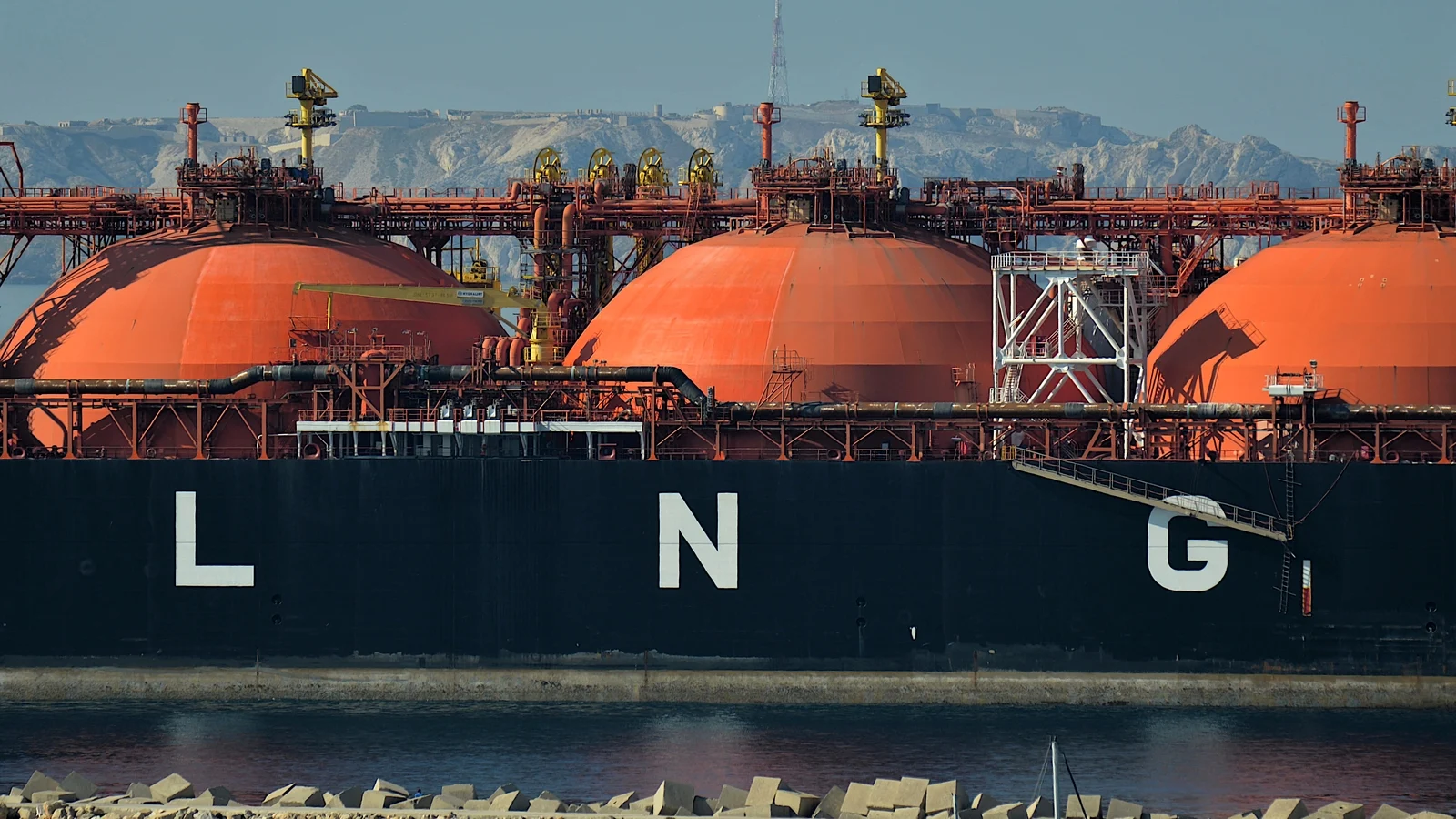
Before Russia’s full-scale invasion of Ukraine in 2022, Moscow supplied roughly two-fifths of the European Union’s gas needs. That dependence plunged many EU capitals into frantic re-mapping of supply routes: more LNG terminals, new pipelines from Norway, Azerbaijan and North Africa, and long-term contracts that suddenly looked expensive but necessary. Yet even with new supply pathways, the raw fact remains: some countries, especially in Central and Eastern Europe, could not pivot overnight.
The Domestic Politics of an Energy Shock
Viktor Orbán has framed the ban as an existential attack on his government’s policy of keeping utility bills low. “There can be no compromise on this,” he wrote on social media, characterizing the EU move as a direct threat to “utility price reduction” — a phrase that has become shorthand in Hungary for economic stability and electoral survival.
Fico’s rhetoric is sharper, bordering on the conspiratorial: he accused EU policy-makers of allowing “ideology and hatred towards Russia” to dictate energy policy, a line that resonates with voters who still remember bitter winters and cascading factory shutdowns from early supply squeezes.
Meanwhile, factory managers in Slovakia and Hungary are doing arithmetic late into the night: steel mills, chemical plants and food processors run on steady, affordable gas. Breaks in supply ripple quickly into layoffs and lost exports. “We can run on hope for only so long,” said one plant manager near Komárno. “Contracts need certainty.”
Legal Paths and Practical Realities
Both Bratislava and Budapest have announced they will challenge the EU decision in the Court of Justice of the European Union. They cannot file a single joint complaint, the prime ministers acknowledge, but they intend to synchronize legal arguments and timings.
At the heart of the case will be a debate over procedure and substance. Hungary will argue — as officials have already suggested — that the gas ban is “essentially” a sanction. Sanctions, it insists, require unanimous approval under EU treaties. Brussels insists that its mechanism, built to modernize the Union’s energy posture and accelerate the transition away from Russian fuel, falls under ordinary regulatory competence and was legitimately adopted by a qualified majority.
Legal scholars say the case is complex and could take months, possibly years, to resolve. “This is a collision of law and geopolitics,” said Maria De Luca, a professor of EU law in Milan. “Even if Hungary or Slovakia win on procedural grounds, the practical implementation of an EU-wide phase-out will already be well advanced. Courts can rule, but pipelines obey physics and contracts.”
What Are the Alternatives?
Behind the headlines are the nitty-gritty options national governments must consider. Can gas be rerouted via interconnectors? Can industry switch to electricity or biomass fast enough? Is more LNG the answer — and who will pay for the terminals and regasification?
- Increase imports from Norway and Algeria — possible but limited by pipeline capacity and long-term contracts.
- Ramp up renewable power and electrify heating and industry — a climate-friendly move, but expensive and time-consuming.
- Invest in domestic storage and reverse-flow capabilities — useful as a stop-gap but not a silver bullet.
- Accept temporary peaking supplies and higher prices — politically painful, but a realistic short-term concession.
Each option brings trade-offs: cost vs. speed, sovereignty vs. solidarity, and short-term pain vs. long-term resilience.
Voices from the Street
At a market in Bratislava, an elderly woman in a wool coat sipped tea and shrugged when asked about the looming legal battle. “I don’t care for the speeches,” she said. “If I have to choose between politics and warmth in my flat, I’ll choose warmth.”
A university student, eyes bright with indignation and hope, offered a different perspective. “This is our chance to stop being dependent on autocrats who weaponize energy,” she said. “Yes, costs will rise, but aren’t we building a more sovereign Europe?”
In a small Hungarian town where gas boilers still glow in winter, a baker fretted over energy bills that eat into margins. “If my oven stops, I can’t feed people or pay wages,” he said. “Courts can argue—people need bread.”
Beyond Borders: A Story of Transition, Trust and the Future of Europe
What happens next will test more than legal doctrines. It will test the EU’s ability to manage a shared transition when member states feel the costs unevenly distributed. It will test political leaders who must explain to pensions and paychecks why a continent should take short-term pain for geopolitical independence and climate goals.
The dispute also illuminates a larger tension pulsing through Europe: how to reconcile national democratic pressures with collective, long-term strategy. When a region’s energy arteries run through a foreign capital, geopolitics becomes a local matter—literally an issue of heating and feeding families.
So ask yourself: should a bloc of 27 countries be able to impose an energy pivot on two reluctant members for the sake of a broader strategic aim? Or should unanimity be the rule when livelihoods hang in the balance? There are no tidy answers.
Final Thoughts
As Brussels prepares for legal briefs and diplomats quietly lobby for compromise, ordinary people will keep their thermostats set at what they can afford. The courts will take their time. The pipelines will hum or sputter based on contracts and geopolitics. And in cafes and parliaments across Europe, the conversation that began with gas will expand into questions of identity, strategy and solidarity.
In the end, the case of Slovakia and Hungary versus the EU over Russian gas is not just legal trivia. It is a story about how democracies manage transitions, who gets to decide the risks, and what sacrifices are fair when the future demands change. How would you balance immediate comfort against long-term security? That is the question Europe is now asking—and it may ask it of us all.