A Turning Point in Brussels, a Tremor Felt in Tehran
Brussels on a winter morning felt heavier than usual. Ministers shuffled into a room where, until recently, the language of diplomacy had been calibrated to keep doors open and back channels alive. This time, however, they chose to close a decisive chapter: the European Union has placed Iran’s Islamic Revolutionary Guard Corps — the IRGC — on its list of terrorist organisations.
For anyone who has watched the slow hardening of relations between Tehran and Western capitals, the move is more than a line in a foreign policy brief. It is a symbolic reordering of how Europe perceives the nexus of power inside Iran: no longer merely a branch of the state, but an actor judged by the EU to be culpable for violent repression and regional agitation.
What the Decision Means — and Why It Matters
The IRGC was conceived amid the upheaval of 1979 to safeguard Iran’s revolutionary government. Over the decades it has evolved into an institution that stretches far beyond the barracks: influential in politics, deeply enmeshed in commerce, and heavily engaged in Iran’s missile and nuclear programs. Now, the EU has put it in the same legal category as organizations such as ISIS and al‑Qaeda, a label with both symbolic bite and practical consequences.
“Repression cannot go unanswered,” EU foreign policy chief Kaja Kallas wrote on social media after the vote — words that resonated with ministers who had watched the brutal suppression of recent protests. “Any regime that kills thousands of its own people is working toward its own demise,” she added, framing the decision as a moral response as much as a strategic one.
From Streets of Protest to the Council Chamber
The political calculus that led to Brussels’ decision was tamped down by raw images streaming from Iran: funerals, funerary processions, the hush of neighborhoods that had been scenes of protest. The EU’s move followed a wave of nationwide demonstrations and a crackdown that, European ministers say, left thousands dead.
A middle‑aged shopkeeper in Tehran I’ll call Reza, who asked for anonymity, told me over a phone call that the climate inside the city feels as if “something fragile has been broken.” He paused and then said, “We want safety. We want to be able to mourn without fear. That’s all.” His fear and weariness capture a mood shared by many Iranians watching events unfold from behind curtains and across messaging apps.
Another voice from the streets—an activist sheltering relatives—said, “We are not anti‑religion; we are tired of being crushed. When those with guns are above the law, how can any law protect the rest of us?” Such statements, intimate and immediate, were part of what pushed several EU capitals to change their earlier hesitation into action.
A Fractured European Debate
Until recently, some member states urged caution. The logic was pragmatic: a formal terrorist designation could risk severing diplomatic ties, making hostage consular cases harder to resolve and putting Europeans in Iran at greater peril. Yet the breadth and intensity of violence inside Iran shifted the debate.
“We have to weigh the immediate protection of citizens and humanitarian channels against the need to be unequivocal about mass human‑rights abuses,” said a senior EU diplomat who participated in the discussions. “This was a painful choice; it was not taken lightly.”
Sanctions, Targets, and the New Tools of Pressure
The EU’s package wasn’t just symbolic. Alongside the IRGC designation came sanctions aimed at individuals and entities accused of enabling repression and online control. The Council announced restrictions on 15 people and six organisations believed to be responsible for serious human‑rights violations in Iran.
Among those targeted were senior security figures, including hardline commanders and law enforcement officials, as well as the Iranian Audio‑Visual Media Regulatory Authority and firms tied to censorship, disinformation campaigns, and the development of surveillance technologies. The bloc also widened export controls on components tied to unmanned aerial vehicles and missile programs — a move intended to narrow the technical avenues for Iran’s drone and missile development.
“Cutting off key technologies is how you make pressure operational,” said a London‑based policy analyst who studies proliferation. “Sanctions by themselves are a blunt tool, but a targeted approach around critical components can slow programs in measurable ways.”
Tehran’s Response and the Risk of Escalation
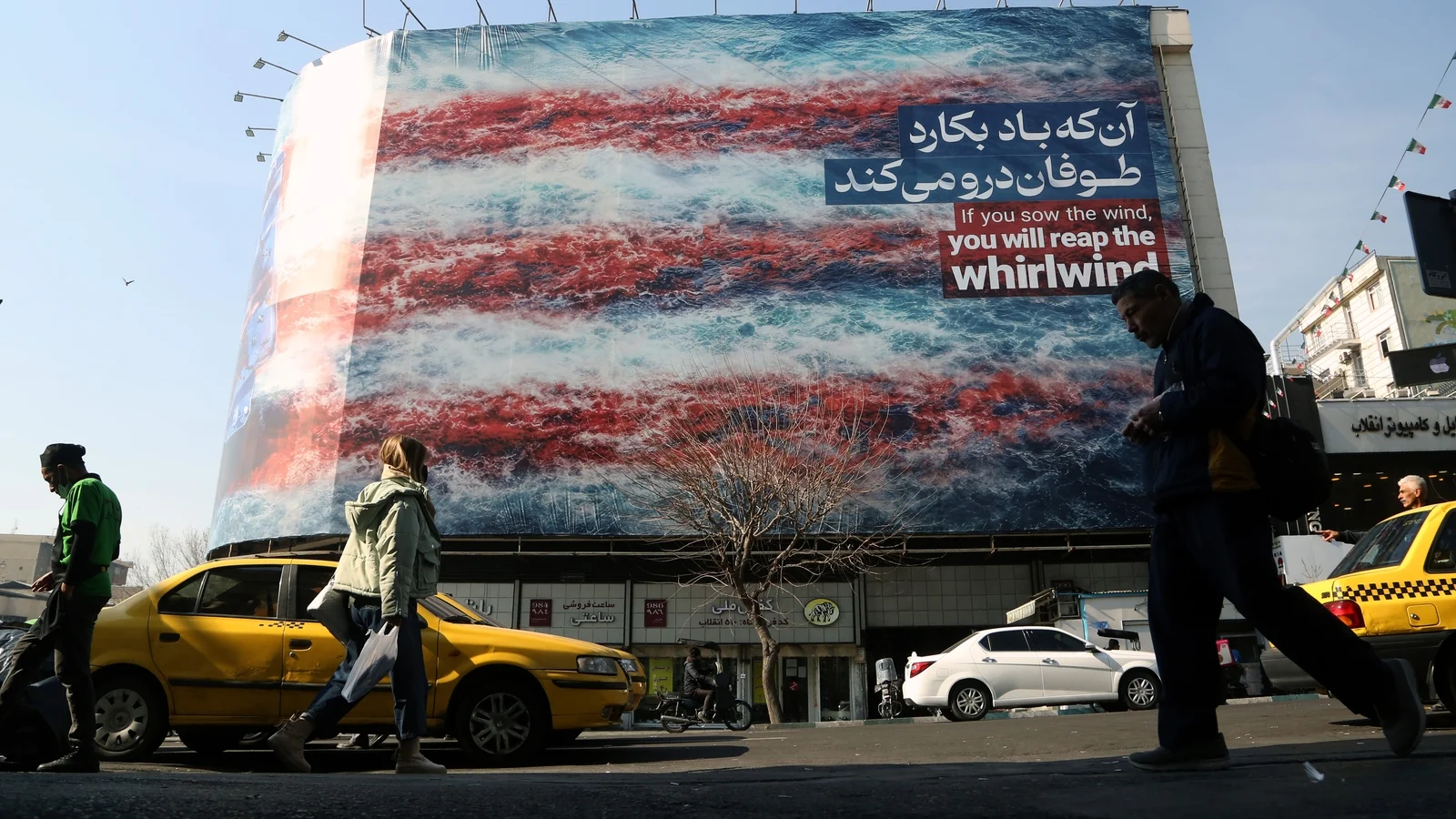
Predictably, Tehran did not take the decision in stride. Iranian officials warned of “destructive consequences” and vowed a strong response should their country be attacked. State television reported that Iran had deployed “1,000 strategic drones” into its combat regiments — a claim that underscores how narratives of deterrence now sit alongside the real fear of military confrontation.
Across the Atlantic, U.S. warnings added fuel to the fire. Washington declared that time was running out for diplomatic engagement on the nuclear file — language that some interpreted as a nudge toward either renewed negotiations or the threat of force. The American naval presence in Middle Eastern waters, combined with veiled threats of strikes, made the standoff palpably risky.
A Gulf official, speaking on condition of anonymity, said bluntly, “Any military strike would be catastrophic for the region. It would send oil prices skyrocketing and plunge our markets into chaos.” The economic ripple effects of a confrontation are real: global energy prices are sensitive to instability in the Gulf, and the specter of war would unsettle markets, trade and everyday lives far beyond the region.
Regional Mediation and Contingency Plans
Even as tensions rose, regional actors moved to de‑escalate. Turkey offered to act as a mediator, inviting Iranian diplomats to negotiate and urging Washington to resume talks. Nations abutting Iran, particularly those hosting foreign military bases, quietly prepared contingency plans — from ramping up border security to reviewing refugee contingencies.
“We’re walking a tightrope,” said a foreign ministry official from a neighboring country. “No one wants another military confrontation. But the sword of Damocles is hanging over the entire region.” That image — of a fragile balance held together by diplomacy and dread — seems apt.
What Comes Next — and Why You Should Care
So where does this leave us? Labels matter. Designating the IRGC as a terrorist organisation redefines certain diplomatic parameters; it signals European revulsion at mass repression and cushions public outrage with concrete policy. But it also raises hard questions about efficacy and unintended consequences. Will this break lines of communication and imperil citizens? Will it force Tehran into greater belligerence? Or will it, counterintuitively, open new space for regional diplomacy by recalibrating stakes?
Ask yourself: when international institutions adopt moral clarity, does it make conflict more or less likely? History offers no neat answers. The world is a map of messy tradeoffs — human rights versus engagement; deterrence versus dialogue.
What now matters most is whether diplomatic channels remain open on the things that prevent the worst outcomes: nuclear escalation, regional spillover, economic contagion, and the trampling of civilian life. If Brussels’ decision is meant to be both a rebuke and a lever, the test will be whether it helps protect the people it claims to stand for — the protesters and grieving families in Iran — or simply hardens the standoff around them.
As you read this, think of Reza and the shadowed streets he described. Think of the diplomats in Brussels and Ankara, of analysts in London and Washington poring over sanctions lists, of the sailors in a U.S. carrier group steering toward a region where every misstep could become headline news. The world feels small and brittle right now. The choices of a few capitals will ripple widely, and the human cost will be borne by many.
Will this be the moment that checks repression while preserving avenues for negotiation? Or is it the beginning of a new chapter of long, grinding confrontation? The answer will emerge in the weeks and months ahead, shaped not only by high policy but also by the courage — and the suffering — of ordinary people on the ground.