A Return of the Departed: When Numbers Become Names Again
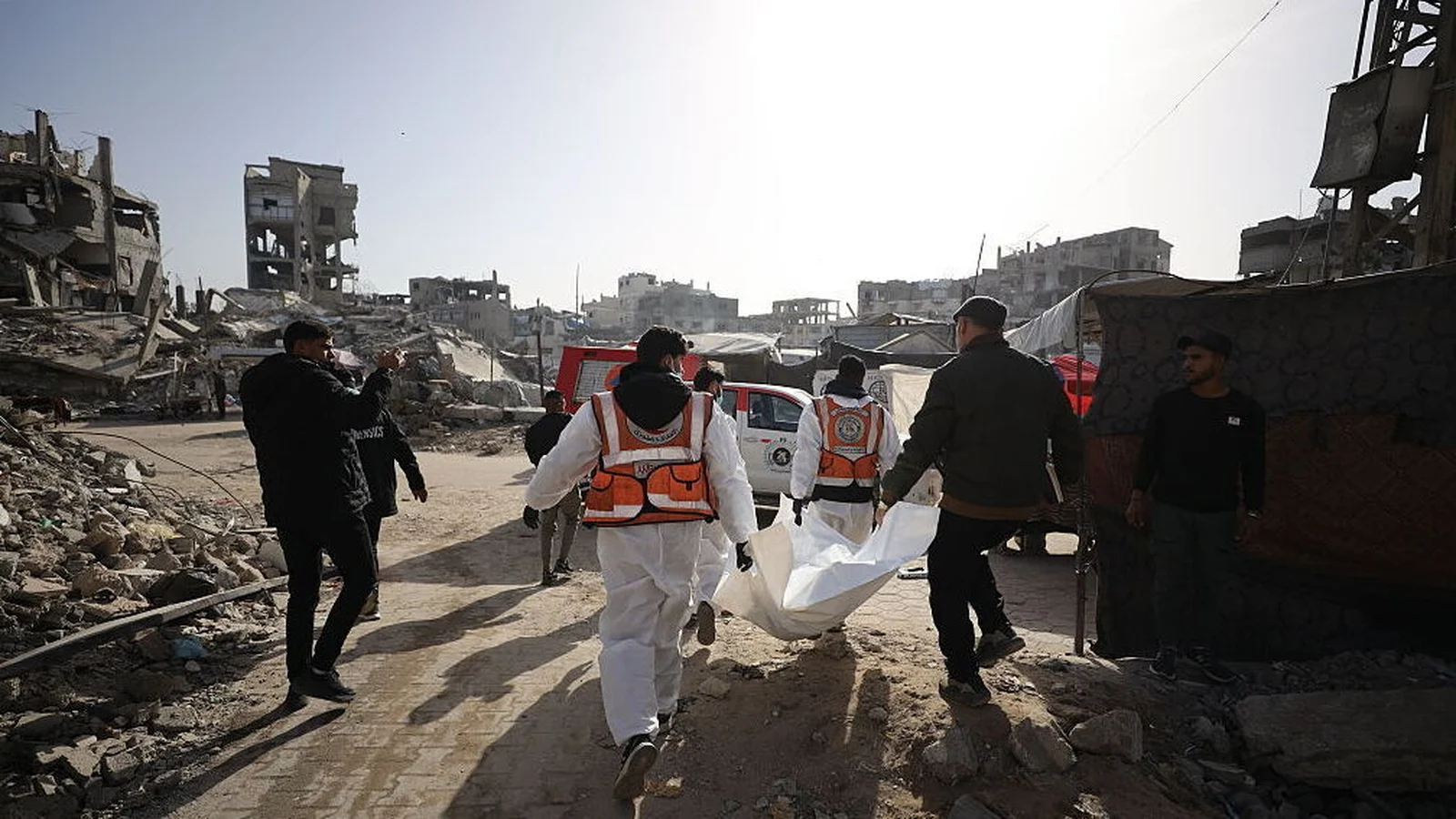
On a gray morning in Gaza City this week, a convoy crept through streets still pocked by the scars of war and came to a stop at the gates of Shifa Hospital. Men and women gathered, some clutching faded photographs, others with hands folded as if in rehearsal for a goodbye they had already had to endure. Israel handed over 15 bodies to Gaza authorities — the final transfer tied to the first phase of a U.S.-brokered ceasefire that, for a few fragile weeks, paused the wider violence.
“This is not just logistics,” said Zaher al-Wahidi, a spokesman for Gaza’s health ministry, as he watched the stretchers carried into the hospital. “It is a return of identities lost amid the rubble. Families deserve to know.” He told us the remains were photographed and posted publicly so relatives could try to identify them — a grim process repeated again and again over the past months.
What Was Exchanged — And What Remains Unsaid
Under terms of the deal reached in October, Israel agreed to transfer 15 Palestinian bodies for every Israeli hostage recovered. The deal was part of a larger package that saw Israel freeing roughly 2,000 Palestinian prisoners and returning, in stages, hundreds of bodies to Gaza. To date, Israeli authorities have sent back about 360 bodies; Gaza officials say families have been able to identify only around 100.
Who those returned bodies were — detainees who died in custody or persons taken from battlegrounds — remains unclear. That lack of clarity has turned burial into an act of imagination: relatives praying to put together a life from a nametag, a scarf, a pair of shoes.
“We have been scraping together what we can,” said Amal, a 52-year-old woman from Gaza City whose nephew remains unaccounted for. “They posted pictures of the decomposed hands and a watch. I recognize the watch; it has an engraving. But is a watch proof enough? Will a photo of a jawline tell us he is really our Jalal?”
The Human Cost Behind the Diplomatic Paperwork
The handover followed days after Israel announced it had located and identified the remains of the last Israeli hostage taken during the October 7 attack — an offensive that killed roughly 1,200 people in Israel and led to 251 hostages being taken, according to widely reported figures. The Israeli announcement closed a painful national chapter and signaled the transition to the next, more fraught phase of the ceasefire: deploying an international security force, disarming militant groups, withdrawing troops and beginning reconstruction in Gaza.
“Closure is not the same as healing,” said Maya Rosen, a psychologist in Jerusalem who has been working with families of hostages. “A returned body allows a family to perform rites, to place a name in a cemetery, to stop hoping against hope. But the psychological repair — the mourning, the rebuilding of trust — that takes a generation.”
Meanwhile in Gaza, the death toll continues to mount even under the ceasefire. The health ministry reports 492 Palestinians killed since the truce began; their figures do not distinguish between combatants and civilians. The reality on the ground is one of daily grief compounded by bureaucratic ambiguity.
The Red Cross and the Logistics of Mourning
The International Committee of the Red Cross (ICRC) helped facilitate the return of the bodies, a procedural detail that belies the fraught choreography of transfer: forensic teams, lists checked and cross-checked, ambulances convoying through checkpoints. The Red Cross has taken on the role of a neutral midwife in this exchange of the dead — a role both vital and emotionally wrenching.
“Our teams are present to ensure dignity,” said an ICRC field coordinator who asked not to be named for security reasons. “We see the faces in the crowds, the mothers, the men who have stood guard over a grave for months. This work is not about numbers. It’s about human beings.”
Rafah, Reopening, and a Portal to the World
For many Gazans, the return of bodies is only one of several urgent priorities. The Rafah crossing with Egypt — Gaza’s primary doorway to the outside world — has been largely closed since May 2024. Israeli officials have said the crossing would reopen soon, at least for a limited number of medical evacuations. But Prime Minister Benjamin Netanyahu has been explicit: goods will not flow for now.
What will that mean for reconstruction? For the supply of medicines and building materials? For families trying to be reunited across borders? The answers are still being negotiated, and the uncertainty compounds the sense of exile already felt by tens of thousands of Palestinians who remain displaced.
“We waited three months for a permit so my son could get prosthetic surgery in Cairo,” said Ahmed, a carpenter now lodged in a temporary shelter near Shifa. “They tell us the crossing will open for medical cases. That helps. But a whole life takes more than one crossing.”
Why These Exchanges Matter Beyond the Headlines
At first glance, prisoner swaps and body returns are technical components of ceasefire deals. But they are also deeply symbolic gestures. They signal whether parties are serious about the fragile trust-building steps necessary after prolonged conflict. They touch on universal, human needs: dignity, memory and the right to bury loved ones. They also test the capacity of international intermediaries, local institutions and families to navigate grief under extraordinary constraints.
These exchanges raise uncomfortable questions: Can a temporary pause in violence mature into lasting peace? Can international forces realistically disarm entrenched groups while protecting civilians and enabling reconstruction? And perhaps most poignantly: how do communities rebuild when the identities of so many remain in limbo?
What Comes Next — And What We Should Watch For
The second phase of the ceasefire, which international mediators have signaled is beginning, will be harder to implement than the first. It promises an international security presence, withdrawal of Israeli troops from certain zones, and wider reconstruction — steps that will require enormous political capital and sustained international engagement.
Observers warn that without clear timelines and robust guarantees for aid and materials through crossings like Rafah, the physical and social reconstruction of Gaza could stall. “Reconstruction is not only about bricks and water pipes,” said Lina Haddad, a humanitarian policy analyst. “It is about restoring the fabric of civil society: courts, schools, hospitals, the rule of law. That takes planning and, crucially, predictable access.”
A Moment to Pause and to Remember
As the sun sets over Gaza City, families bring flowers and a handful of soil to cemeteries, trying to anchor loss in a place. They stand together, sometimes in quiet, sometimes in loud lament. The transfer of 15 bodies is one small administrative act in a much larger, painful story. But for those who stood at Shifa’s gates, it was a moment of human return — messy, incomplete and deeply felt.
What will peace look like here? How do we balance the urgent needs of the living with respect for the dead? These are questions not only for leaders and negotiators but for all of us who watch and care. When the paperwork is signed and the diplomats move on, families will remain, holding photographs and the slow, stubborn duty of memory.