A Cold Corner in the Hottest Debate: Greenland, Great Powers, and a Fragile Optimism
Something quietly unusual is unfolding at the margins of maps and headlines: officials from Denmark and the United States have begun technical talks in Washington about Greenland, and for the first time since a very public spat, Copenhagen’s tone sounds not like confrontation but cautious hope.
“We had a constructive first meeting at senior-official level,” Denmark’s foreign minister, Lars Løkke Rasmussen, told reporters in Brussels, the kind of diplomatic understatement that nonetheless carries weight after a period of public saber-rattling. “It went well. We aren’t done, but I’m a little more optimistic than I was a week ago.”
That optimism is fragile, but real. It didn’t appear out of nowhere—rather, it is the aftershock of a storm that laid bare questions of sovereignty, security, and identity in the Arctic: who gets a say in a place that is geographically huge, sparsely populated, and suddenly central to global strategy.
Why Greenland Matters
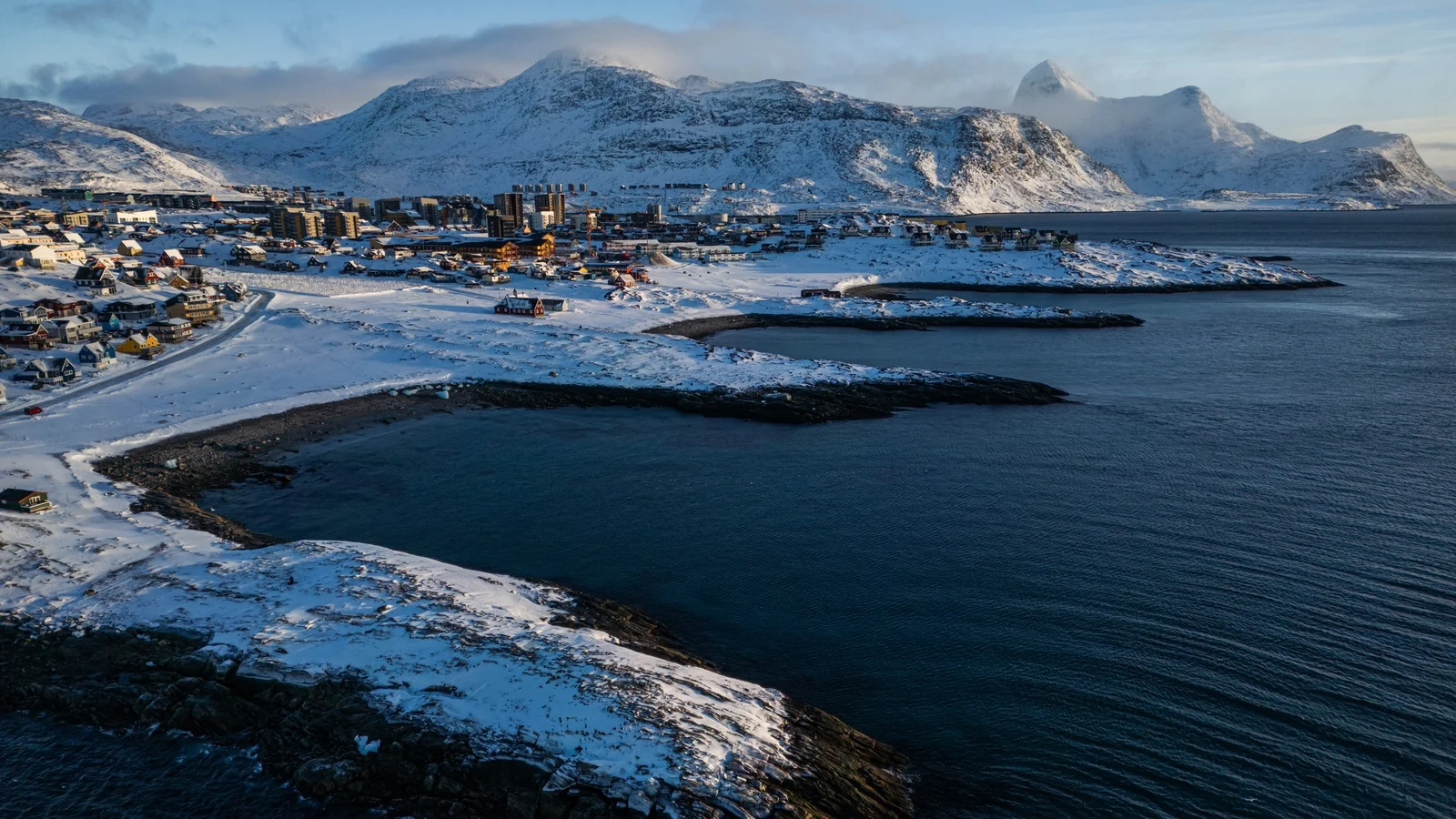
Greenland is not an obscure rock; it is an expanse of more than 2.16 million square kilometers—about four times the size of Texas—blanketed mostly by a continental ice sheet. Yet its population is fewer than 60,000 people, mostly Inuit, clustered along a jagged coastline where towns like Nuuk and Ilulissat stitch themselves into fjords with bright houses and stubborn traditions.
To outsiders, Greenland is strategically magnetic. It sits astride North Atlantic air and sea lanes, hosts early-warning radar and air facilities used by the United States since a 1951 defense agreement, and, as the ice retreats, opens new shipping routes and access to untapped resources.
Those facts have pushed Greenland into the crosshairs of geopolitics. Russia has rebuilt Arctic military bases; China calls itself a “near-Arctic state” and has shown economic interest; and the U.S. has repeatedly signalled that it considers Greenland part of its broader defence calculus in the North.
From Threats to Talks: The Political Backstory
Not long ago, the conversation exploded into headlines when then-U.S. President Donald Trump publicly mused about acquiring Greenland. For many in Copenhagen and Nuuk, the idea was not merely absurd—it was an affront.
“That moment felt like a violation,” said Aqqaluk Petersen, a fisherman from Sisimiut who has lived in Greenland all his life. “We are not for sale. Our land is not a commodity at an auction.”
What followed was a diplomatic bruising. Public anger in Denmark mingled with concern in Greenland about autonomy and local control. NATO allies watched uneasily as transatlantic trust was tested.
But politics has a way of steering toward repair when interests compel it. The recent Washington meetings are technical and not theatrical; they are about practical details—security cooperation, the role of NATO in the Arctic, and the potential renegotiation of elements of the 1951 U.S.-Denmark defense agreement that governs foreign troop presence in Greenland.
What’s on the Table?
The conversations, officials say, are focused on a few pragmatic strands:
- Security coordination in the Arctic, including potential expanded NATO activities and joint exercises;
- Clarifying the legal and political boundaries of sovereignty to ensure Greenland’s autonomy is respected;
- Assessing infrastructure needs—ports, search-and-rescue capabilities, and surveillance—that both protect local communities and serve broader alliance interests.
“This is not about handing over territory,” Rasmussen emphasized. “It’s about addressing shared security concerns in a way that respects Danish sovereignty and Greenlandic self-government.”
Voices from the Ice
Down in Nuuk’s harbor, where children race along the waterfront and old men fix nets beneath painted roofs, the conversation is more personal than strategic. Greenlanders want jobs, cleaner seas, and the authority to determine when and how foreign investment comes to the island.
“We’ve seen companies come and go,” said 28-year-old Maaja Kleist, who runs a tourism business that guides hikers across ice-carved valleys. “We don’t want our decisions made for us in a room far away. If allies are involved, OK—just ask us first.”
Indigenous rights leaders have long argued that geopolitical decisions affecting Greenland must be co-created with local communities. The self-rule agreement of 2009 granted Greenlanders greater authority over internal affairs, and many here are wary of arrangements that would sideline their voices.
Climate Reality: The Background Hum
Under the diplomacy and national security chatter lies a simple, merciless truth: Greenland is warming. Scientists have repeatedly shown that the Arctic is heating faster than much of the planet; NASA and other agencies report that Greenland’s ice sheet has lost trillions of tonnes of ice in recent decades, contributing measurably to global sea-level rise.
For Greenlanders, this is not an abstract headline; it is the reason ship seasons lengthen, fishing patterns shift, and coastlines change. It is also the underlying cause of much international attention. As the ice recedes, previously inaccessible landscapes—some containing minerals, others new maritime passages—are suddenly of interest to states and corporations alike.
Strategic, Ethical, Local: A Tricky Triad
The Washington meetings make sense in that light: they attempt to reconcile three vectors that don’t always line up—great power strategy, alliance cohesion, and local autonomy. Can they be reconciled? The answer is less an on/off switch than a long negotiation.
An Arctic policy expert who asked not to be named called the talks “a necessary first step.” “We need transparent dialogue that recognizes security realities and respects self-determination,” the expert said. “If we ignore the voice of Greenlanders, any agreement is brittle.”
What Comes Next—and Why You Should Care
Expect slow diplomacy and technical working groups rather than fireworks. Expect NATO to posture more in the Arctic, and expect Denmark to insist that any change preserves the legal autonomy of Greenland. Above all, expect Greenlanders to press for seats at every table where decisions about their land are made.
But beyond procedure, there is a larger question: how do we govern places transformed by climate change when people who live there must also answer to global powers? Who gets to decide what is in the national interest, and whose rights are prioritized when resources and strategic positions are at stake?
These are not theoretical musings. They touch on sovereignty, indigenous rights, climate justice, and the future of international cooperation in a warming world.
Facts at a Glance
- Area of Greenland: ~2.16 million km²
- Population: roughly 56,000 (most live along the coast)
- U.S.-Denmark defense agreement: original framework from 1951 governs foreign force presence
- Arctic change: Greenland’s ice sheet has seen substantial loss in recent decades, contributing to global sea-level rise
Closing Thoughts
So as diplomats step through rooms in Washington and Copenhagen, and as fishermen and entrepreneurs return to their nets and guesthouses, Greenland sits at the intersection of intimate local life and broad geopolitical currents.
What feels urgent is the choice ahead: to let big powers make brittle deals in the name of strategy, or to build durable, inclusive arrangements that protect local rights while addressing shared security and environmental challenges. Which path will we choose?
As you consider that question, picture Nuuk’s colorful houses along a steaming harbor, a dog sled silhouette against a pale horizon, a council meeting where young Greenlanders insist their language, Kalaallisut, must be part of any conversation about their future. That is the human frame for this cold, consequential debate.