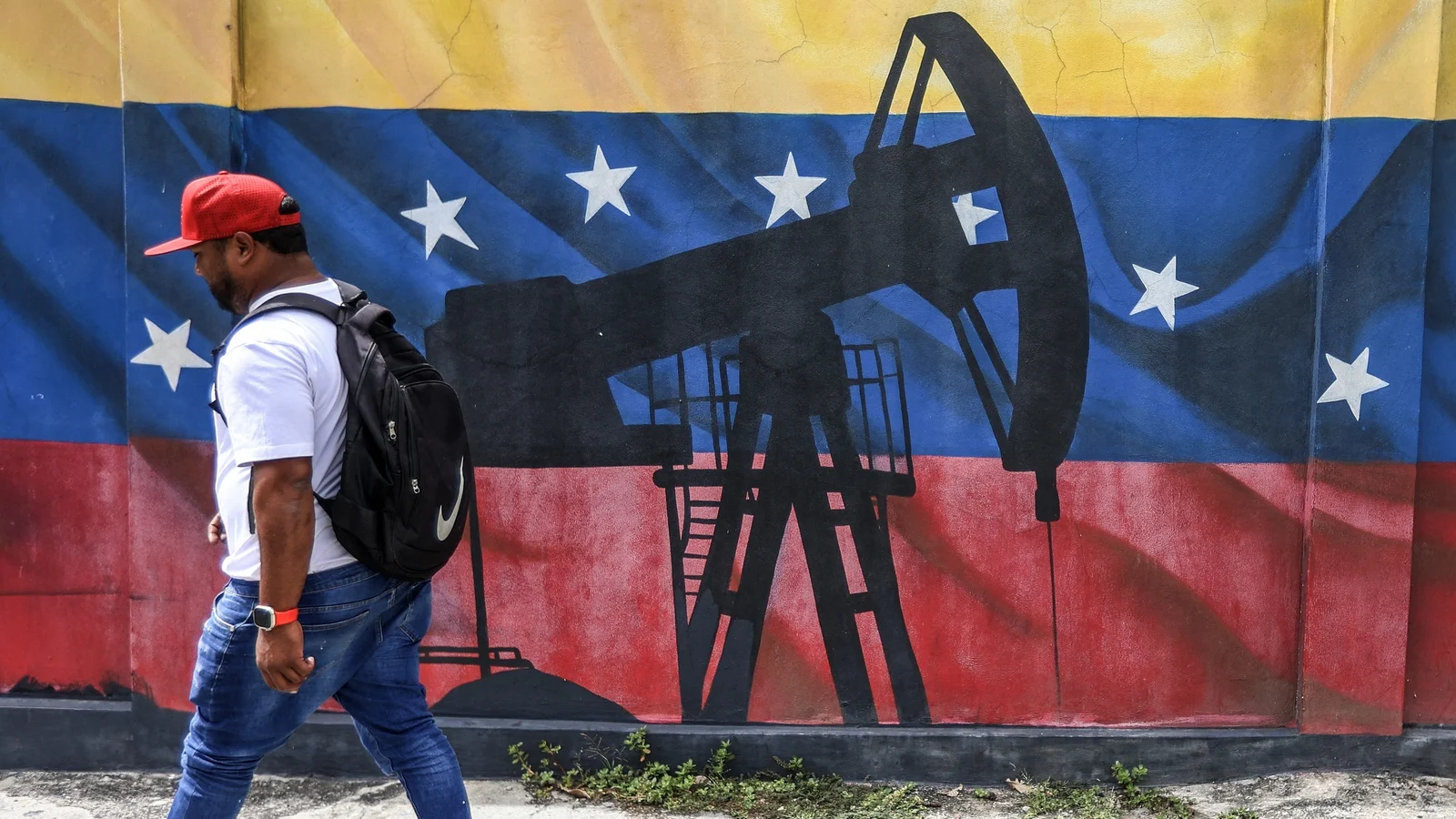
When Sanctions Meet the Oil Patch: Venezuela’s Next Act
There was a different smell in the air that week in Caracas — not the thick smoke of protests or the metallic tang of a city once proud of its riches, but the faint, oily scent of possibility. News had broken that Washington’s Treasury arm had issued a new general licence opening a narrow corridor for U.S. companies to trade Venezuelan crude. To anyone who has watched Venezuela’s oil industry with a mixture of sorrow and stubborn hope, the move felt like the first careful step in a long, complicated dance.
What exactly changed?
The Office of Foreign Assets Control (OFAC) authorised U.S. entities to buy, sell, transport, store and refine Venezuelan-origin oil — transactions that had been effectively taboo for constrained American firms since parts of the energy sector were blacklisted in 2019.
That licence does not reopen the door to everything. Production sanctions remain in force, and the licence explicitly bars certain forms of payment — no debt swaps, no gold deals, and no settlements in digital currency. It also excludes actors linked to rival governments: companies and individuals from China, Russia, Iran, North Korea and Cuba remain out of the permitted circle.
“Think of it as a safety valve,” said an official involved in the policy discussions. “We want product to move. We want commercial clarity for U.S. firms. But we also want to retain leverage and ensure that the revenue channels are broadly compatible with U.S. national-security goals.”
Why the nuance matters
The distinction between trade and production is not an abstract legalism. Allowing U.S. refiners and traders to deal in Venezuelan crude helps restore market liquidity and gives American firms the chance to profit from barrels that otherwise might be locked in place. But keeping production sanctions intact means a full-scale revival of Venezuela’s oilfields — damaged by years of underinvestment, sanctions, and mismanagement — would still require further authorisations and likely, political concessions.
“Opening up transportation, storage and refining is a big deal,” said an energy trader in Houston. “It’s the plumbing. But the taps at the wellheads are still controlled by other rules.”
Numbers and history: understanding the gap
Venezuela was once synonymous with abundance. At its peak in the late 1990s and early 2000s, the country produced more than 3 million barrels per day. Today, production is a fraction of that — generally reported in recent years below 1 million barrels per day, depending on which dataset you consult. The decline has been stark and painful: collapsing output, flickering exports, and a workforce hollowed out by salary crises and brain drain.
The new licence could help clear bottlenecks: traders and refiners will have clearer legal footing to move and process Venezuelan crude. Some reports suggest an initial commercial arrangement to sell tens of millions of barrels has already been negotiated, with large European trading houses lined up to market the supply. That said, the path to reviving production — replacing dilapidated pumps, repairing pipelines, and restoring offshore platforms — is long and costly.
Voices from the ground
“We’ve been waiting to see if the oil flows again,” said María, a shopkeeper in Maracaibo whose father was a mechanic at a nearby refinery. “People here remember when the job was steady. What we want is work, not geopolitics.”
An engineer who recently left PDVSA described a landscape of worn equipment and dwindling crews. “You can’t fix decades in a week,” he said. “Even if companies invest, you need skilled people, security, and consistent policies.” He asked to remain anonymous for fear of reprisal.
In Caracas, an opposition politician framed the move more cynically: “This is about control over revenues. Whoever controls the oil controls the leverage.”
Legal lines, commercial calculus
Some of the largest names in the industry — majors like Chevron and European players such as Repsol and Eni — have quietly petitioned for permissions to expand activity in Venezuela. Indian refiner Reliance and a handful of U.S. oil-service providers also sought licences to work on restoration plans. For those companies, clarity matters: without consistent legal frameworks, investors remain wary of deploying hundreds of millions — or billions — of dollars into ageing infrastructure.
“The licence offers a playbook for U.S. entities, but it leaves non-U.S. partners in a grey zone unless they go through traditional, case-by-case approvals,” noted an independent analyst focused on Latin American energy markets. “That’s an intentional policy: encourage American commerce while restricting competitors.”
Political crosscurrents inside Venezuela
Inside Venezuela, lawmakers moved quickly to revise the country’s main hydrocarbons law. The reform — framed as a bid to offer autonomy to private partners, allow production-sharing models, and regularise deals with smaller, previously little-known companies — drew praise from government offices eager to show openness to outside capital.
“We are opening an era of investment and recovery,” a government spokesperson declared in an official note. “This is a historical leap for the national industry.”
But analysts warn the new law must do more than sparkle on paper. “Legal tinkering without institutional rebuilding won’t attract the $50–100 billion in capital some advocates mention,” said an energy economist. “You need rule of law, transparency, and a workforce incentive structure.”
What could go wrong — and who benefits?
There are practical and geopolitical risks. Excluding Chinese and Russian partners could complicate joint ventures that already involve those countries; roughly one-fifth of current output is tied to ventures with those actors in some estimates. If those ventures are blocked from exporting, the logistical and contractual fallout could be messy.
On the other hand, U.S. refiners and traders gain an opening. For nations and companies that depend on consistent crude supply, a reintroduction of Venezuelan barrels could be a welcome relief to tight markets, even as politics carve up who ultimately profits.
Questions for the reader — and for policymakers
What would you ask a Venezuelan oil worker walking the cracked floors of a refinery? Whose interests should matter most when a country’s primary resource is reopened to global markets: the communities that have borne the brunt of the crisis, foreign shareholders, or the geopolitical players with the deepest pockets?
These are not academic queries. They shape whether reconstruction becomes a vehicle for genuine recovery or another round of extraction that leaves local people behind.
Looking ahead
The licence is a nudge, not a turning of the tide. It is an invitation to business under watchful eyes, an attempt to thread economic pragmatism through a thicket of geopolitical aims. Expect more announcements if the administration decides to loosen other constraints — and expect pushback from allies and rivals who see Venezuela as much more than an energy asset.
At a roadside café near the refinery town, an old mechanic sipped bitter coffee and shrugged. “They talk about barrels and billions,” he said. “But all we want is a steady paycheck, a hospital that works, and our children to imagine a future here.”
If policymakers and investors take that line seriously, the next chapter for Venezuela’s oil will be written not only in Washington boardrooms but in the lives of people who know the industry from the inside out.