When Diplomacy Unbuttons a Tinderbox: Keir Starmer’s China Visit and the Unwinding of Sanctions
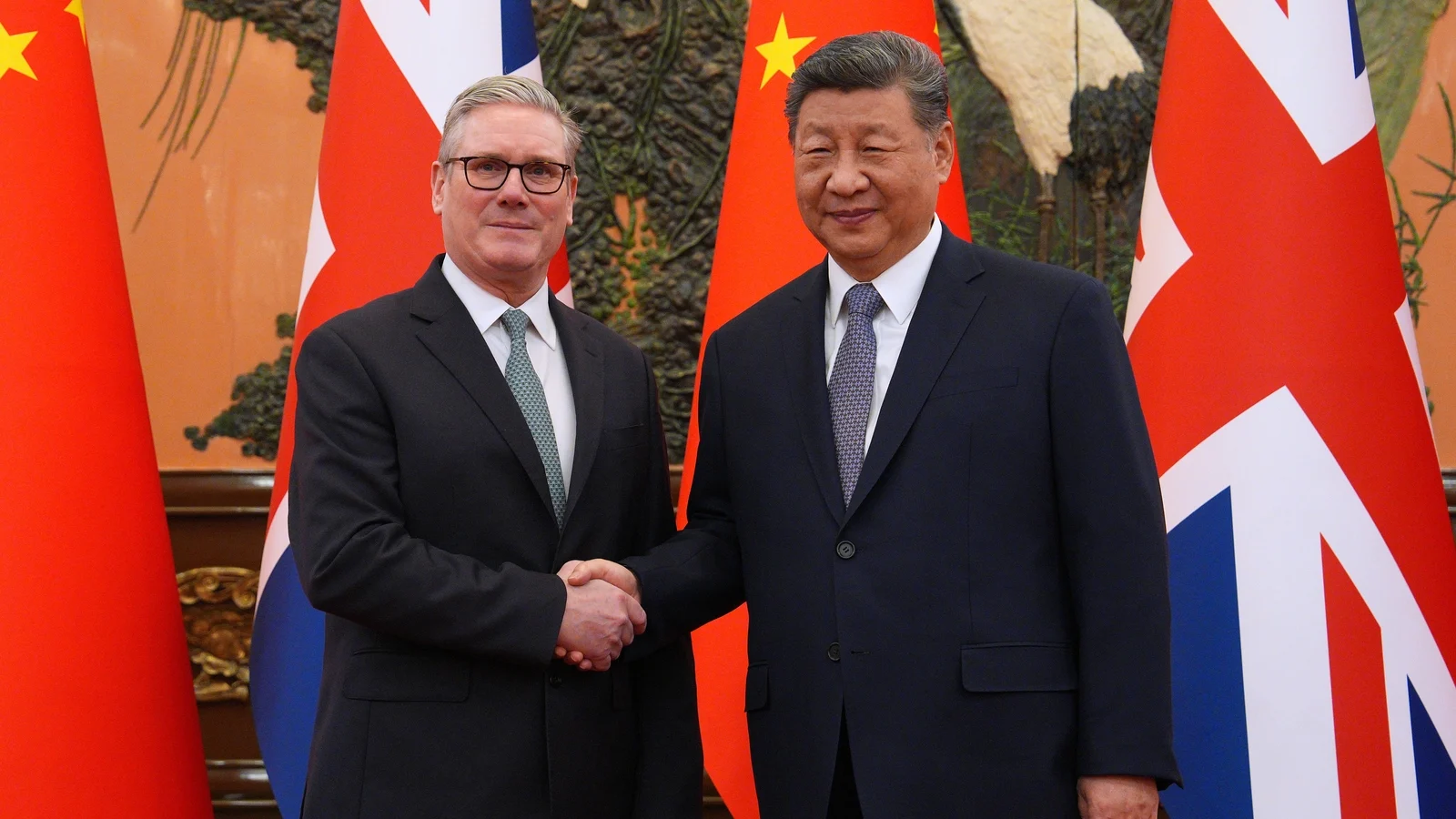
There is a particular kind of quiet that hangs over an airport departure lounge when a delegation leaves for Beijing: polite smiles, suitcases with diplomatic creases, and the low hum of possibility. For Britain’s prime minister, the trip was meant to be precisely that kind of low-humored, high-stakes choreography — a mission to rekindle trade, reopen lines of communication and, crucially, to press difficult human-rights issues face-to-face. What followed felt less like a press conference and more like a re-marking of the global chessboard.
A surprising concession, and a moral rift
In an interview given while he was on the trip, Prime Minister Keir Starmer announced that China had agreed to lift the travel and business restrictions it imposed in 2021 on seven members of the UK’s House of Commons and House of Lords. Those sanctions — levied in response to British measures against Chinese officials over alleged abuses in Xinjiang — had become a flashpoint for both principle and pragmatism. “President Xi said to me that that means all parliamentarians are welcome,” Starmer said, later adding, “That shows that if you engage, you can raise the difficult issues.”
The seven affected included high-profile critics of Beijing such as Tom Tugendhat and Iain Duncan Smith, names familiar to anyone tracking the UK’s evolving posture on China. In 2021, Beijing barred those politicians from entry and forbade Chinese entities from dealing with them, branding their criticisms as “lies and disinformation” related to the treatment of Uyghur Muslims in the Xinjiang region.
That moment — the lifting of restrictions — is easy to reduce to a line in a brief, but the room it opens onto is vast: diplomacy versus principle, engagement versus sanction, economic opportunity versus moral accountability. Which side do you lean toward when two imperatives clash?
Voices from both shores
Not everyone welcomed the development. Members of the Inter-Parliamentary Alliance on China (IPAC), which had championed scrutiny of Beijing’s policies, issued a statement of defiance even before the move was confirmed: “We would rather remain under sanction indefinitely, than have our status used as a bargaining chip, to justify lifting British sanctions on those officials responsible for the genocide in Xinjiang,” they said.
“If you cave on these things for a handshake and a trade deal, you send a message,” said a senior analyst at a human-rights think tank in London, who asked not to be named. “It becomes a ledger: trade on one side, human rights on the other.”
On the streets of Shanghai, however, reactions ranged from curiosity to weary pragmatism. “We are here to sell our services and keep the lights on,” said Li Na, owner of a small export consultancy, as she poured jasmine tea for a visitor. “Politicians say many things; business adapts to what is possible.”
Why Xinjiang still matters
At the heart of this diplomatic choreography is Xinjiang — a region that, since 2017, has been the focus of severe international concern. Human rights groups and researchers have estimated that more than one million Uyghurs and other predominantly Muslim minorities have been detained in camps or heavily policed settings. In 2022, the UN human-rights office warned that policies in the region could amount to “crimes against humanity.” China rejects these allegations, saying its actions are counterterrorism measures that have driven down violence and supported economic development.
Sanctions imposed by the UK and other Western countries in 2021 were intended to hold officials accountable. Beijing’s reciprocal restrictions on MPs were not simply symbolic; they were personal, punitive and unmistakably political.
Trade, strategy and the art of engagement
Starmer’s decision to engage — to sit down, to accept trade talks and to press China directly — reflects a growing post-Cold War realization: isolation has limits. “No country is an island in a globalized economy,” said Dr. Mira Patel, an international relations professor. “Engagement allows for leverage, but requires a delicate mixture of pressure and cooperation.”
Economically, China remains the world’s second-largest economy and a central market for British exporters and investors. For a government balancing a fragile domestic agenda — from public services to post-Brexit trade realignments — the math of engagement is tempting.
- Xinjiang allegations: estimates of 1+ million detained since 2017 (based on multiple human-rights reports)
- UN finding: policies could constitute “crimes against humanity,” according to the UN human-rights office
- 2021 sanctions: reciprocal measures between the UK and China after mutual allegations over conduct
Allies, critics and the geopolitical echo chamber
International reactions were predictably mixed. Critics suggested that softening Beijing’s stance on individual parliamentarians risked signaling a broader willingness to trade scrutiny for access. Allies — close intelligence and defense partners — have been watching whether economic re-engagement will dilute longstanding concerns over trade dependency, surveillance technologies and human rights.
“We remain very close allies with the United States, and such trips are always discussed,” Starmer said, according to reports. In the current geopolitical climate — where technology, security and trade are intertwined — every handshake carries implications.
What does this mean for democracy and accountability?
Here is the uncomfortable question: can engagement co-exist with accountability, or do they counteract one another? When a state lifts restrictions on parliamentarians as part of a broader diplomatic reset, what message does that send about the international community’s appetite for consequences?
“History shows that human-rights progress often comes through sustained pressure — legal, economic, moral — coupled with opportunities for reform,” said a former diplomat who worked on China policy. “The danger is conflating the appearance of dialogue with the achievement of justice.”
A personal note from the field
Walking the Bund at dusk, the lights bouncing off the Huangpu River, it’s easy to be seduced by the normalcy of commerce and culture — restaurants overflowing, families taking photos, street vendors calling out in a dozen dialects. Yet beneath that bustle lie questions that do not resolve with a single trip: Are sanctions transactionary or transformational? Can trade and human rights be pursued in parallel? And what responsibility do democracies hold when their economic ambitions meet systemic abuse halfway around the world?
Those are not theoretical musings. They shape the lives of people in Xinjiang, the careers of parliamentarians, the strategies of governments, and the livelihoods of shopkeepers like Li. They also shape what kind of world we are willing to build: one where values are non-negotiable, or one where they are bargained in the shadows.
Where do we go from here?
The lifting of sanctions on the seven parliamentarians is more than a diplomatic footnote. It is a test case for how democracies will navigate the 21st-century terrain of powerful authoritarian states, global commerce and human-rights advocacy. It forces us to ask: Can engagement be principled? Will pressure be sustained? And how will ordinary citizens — from London to Lhasa to Lagos — judge those choices?
If nothing else, this episode reminds us that foreign policy is never just policy. It is a story we tell ourselves about who we are, what we tolerate, and what trade-offs we will accept in the name of national interest. And that story, like all good stories, hangs on human faces, quiet tea cups, and the small, stubborn demands for dignity that refuse to be footnoted away.