When the Hill Gave Way: Voices from the Rubaya Pits
The rain came like a warning and then, in a matter of heartbeats, the slope gave up its secret.
At the Rubaya mining site in North Kivu, eastern Democratic Republic of Congo, scavengers—men and women who pick at the earth for coltan with bare hands and cheap tools—found themselves buried by the mountain they had been prying apart. Witnesses say two deadly slides struck the militia-held zone this week: one in the wet gray of Wednesday afternoon and another on Thursday morning, each sending mud and rock down into the labyrinth of pits and makeshift tunnels.
“It rained for an hour and then the ground simply slid,” said Franck Bolingo, a freelance miner who was at the site on Wednesday and spoke to AFP. “It swept people away. Some were buried. Others are still in the pits.”
Local authorities told reporters that bodies have been recovered but gave no exact toll. “Some bodies have been found,” Eraston Bahati Musanga, governor of North Kivu province, said. “We do not yet have a full count.”
The scene: close, chaotic, and unbearably human
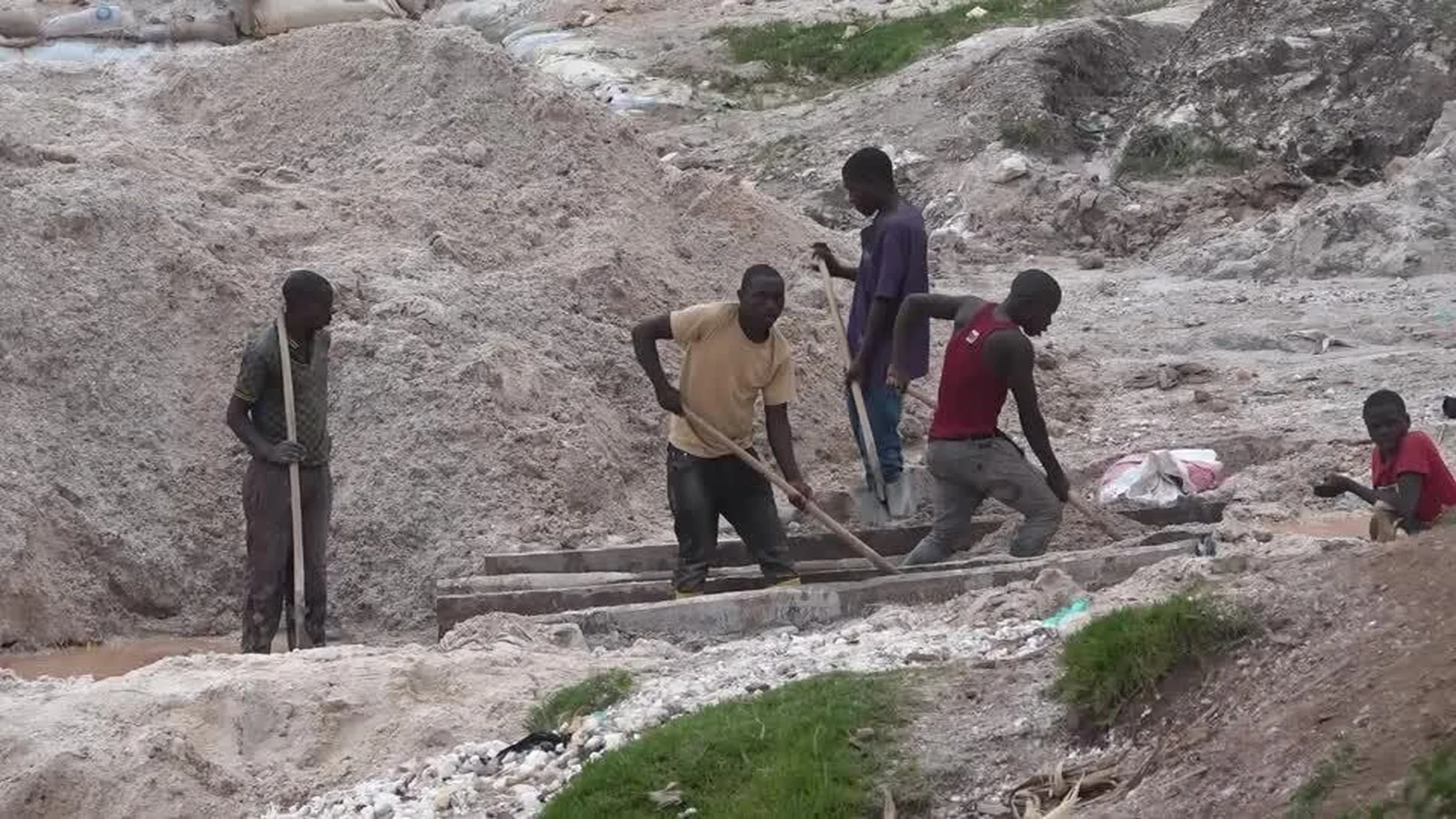
Walk the Rubaya site on a good day and the landscape is a strange sort of industrial carnival: deep pits like craters, terraces carved into the hill, stalls where men barter for tools, and charcoal fires where women cook cassava for the crews. On a bad day—like the one after the first slide—the air is thick with soil, the constant clink of metal, and the low, stunned murmur of people who keep on digging because they must.
“We were in the pit when it happened. I escaped by crawling under a rock,” said Olivier Zinzabakwira, another miner who narrowly survived. “But I saw many go down. We are tired and hungry and the mountain is alive.”
Dozens of scavengers were still shoveling at the site on Friday, video from AFP showed—some in rubber boots, some in flip-flops—sifting through mud and debris for the black, shiny ore that has turned this remote hill into one of the most globally consequential mines on Earth.
Why Rubaya matters far beyond North Kivu
Rubaya is not just another pit in a country of many extractive wounds. It is a cornerstone of the global supply chain for coltan—a combination of columbite and tantalite, the mineral from which tantalum is extracted. Tantalum is indispensable for tiny capacitors that keep our phones, laptops, and countless other electronics functioning.
Depending on the estimate you accept, Rubaya has been credited with producing somewhere between 15 and 30 percent of the world’s coltan. The broader eastern DRC basin is thought to hold between 60 and 80 percent of global coltan reserves.
Numbers can feel abstract, but think of this: a handful of dull, sticky ore from a Congolese hillside can be translated—through grinding, trading, and smuggling—into a component that sits inside the pocket computer you now read this on. The people who pull it out of the earth rarely see the profit that follows.
Who runs the mine now?
Since the M23 militia re-emerged as a force in eastern Congo in late 2021, control of territory and resources has been a central axis of the conflict. In April 2024 the group took Rubaya, and United Nations experts have said the militia has since established a parallel administration over the site, instituting taxes and regulations in place of the Congolese state.
UN monitors estimate the M23 collects roughly $800,000 a month from Rubaya, levying a reported $7-per-kilo tax on coltan as it is taken from the pit. Those revenues, the experts warn, are used to sustain and arm the militia.
Accusations have rippled outward: UN reports and experts have suggested Rwandan involvement in supporting the M23’s campaign—a charge Kigali denies. Such regional entanglements complicate every rescue effort, every negotiation, and every prospect of regularizing legal trade.
People first: the human ledger of a conflict mineral
Rubaya’s slope is a ledger where the lines are measured in lives, not just kilos. Casualty counts remain uncertain in the wake of the slides; AFP and local officials could not independently verify a full toll. But talk to the people who live and work here and the losses are immediate and intimate: grieving families, children orphaned, friends that do not come home. The earth, exhausted by digging and drenched by recent rains, let go.
“We don’t have choices,” 36-year-old Mariam Kabasele told me in a phone call. She has been washing coltan dust from clothes and pots since she was a teenager. “If I stay, my children starve. If I go, maybe I die. So we keep coming back.”
There is little in the way of safety infrastructure. Tunnels are unreinforced, slopes are overworked, and weather forecasts—predictably shifting as climate patterns change—are rarely heeded in the moment of survival. That combination turns every storm into a potential catastrophe.
What the world should notice
This tragedy at Rubaya is not just a local or national story; it is a portrait of how global demand and fragile governance collide. Our phones, computers, and cars are downstream from mines like Rubaya. Supply chains may be audited in glossy corporate reports, but the human cost—unevenly policed and often ignored—keeps building.
Consider these stark realities:
- Rubaya’s output accounts for a major percentage of global coltan production, which supports industries worth billions.
- Militia taxation of mines creates steady revenue streams that fuel ongoing instability.
- International mining firms have temporarily suspended operations across the region amid M23’s advances, affecting both corporate supply and local livelihoods.
Questions we ought to be asking
Are companies doing enough to map the human footprint of their mineral sourcing? Can international consumer awareness translate into policies that protect miners rather than absolve distant firms? What responsibility do regional powers and the global community bear when bids for strategic resources become engines of violence?
“Sanctions and boycotts only push trade underground,” Dr. Amina Kambale, a Congolese geologist and independent analyst, told me. “We need transparent, enforced traceability and livelihoods alternatives for miners. Otherwise, people will always go back into dangerous pits.”
That practicality cuts through moralizing. Even as campaigns for conflict-free minerals mobilize, the daily calculus for families at Rubaya is simple and brutal: survive today, hope for tomorrow.
Small gestures, bigger policy
Rescue teams, local NGOs, and provincial authorities can and do respond in the short term. But sustainable change requires investment in safer mining techniques, real oversight of militia-taxed revenues, and credible regional diplomacy to halt the flow of weapons and political backing that keep conflicts alive.
For readers in distant cities and suburbs: when you hold a device tonight, consider the invisible journey of the materials inside. What kind of world do you want your phone to have come from?
In Rubaya, people are shoveling through the mud again. They sing sometimes—old songs to keep fear at bay—and they count their losses quietly. Their hands are raw, their resolve stubborn. They are not statistics. They are neighbors to the planet’s appetite for convenience, and they are living proof that how we source the things we prize has consequences written in soil.