Abu Dhabi at the Brink: Diplomacy and the Drumbeat of War
There is a kind of brittle quiet that comes before a storm — the hollow hush in an alley where the wind has knocked down shutters, the pause before a siren that never really ends. That’s the mood threading through the latest chapter of the war in Ukraine: negotiators are packing their briefcases for Abu Dhabi while, back home, families count bodies and burn the last of their firewood to keep warm.
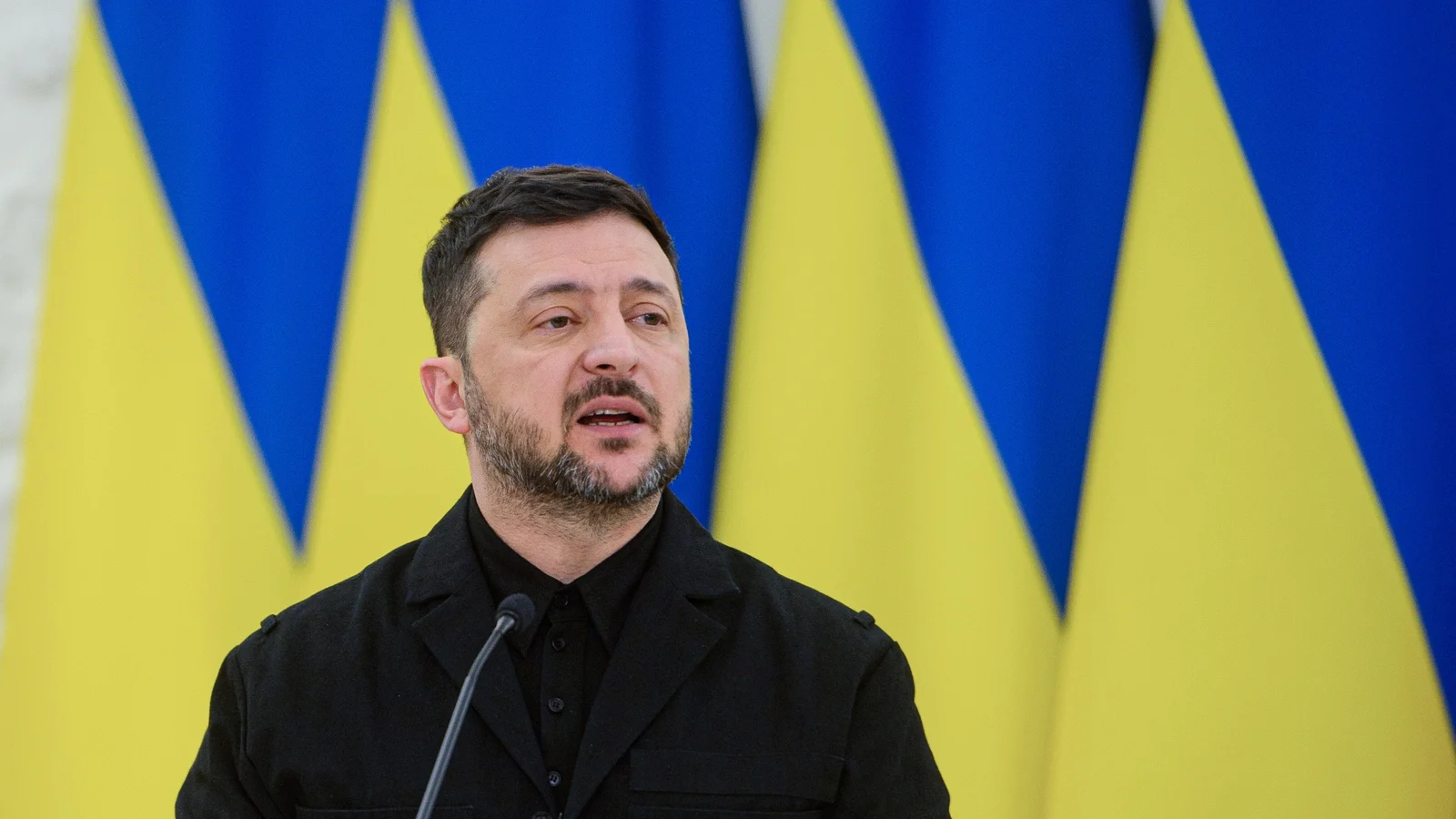
President Volodymyr Zelensky announced bluntly that envoys from the United States, Russia and Ukraine will meet in Abu Dhabi for two days of talks on February 4 and 5. “Ukraine is ready for a substantive discussion, and we are interested in ensuring that the outcome brings us closer to a real and dignified end to the war,” he wrote on social media — a line that reads like both hope and wager.
The stakes are physical and existential
This is not a diplomatic exercise removed from the battlefield. Less than 24 hours after the announcement, the reality of war intruded: a night-time drone strike in Dnipro, in the Dnipropetrovsk region, killed a man and a woman, officials said. Fires consumed a house; two other homes and a car were damaged. In the south, an attack in the Kherson region left a 59-year-old woman critically injured, with severe head trauma and part of her leg severed — vivid, brutal proof that conversation and catastrophe continue on parallel tracks.
“We wake up and the world is divided into the time before and after the strike,” said Olena, a teacher in Dnipro who, like many, asked not to use her full name. “You learn to listen for certain sounds. We talk about negotiations at night, and in the morning we sweep glass.”
What’s on the table in Abu Dhabi?
The details of the agenda have been sparse in public briefings. But anyone who follows this war knows the likely items: ceasefire mechanics, prisoner exchanges, corridors for humanitarian aid, and — perhaps most urgently for Ukrainians this winter — arrangements to preserve power and heating infrastructure. Zelensky has repeatedly framed the conversation around a “dignified end to the war.”
- Ceasefire enforcement and verification measures
- Protection of critical infrastructure, especially energy networks
- Humanitarian access and evacuation corridors
- Prisoner exchanges and the legal mechanisms post-conflict
“Talks are only worth the ink they leave on agreements that stop the killing,” said a European diplomat involved in shuttle conversations, speaking on condition of anonymity. “We are pushing for measures that can be verified on the ground, not just promises on paper.”
Winter war: the assault on warmth and light
Across Ukraine, the war increasingly looks like an assault on survival as much as territory. Temperatures have plunged to around -20°C in parts of the country. For many towns and cities, the first casualty of the winter escalations has been heat and light: sustained attacks on the power grid have forced rolling blackouts, left hospitals scrambling for generators, and turned apartment buildings into cold, dim hulks where elderly residents huddle beneath blankets.
“When the power goes, the house becomes a cave,” said Mykhailo, an electrician volunteering at a volunteer-run warming center in central Ukraine. “People bring kettles, thermoses. They play cards at 9 a.m. to feel like it’s still a day.”
President Zelensky used stark numbers to underline the scale of the campaign against the energy sector: he said Russia launched more than 6,000 drones, roughly 5,500 aerial bombs and 158 missiles at Ukraine in January alone, with many strikes intentionally directed at logistics and connectivity between cities. Whether those figures provoke immediate policy shifts in Abu Dhabi or only hardened positions remains to be seen.
Behind the statistics: human lives and choices
For every aggregate number there is a person who lights a candle by a hospital bed, a child who misses school because the roads are damaged, a baker who opens at dawn to sell black bread to men in scarred fingers. These are the textures that make diplomacy urgent.
“We are tired of being told to be ‘patient,’” said Kateryna, who runs a small grocery stall near Dnipro’s riverfront. “Patience doesn’t fix a shattered radiator or pay for a prosthetic. We need concrete help: air defense systems, fuel to keep hospitals running, and a way to move people safely.”
Her ask mirrors a central plea from Kyiv: more air defense and fighter jets. Zelensky has repeatedly urged Western partners to accelerate supplies, naming F-16s among the specific systems Kyiv believes would change the calculus of the skies. For partners, decisions about advanced weaponry are weighed against fears of escalation and the complexities of training, maintenance, and delivery timelines.
What does success look like?
Ask ten people — a minister, a mother, a mercenary, a market vendor — and you will get ten different definitions. For a diplomat, success might be an enforceable ceasefire and a monitoring mission. For a displaced grandmother, success could be simply returning home before spring to a house that still stands.
“If we come back and find our stove and door, that is success,” said Ivan, who fled southeast Ukraine last winter and sleeps on a twin mattress at an aid shelter. “If our sons come back alive, that is success.”
Why Abu Dhabi?
Hosting talks in Abu Dhabi signals several strategic calculations. The UAE has cultivated relationships across this conflict’s many fault lines and markets itself as neutral ground where rivals can meet. The city’s desert calm and conference hotels provide a staging area far from the frontlines and the immediate noise of Western capitals — an environment conducive, perhaps, to careful bargaining.
Yet setting a table and getting plates to agree on the bill are different things. The inevitability of tension is baked into the trip: envoys must balance public pressure at home, the demands of constituencies ravaged by war, and the private calculus of what they can afford to concede.
Global echoes
Beyond the boardrooms and bunkers, this conflict ripples into global conversations about energy security, refugee flows, and the resilience of liberal international institutions. When power grids are targeted, when children are pushed into cross-border migration, when winter becomes a weapon, you don’t just watch a country fracture — you see a test of how the world responds to human vulnerability under fire.
“This is not just Ukraine’s story,” noted an analyst from an international think tank. “It’s a chapter in a larger argument about whether modern warfare accepts certain rules — like the protection of civilians and infrastructure — or whether those rules will be eroded.”
Questions to hold as delegates fly out
What are we willing to accept to stop the killing tonight? How do we verify promises tomorrow? Can hot words be translated into cold, enforceable realities on the ground?
As airplanes descend over Abu Dhabi and negotiators trade folders and guarded smiles, the final arbiter will not be protocol but the hum of a generator in a Ukrainian hospital, the warmth of a stove, the lives of people who sleep with one ear tuned to the distant thump of ordnance.
So when the headlines flash and the summaries print, ask yourself: what would you trade — and for how long — to bring a community back from the brink? The answers, like the meeting rooms in Abu Dhabi, will be crowded, urgent and impossible to reduce to a single line.