When a Stack of Files Becomes a Mirror: The Epstein Papers and the Politics of Power
They arrived not with fanfare but with the low, relentless thud of revelation: digital folders, printed pages, and tattered letters that have the tremulous power to redraw reputations and reopen old questions about who moves in the corridors of power.
Last week the US Department of Justice released what officials called the final tranche of documents tied to Jeffrey Epstein’s investigation — a cache that prosecutors and journalists say amounts to “millions of pages” of material collected over years. For Washington and London alike, the files landed like a cold rain: soaking, staining, impossible to ignore.
Two former cornerstones of the Democratic establishment agree to testify
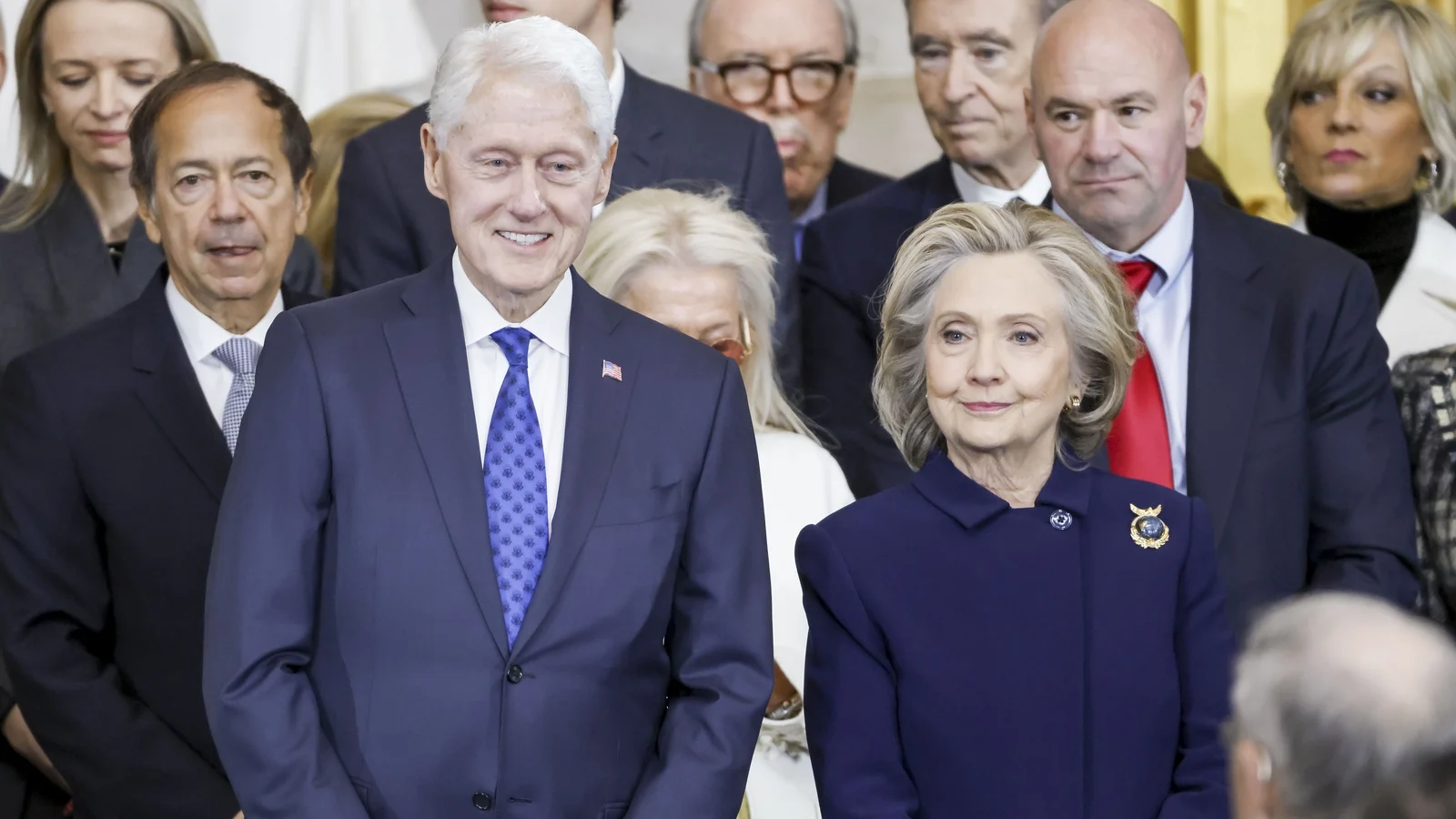
In a twist that gripped both Capitol Hill and social feeds, former president Bill Clinton and former secretary of state Hillary Clinton have agreed to appear before a House committee examining Epstein’s network — a decision that could diffuse a planned Republican-led vote to hold the couple in contempt of Congress.
“They are prepared to answer questions under oath,” said a senior aide to the Clintons. “They have been clear that they want the truth to come out, and they expect that standard to apply to everyone.”
The House Oversight Committee, dominated by Republicans, had recommended contempt resolutions after the Clintons refused to appear in person earlier, submitting written testimony instead. House Speaker Mike Johnson — cautious in tone but impatient in posture — welcomed the change. “Anytime witnesses comply, it helps the committee’s work,” he said, without committing to dropping the contempt motion.
Why in-person testimony matters — or doesn’t
Republicans argue that face-to-face testimony under oath is the gold standard of congressional oversight, particularly when the subject is a figure like Epstein, who cultivated ties with presidents, prime ministers, academics, tech billionaires, and celebrities. Democrats counter that the committee’s maneuverings are politically motivated, an effort to shift public focus ahead of elections.
“There’s a legitimate question here: is this oversight or performative theater?” asked Dr. Leah Campos, a Washington-based scholar of public institutions. “That’s not to say there shouldn’t be scrutiny — but congressional process can be weaponized when legal deadlines and political calendars collide.”
Old scandals, new echoes: the global ripple effect
Epstein died in a Manhattan jail cell in 2019 while awaiting trial on sex trafficking charges. The official finding of suicide did not end the scandal; instead, it ushered in new investigations, civil suits, and an avalanche of documents. Ghislaine Maxwell, his close associate, was convicted and handed a 20-year sentence in 2022.
The latest document release has had reverberations far from Washington. In London, names and notes appearing in the files have prompted inquiries into whether privileged access translated into improper influence over public business.
Prime Minister Keir Starmer has asked his Cabinet Secretary to undertake an urgent review after documents suggested that former Labour minister Peter Mandelson may have passed internal government details to Epstein back when he served at the heart of Number 10 during and after the global financial crisis.
Bank records and emails included in the download appear to show payments to Mr. Mandelson totaling roughly $75,000 in 2003–2004 and a note that Epstein funded an osteopathy course for his husband. Mr. Mandelson resigned his Labour membership and told The Times he had “no record or recollection” of the payments — an almost Shakespearean line in a drama of leaked papers and bruised reputations.
Police, reviewers, and the long tail of accountability
The Metropolitan Police say they have received several reports of “alleged misconduct in a public office” and will decide whether those reports meet the criminal threshold. Downing Street has said it will cooperate, while former officials call for careful, evidence-based review rather than trial by headlines.
“We’re seeing a global test of institutional memory and appetite for accountability,” said Nadia Rafiq, a London-based investigative reporter. “These files underscore how private relationships intersected with public decisions — sometimes clumsily, sometimes clandestinely. The question now is: what will institutions do about it?”
Names, flights, and the photography of influence
Bill Clinton’s travel on Epstein’s private plane in the early 2000s is among the more enduring images in this saga. Clinton has acknowledged flying on Epstein’s jet for work tied to the Clinton Foundation, while insisting he never knew about Epstein’s criminal enterprise or visited his private island. Hillary Clinton has maintained she had virtually no meaningful contact with Epstein.
Other pages in the files are more unsettling: photographs appearing to show members of the British royal family in compromising contexts, notes about meetings and phone calls, and lists of people who moved through Epstein’s orbit. The trove reads less like a tidy dossier and more like the detritus of social climbing, ambition, and moral blind spots.
Beyond headlines: what this reveals about power
At its heart, the Epstein archive tests a simple, discomfiting question: when wealthy and connected people blur the lines between private indulgence and public influence, who pays the price?
Survivor advocates say the documents are a rare piece of truth-telling, a ledger of connections that could never be fully explained away by article disclaimers or legal filings. “These papers validate what many survivors have always said: abuse doesn’t happen in a vacuum,” said Maya Thompson of an advocacy group that works with trafficking survivors. “It thrives when people turn a blind eye or treat victims as collateral to social games.”
But there is another takeaway, quieter and perhaps more universally corrosive: institutions struggle to police their own. Whether it’s congressional committees, political parties, or Whitehall, the reflexes are often slower than the media’s glare and clumsier than the public’s craving for justice.
So what now? Questions for the reader — and for democracy
Will in-person testimony by the Clintons quiet the partisan backlash, or simply re-stoke it? Will police in London pursue a prosecution, or will political cost and legal threshold stall an inquiry? And most urgently: will the public ever really understand how influence was brokered in drawing rooms and private jets?
These documents are not just evidence; they are a mirror. They force us to look at the ties that bind elites across borders, and at the fragility of systems that claim to be blind but are in fact reflective of status and access.
As you read this, think about the institutions you trust — courts, parliaments, the press. Are they doing their job? And if not, what do you expect them to do next?
Key takeaways
- The Justice Department released a final batch of documents related to Jeffrey Epstein’s investigation, described as “millions of pages.”
- Bill and Hillary Clinton agreed to testify in person before a House committee after earlier submitting written statements; Republicans had advanced contempt resolutions for failing to appear.
- UK documents in the release have prompted a police review and an internal government probe into Peter Mandelson’s contacts with Epstein.
- Ghislaine Maxwell was convicted and sentenced to 20 years for sex trafficking; Epstein died in custody in 2019 while awaiting trial.
The story is far from over. Documents become data; data become lines of inquiry; and lines of inquiry, sometimes, become law. But between the pages and the courthouse steps are the lives of survivors, the reputations of the powerful, and the quiet, rigorous work of institutions wrestling with their past. Watch closely — and ask the hard questions. The rest of the world is watching, too.