In Jerusalem’s corridors of power: a blunt message and the quiet arithmetic of rebuilding Gaza
The sun had scarcely climbed above Jerusalem’s limestone roofs when officials filed out of a closed-door meeting, carrying a message that cut through the diplomatic fog: the Palestinian Authority will not have a role in governing Gaza after the war — not “in any way,” according to a terse statement from Prime Minister Benjamin Netanyahu’s office.
It was not only what was said but how it landed. In a city where every word ricochets, the insistence felt like a line drawn in the sand: reconstruction, administration and the future of Gaza would follow terms set by Israel — and not by the Ramallah-based Palestinian Authority (PA).
What was decided — and what remains disputed
The office of the prime minister framed the meeting as decisive. “The Prime Minister clarified that the Palestinian Authority will not be involved in administering the Strip in any way,” the statement read. Netanyahu also reiterated demands that have become near-ritual: the disarmament of Hamas, demilitarization of the Gaza Strip, and the fulfilment of wartime objectives before any reconstruction can begin.
On the other side of the debate, the technocratic National Committee for the Administration of Gaza (NCAG) — a temporary body set up under a US-mediated ceasefire framework to handle day-to-day matters — insists it is focused squarely on humanitarian relief and restoring basic services.
“We are about water, electricity, health clinics, schools — not flags or politics,” the NCAG posted on its X account after Israel’s complaint that one of the committee’s draft logos contained a symbol associated with the PA. “That’s the conversation that matters.”
Why the logo mattered
It might sound trivial: a logo on a letterhead. But symbols matter profoundly in this region where emblems are shorthand for legitimacy and control. Israeli officials seized on the image as proof of an unspoken link between the NCAG and the PA — a link they say they will not accept.
“It’s not an academic debate,” said Miriam Kaplan, a Jerusalem-based analyst who has followed Palestinian governance issues for two decades. “Logos become narratives. A small stamp on a document can be read as a reassertion of authority. For Israel, that is a non-starter right now.”
At Rafah and beyond: humanitarian corridors and political frontiers
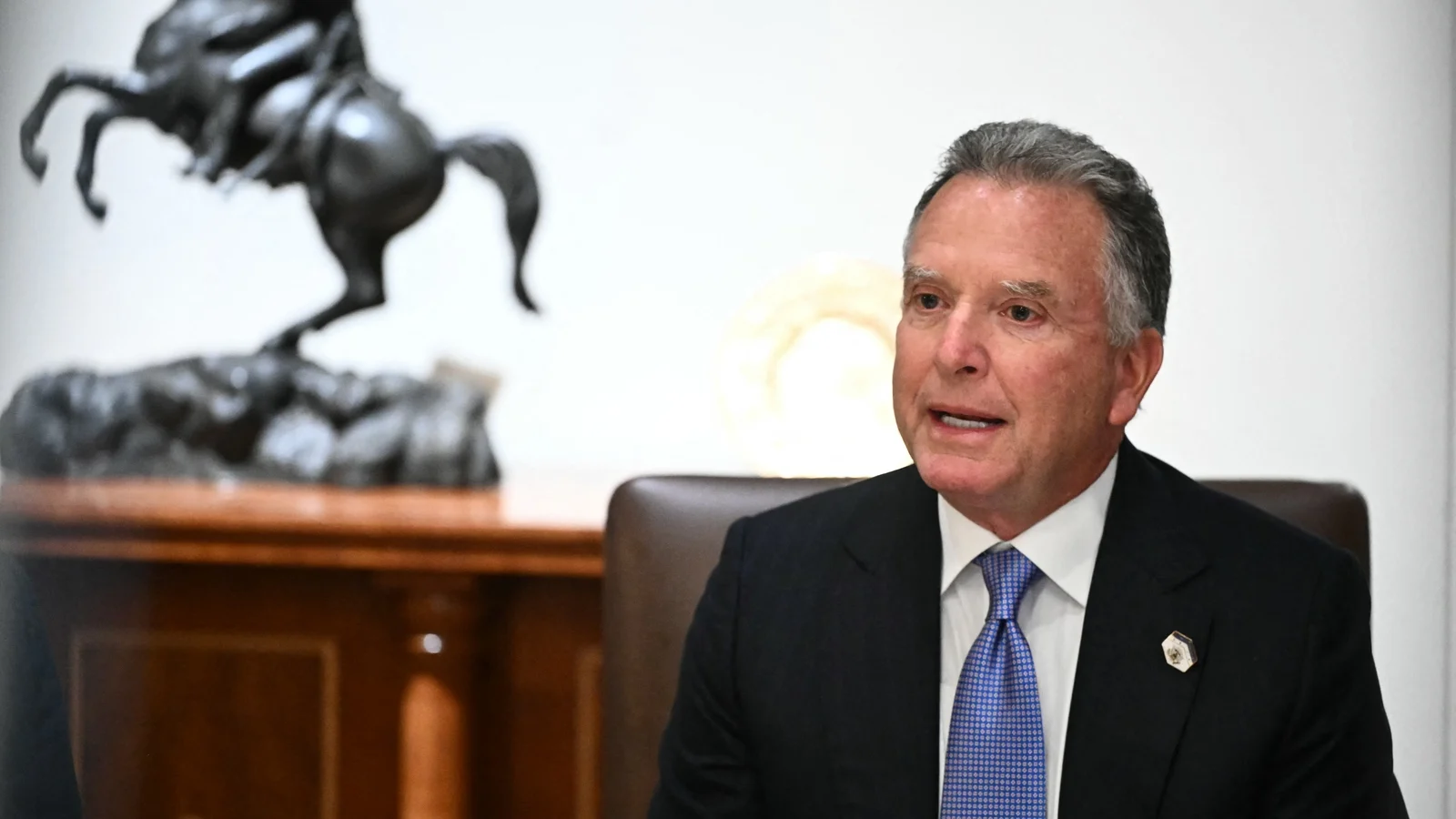
The visit by the US envoy, Steve Witkoff — the second meeting with Netanyahu in under a fortnight — came on the heels of the Rafah crossing with Egypt reopening, a critical relief valve for Gaza’s besieged population of around 2.3 million people.
International aid agencies had long lobbied for that opening. “Every day the crossing is closed, people in Gaza edge closer to catastrophe,” said Lina Haddad, a humanitarian coordinator who has worked along the Egyptian-Gaza border. “Medical supplies, fuel, food — these are not abstract issues. They determine who lives or dies.”
But humanitarian corridors and political control are not the same thing. Israel has made clear it will not allow Hamas to retain its weapons, nor will it accept an administratively independent PA stepping into Gaza without disarmament guarantees.
“There is immense pressure to move quickly on reconstruction,” said a senior diplomatic source, speaking on condition of anonymity. “But no reconstruction deal will survive if security questions aren’t answered to Israel’s satisfaction.”
Voices from the region: fear, skepticism and weary pragmatism
In Ramallah, where the PA government sits, reactions were almost uniformly cautious. “We are not trying to supplant anyone. Our interest is to see people living in dignity,” said a PA official who declined to be named. “But who speaks for Gaza’s people matters.”
In Gaza’s displaced-person camps and neighborhoods, where the war’s scars are still raw, the sentiment is less interested in high politics than in basics. “We want lights in the evenings. We want our children back in school. We want the ambulance to arrive when needed,” said Amal, a 34-year-old mother of three who has been sleeping in a UN-run shelter. “Symbols mean little when your house is rubble.”
A larger geopolitical choreography
Beyond the immediate arrangements in Gaza, there is movement on another front: the United States is expected to hold talks with Iran later in the week, with several Arab capitals — Ankara, Cairo, Muscat and Doha — nudging the process along. Reports suggest the meeting could take place in Turkey, part of a broader push to manage regional tensions that intersect with Gaza’s fate.
Diplomacy here is never linear. Local governance questions feed into regional negotiations and vice versa. Who administers Gaza after the war is as much about domestic politics as it is about the broader balance of influence between Tehran, Washington, Cairo and other regional players.
Law and order in Europe: the Denmark case
Meanwhile, a very different set of consequences played out in Copenhagen, where two young Swedish men were sentenced to lengthy prison terms for a grenade attack on Israel’s embassy neighborhood in October 2024. A court convicted one 18-year-old to 12 years and a 21-year-old to 14 years on charges that included terrorism and attempted murder; no one was physically injured in the attack, which damaged a terrace near the mission in the upscale Hellerup district.
“They threw the grenades with the intention of seriously frightening the Israeli and Danish populations — the attack therefore constitutes a terrorist act,” police said in a statement at the time of the trial. Prosecutors also linked the perpetrators to a criminal network in Sweden alleged to have been acting as an armed wing for a Middle Eastern militant group.
These cross-border ripples — recruitment, violence, and shadowy networks — underscore how the Middle East’s conflicts reverberate in unexpected places, pulling in youths, criminal gangs and diasporic communities far from Gaza’s narrow strip of land.
A new voice in Arabic — and what it signals
Back in Israel, another change is unfolding on the information front. The Israel Defense Forces has announced that Major Ella Waweya, a 36-year-old Muslim officer from Qalansawe, will replace Lieutenant Colonel Avichay Adraee as the army’s chief Arabic-language spokesman.
Adraee’s voice — sometimes sardonic, sometimes loaded with biblical or Quranic references — has been a hallmark of the conflict’s social-media ecosystem. His alerts and videos are followed closely by Arabic-speaking audiences who often see them as harbingers of military action.
Major Waweya’s appointment has a symbolic charge. “As a child, she watched Arab media and discovered the Israeli narrative,” an IDF source said. Her role signals a tactical shift: to reach Arab audiences with a different cadence, perhaps a different tone.
“Representation matters,” observed Professor Nader Saad, who studies media and conflict. “But so does credibility. She will need to build trust among audiences who may be skeptical of any military spokesman.”
What should readers take away?
These developments — a refusal to involve the PA in Gaza’s governance, the rise of a technocratic committee, regional diplomatic maneuvers, prosecutions in Europe and a change in military messaging — are threads of the same tapestry. They reveal a region trying to stitch together security, legitimacy and humanitarian need amid deep mistrust.
Ask yourself: when rebuilding a place that has seen so much destruction, who gets to decide what normal looks like? And how will the voices of ordinary people — the ones actually living amid the rubble — be heard in those decisions?
In the end, the true test will be whether policies produce functioning hospitals, steady power, schools that reopen and roads that connect people to jobs and goods. Symbols and diplomacy will do their part, but survival in Gaza will be measured in the small, mundane returns of daily life — and in whether those returns prove durable.