Morning on Chios: A Quiet Sea, Then a Sudden Horror
It was the kind of morning the Aegean gives when it wants to remind you how small you are: pale light slipping across olive groves, a soft wind smelling faintly of resin and salt, fishing boats slowly trimming their nets near the island’s jagged shoreline. Then came the sirens.
Fishermen on the western coast of Chios say they heard a thunderous impact and saw spray bloom like a broken sheet of glass. Lifeboats pushed off. Men and women who have long known the sea’s moods raced toward a scene that would quickly become one of Greece’s deadliest maritime tragedies in months.
What Happened
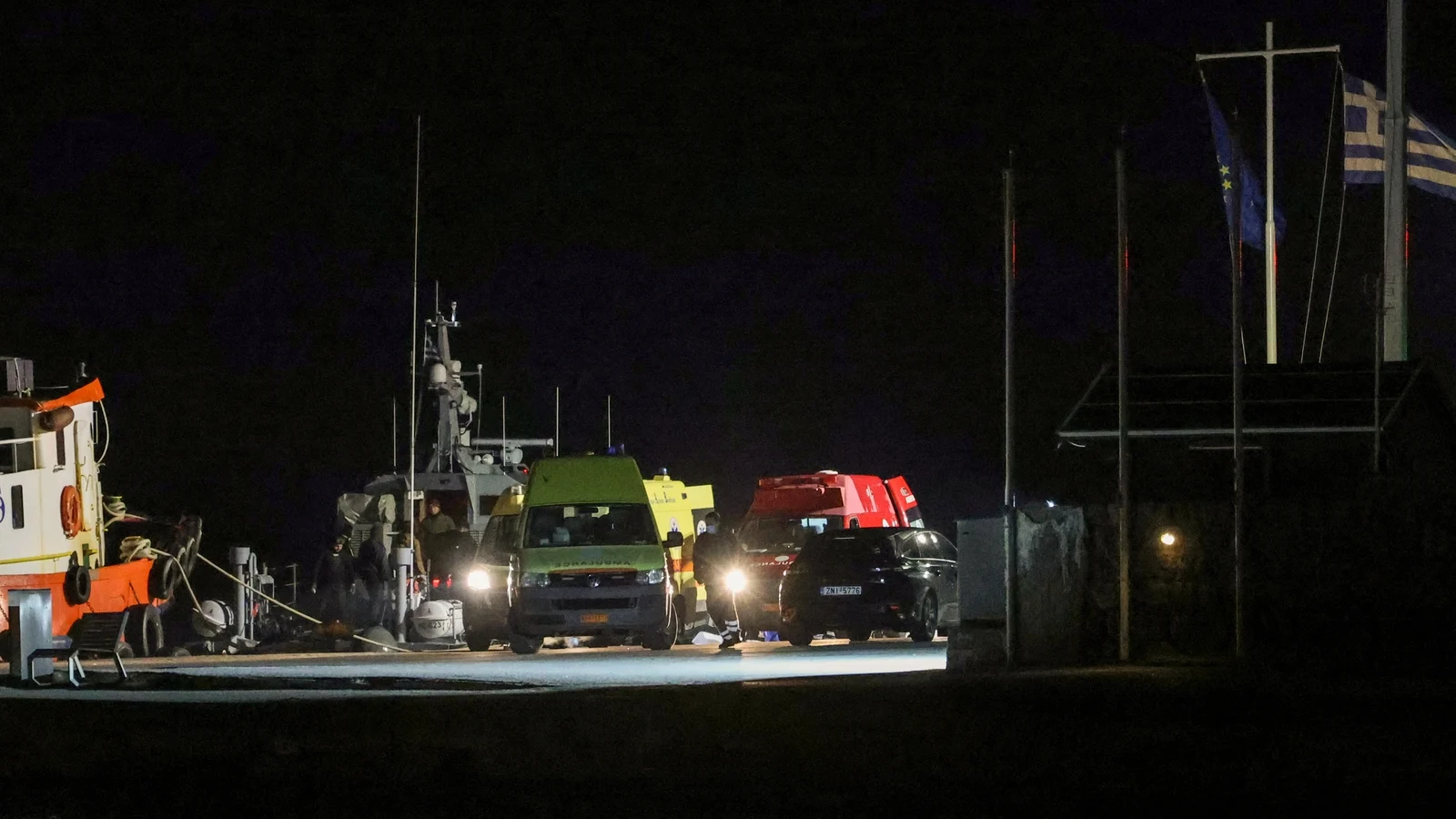
Greek police say a port police patrol vessel and a high-speed migrant boat collided off the coast of Chios yesterday, with at least 14 people killed. The coastguard reported that two of its members were taken to hospital and that 24 migrants were pulled from the water in the immediate rescue effort. Greek media outlets added a heartbreaking detail: among the injured were seven children and a pregnant woman.
“We issued a warning signal,” a coastguard spokesperson told local broadcasters, echoing accounts carried by the national public broadcaster. “But the vessel attempted to flee and a collision occurred.” A Greek air force helicopter joined the search for survivors, scouring the glittering blue for signs of life.
Voices from the Shore
“You could see small shoes drifting in the wake,” said Giorgos Katsaros, a fisherman who helped recover survivors at the pier. “A woman kept repeating a name, over and over. It was chaos—then a silence where people were counting the living and the dead.”
An exhausted nurse at the small hospital in Chios town described scenes that the island’s medical facilities are ill prepared for. “We do our best,” she said, speaking under the weight of fatigue. “We don’t often see so many children in a single incident.”
The Geography That Makes Chios a Crossroads
Chios sits like an attentive sentinel close to the Turkish coastline, its nearest point only a few nautical miles from Asia Minor. For decades, that narrow channel has been a highway for desperate, illegal, and sometimes deadly crossings — crowded dinghies, rubber boats, or high-speed skiffs attempting to bridge the stretch to safety and asylum in the European Union.
The island itself is a mosaic of serenity and tension: medieval mastic villages with stone alleys where elders gossip over thick coffee; seaside tavernas that serve fresh octopus grilled over wood fires; a coastline where tourists swim in summer and the sea tests the resolve of migrants year-round. Local residents describe a rhythm in which tragedies punctuate normal life with terrible regularity.
Numbers That Tell a Larger Story
This accident is not an isolated tragedy. The United Nations refugee agency reported in November that more than 1,700 people either died or went missing on migration routes to Europe in 2025, a grim reminder of the relentless human cost of these crossings. And the International Organization for Migration estimates that roughly 33,000 migrants have died or gone missing in the Mediterranean since 2014.
Those figures, horrifying in themselves, also mask stories: the people who leave with newborns swaddled, or teenagers clutching backpacks; the smugglers who spin promises of safety into engines and rubber; the families left behind in cities and camps across the Middle East, Africa, and Asia.
Why Do People Risk It?
Ask any refugee or migrant why they boarded a small boat, and you’ll receive answers that cut across politics and geography: escape from war and persecution, hunger and drought, a daughter’s future, debts that suffocate a household, or the slow violence of corruption and collapsed economies. For many, that narrow sea is a gamble forced by circumstances, not a choice of desire.
“We left because there was no life left,” a man who identified himself as Amir, speaking softly in the hospital hallways, told a reporter. “Better to try and perhaps drown than to stay and watch my children fade.”
Search and Rescue — Limited by Capacity and Politics
Greece’s coastguard and military have often been the first and only responders to incidents like this. But the resources available on islands like Chios are limited. Smaller ports, limited ICU capacity, and the logistical challenge of coordination at sea mean that response times and outcomes can vary dramatically.
There’s also a political dimension that complicates rescue efforts: EU border policy, bilateral agreements with neighboring countries, and frequent tensions over accusations of pushbacks and interdiction strategies all shape the contours of what happens when a small boat is spotted.
- Immediate needs after shipwrecks: rapid medical triage, shelter, psychological support, and forensic care for the dead.
- Longer-term needs: safe reception centers, routes for legal migration, and stronger international cooperation on search and rescue.
- Systemic solutions: addressing root causes in home countries and disrupting criminal smuggling networks.
Neighbors, Officials, and the Everyday Human Cost
Locals gathered by the harbor spoke in low voices, hands busy threading together an understanding: grief that arrives without invitation, gratitude for those who helped, and anger at a world that frames these crossings as statistics rather than lives. “We are tired of burying children,” said Eleni Papadopoulou, a teacher, as she lit a candle in the church that evening. “This island has warm hearts, but our hearts are not enough.”
European officials routinely promise tougher measures to stem irregular migration and to bolster maritime surveillance. Yet every policy discussion seems to collide with the same human facts: people on the move, smugglers adapting, and a sea that remains indifferent to fear and need.
What Should We Ask Ourselves?
How do we balance border security with basic humanity? Is there a way to keep people from risking their lives without shutting them out entirely? When a ferry of grief pulls into a tiny island port, who is responsible for the living and the dead?
These are not just policy puzzles; they are moral tests. The Mediterranean is a mirror of global inequality, conflict, and climate pressure. It asks of us not only better systems and better policies, but better empathy.
Where We Go From Here
For now, Chios will tend its wounded and bury its dead. The island’s usual rhythms—market days, church bells, the smell of frying fish—will return. But the questions raised by this collision will not dissolve so quickly.
We can remember the names and faces behind the statistics. We can press for transparent investigations into what happened at sea and for safer legal routes for those seeking refuge. We can insist that the bright-blue Aegean — so beloved by holidaymakers — be treated as more than a border: as a shared space holding lives that deserve dignity.
What will you do with this knowledge? Will it become a headline you scroll past, or the prompt for conversation, action, compassion? The sea keeps asking, and the answers may well define us.