When Metal Meets Diplomacy: A Carrier, a Drone, and a Fragile Window for Talks
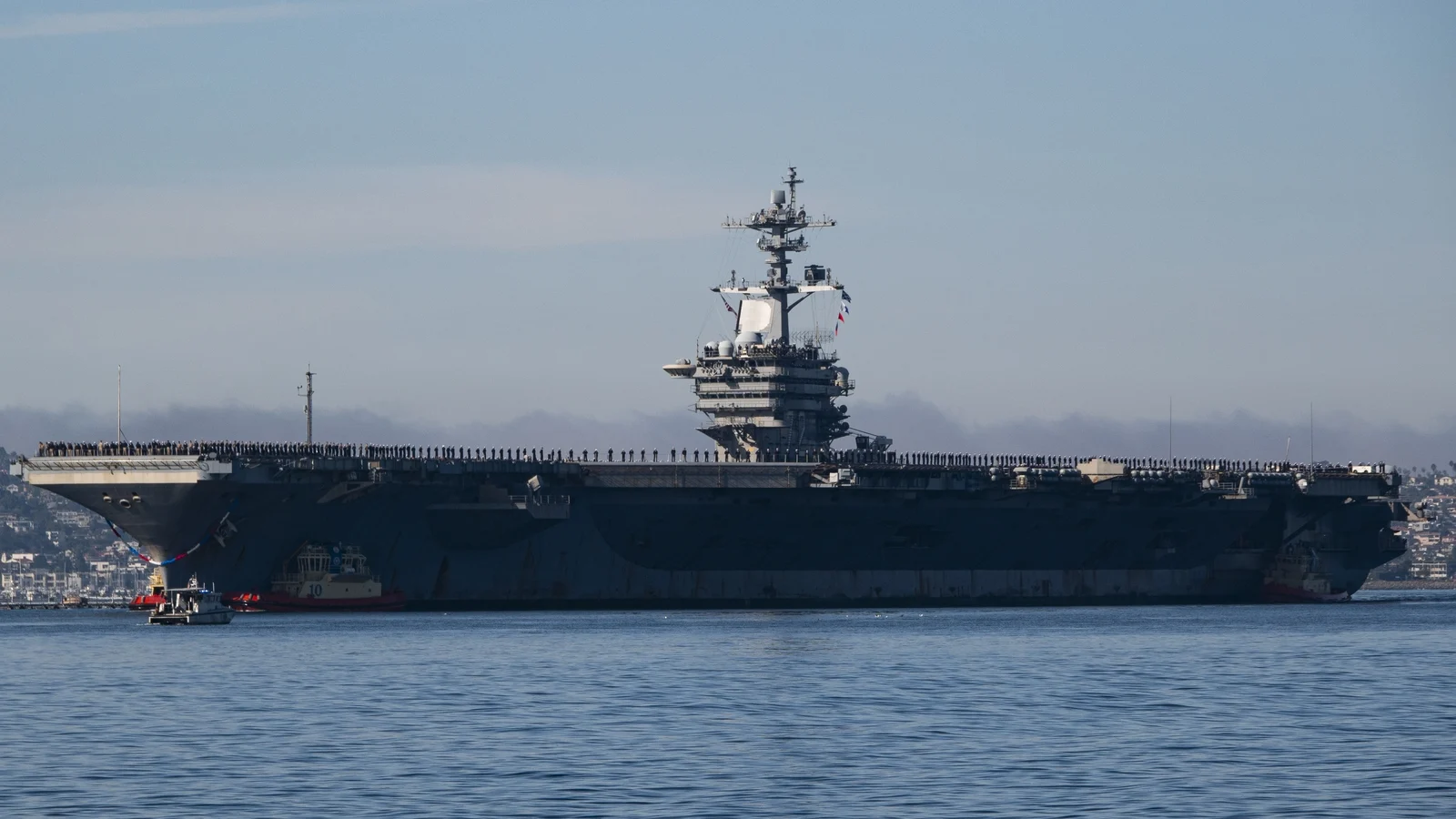
Before the sun pulled itself fully over the Arabian Sea, a U.S. F-35C slid from the flight deck of the USS Abraham Lincoln and changed the tone of a fragile diplomatic dance. The jet fired on a drone that, American officials say, came too close to the carrier. It fell into the water. No one cheered. No one celebrated. In the space between that flash and the splashes, a negotiation that world leaders had cautiously promised continued — a chance to cool one of the planet’s most combustible flashpoints — suddenly felt less certain.
“We were ordered to assume the worst,” said a young lieutenant who asked to remain unnamed. “You can’t tell that over the radio — it’s just a pulse in your chest and a thousand tiny, old training scenarios. We did what we had to.”
This moment was not an isolated clash. On the same day, Iranian fast boats and a drone converged on the M/V Stena Imperative, a U.S.-flagged tanker threading the Strait of Hormuz. The ship increased speed and kept course; an American destroyer provided air cover and shepherded it through. Both incidents happened where geography and geopolitics are braided tightly: a strip of water less than 40 nautical miles at its narrowest, through which roughly one-fifth of the world’s seaborne oil passes.
Diplomacy in the Shadow of Steel
Against this volatile backdrop, Washington insisted that dialogues would proceed. White House spokeswoman Karoline Leavitt told reporters the U.S. envoy Steve Witkoff was still expected to “have conversations with the Iranians late this week,” even as the carrier steamed and the F-35C circled. Tehran’s president, Masoud Pezeshkian, accepted the idea of talks — but only if the meetings were free of “threats and unreasonable expectations,” he wrote in a post on X.
“We want to talk, but we will not be bullied into giving away our security,” said a diplomat close to the Iranian negotiating team. “Words without trust are just noise.”
Where they might meet is still unclear. An Arab official, speaking on condition of anonymity, suggested Turkey; other reports said Iran preferred Oman. Little things — the color of a carpet in a meeting room, the way a host offers tea — may seem trivial, but in negotiations they symbolize status, parity and respect.
The Sound of a City and a Billboard
Back in Tehran, the mood was a strange mixture of defiance and dread. A giant billboard in the downtown district showed a digitally mangled image of the Abraham Lincoln — an anti-U.S. mural that read like a message to both domestic and foreign audiences. The city’s alleys hummed with the daily life that refuses to be entirely eclipsed by headlines: the clink of porcelain cups in chai houses, the bargaining over golden pistachios, the long, patient repair of Persian rugs in workshops where elders mutter poetry and politics in the same breath.
“There’s anger here, yes,” said a café owner who asked not to be named. “But there’s also fear. People are watching everything—what they say, where they go. It’s like living in two seasons at once: one of heat and protests, and one of cold caution.”
Numbers That Refuse to Be Quiet
The human cost of the unrest that began months ago runs through the current crisis like a fault line. Iranian authorities acknowledge more than 3,000 deaths in the aftermath of anti-government protests, while rights groups paint far starker scenes: the Human Rights Activists News Agency (HRANA) has confirmed 6,854 deaths, largely attributed to security forces firing on demonstrators. HRANA also reported at least 50,235 arrests tied to the protests.
“We’re not just negotiating nuclear dossiers or shipping lanes,” said Leila Hosseini, a human rights researcher in Tehran. “Each seat at that table is an echo of a person who disappeared, a family that lives with a hole where a loved one used to be.”
The Maritime Tightrope
The Strait of Hormuz is a place that teaches you how thin the line is between routine and crisis. Over the years it has been the stage for tanker seizures, near-miss collisions, and naval shadow-boxing. On this recent day, U.S. Central Command said two Iranian boats and a drone had threatened to board and seize the Stena Imperative. British maritime security firm Vanguard Tech reported that three pairs of small armed boats of the Islamic Revolutionary Guard Corps approached the tanker roughly 16 nautical miles north of Oman — a detail Iran’s Fars news agency contradicted by saying the ship had briefly entered Iranian waters and left after a warning.
“In a region like this, one misread signal can become a war,” said Captain Tim Hawkins, a Central Command spokesman. “We will defend our forces at sea and ensure freedom of navigation.”
For sailors on the deck of a carrier or a freighter, the abstract language of deterrence turns tactile and immediate: the smell of jet fuel, the thud of supersonic training routines, the tense silence of radio channels as command crews file routine checklists. A moment’s hesitation can become a headline.
Beyond the Headlines: What This Means Globally
Why should anyone outside the Gulf care? Because the region is not a closed system. Interruptions in the Strait of Hormuz ripple through global energy markets, raising fuel prices and unsettling economies already taxed by inflation and supply chain upheaval. Because a single skirmish at sea can freeze diplomatic windows that had begun to open. Because the humanitarian story inside Iran — the protests, the arrests, the contested death toll — raises questions about how negotiations over nuclear programs intersect with citizens’ calls for rights and accountability.
“If conversation is the alternative to conflict, then we must ask: who is listening at both ends?” urged Dr. Miriam Ansari, a scholar of Middle Eastern diplomacy. “And can a single track focused on nuclear issues detach from the broader social and political realities on the ground?”
Questions to Sit With
As you read this, ask yourself: Can nations truly separate the battlefield from the bargaining table? Should they try? And who pays the price when security is prioritized over civic freedoms?
For sailors, diplomats, shopkeepers and grieving families, the answer matters in ways that transmit not just across water but through lives. The F-35C that downed the drone returned to its carrier. The tanker continued. The envoy still plans to meet. But the thin thread of restraint that keeps the world from spinning into larger conflict is frayed — and how it’s mended will depend on whether leaders can temper muscle with listening.
“We are living in a moment when small actions have enormous consequences,” a foreign policy analyst in London said. “This is a test of whether diplomacy can outpace escalation.”
So watch the headlines. But also listen to the quieter signals: the tea shop conversations in Tehran, the radio checklists on a carrier, the convoy captain’s breath as he steers through a narrow channel. Those are the human sounds that will tell us whether this dangerous moment becomes yet another chapter of violence — or the beginning of something harder and more hopeful: a negotiated, sustained peace.