Gaza at the Crossroads: Weapons, Aid, and the Question of Who Will Rule the Rubble
At the Rafah crossing, beneath a sky that sometimes tastes like dust and diesel, children cling to the hands of exhausted parents while buses ease forward in a slow, fragile ballet. Their faces tell a story of hunger and hope, of nights interrupted by blasts and days measured now by whether a truck brings medicine, clean water, or bread.
“We just want our lives back,” said Mariam, a mother of three pushing a stroller through the heat. “But we also want to decide for ourselves how to live. When a foreigner tells you what to do in your home, it feels like more of the same.”
“As Long as There Is Occupation, There Is Resistance”
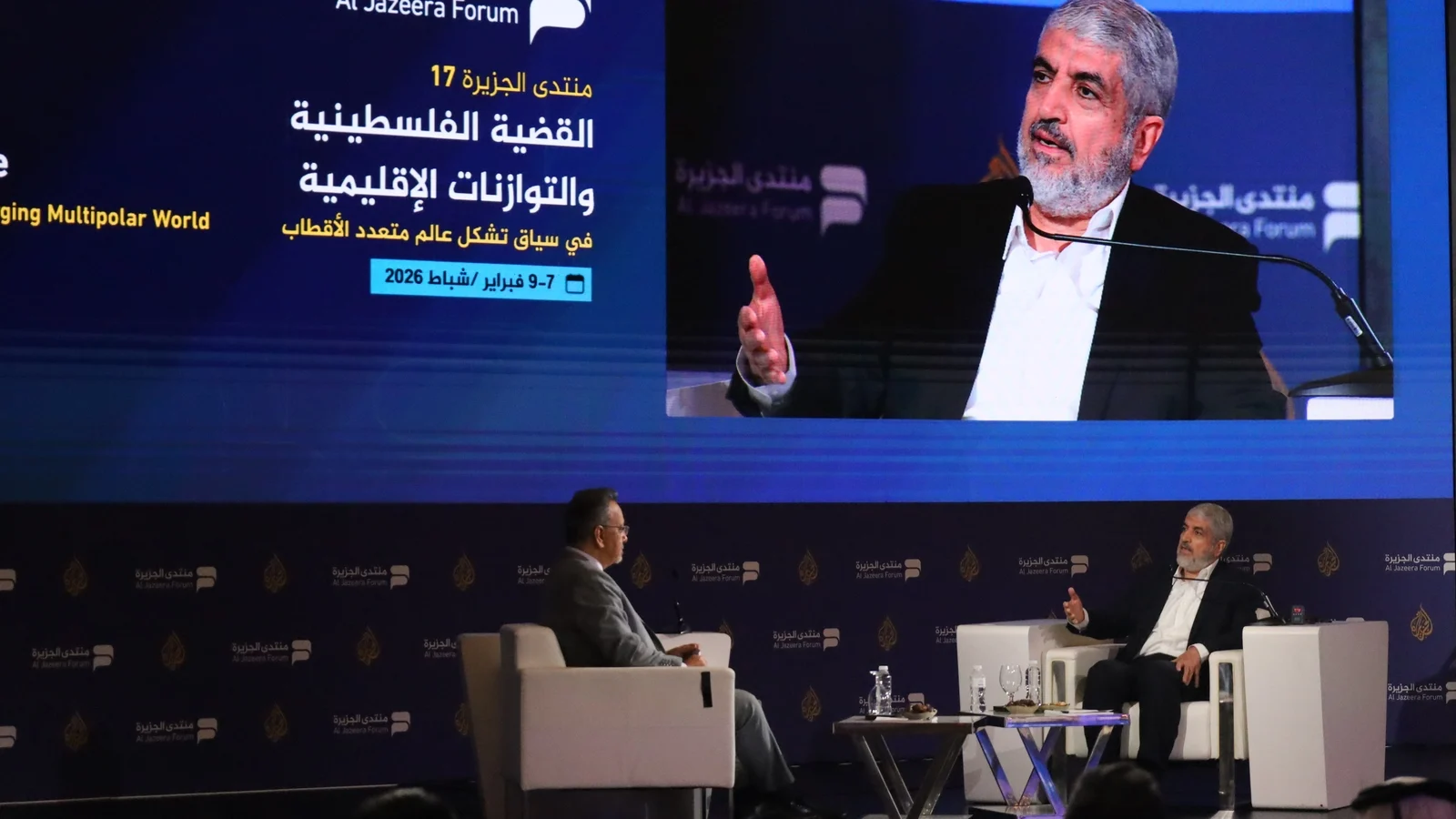
From the conference halls of Doha, one of the old voices of Hamas spoke in a language designed to leave no ambiguity. Khaled Meshal, who once led the movement in exile, pushed back publicly against what he called the twin demands of disarmament and outside governance.
“Criminalising the resistance, its weapons, and those who carried it out is something we should not accept,” he told delegates. “As long as there is occupation, there is resistance. Resistance is a right of peoples under occupation … something nations take pride in.”
The three-line thrust of that message — no disarmament, no foreign guardianship, sovereignty first — is now the fulcrum upon which a fragile ceasefire turns. It is also the core tension between a battered population trying to rebuild and international actors insisting that guns must be taken off the streets.
Why Weapons Matter — and Why They Frighten Everyone
For many Gazans, weapons are not primarily instruments of aggression but of memory. They are visible proof of years of blockade, incursions, and a sense that there was and is no one else who would protect them. “My brother fought because he had to,” said Youssef, a teacher who lost his home in the shelling. “On the day the tanks came, there was nothing else. Do you think we would choose this life? We choose survival.”
For Israelis and much of the international community, the equation is different: weapons in Gaza represent a security threat that must be neutralised to prevent future attacks. Officials in Jerusalem and Washington have framed a post-conflict paradigm in which demilitarisation is the price of peace and reconstruction.
Those two logics — survival and security — are not easily reconciled. To complicate matters, Israeli officials estimate Hamas still fields roughly 20,000 fighters and holds some 60,000 Kalashnikovs in Gaza. Whether those numbers are precise or approximate, they underscore why disarmament remains a top demand in diplomatic corridors.
The Ceasefire, Phase Two, and a Board That Worries Many
The US-brokered ceasefire entered what diplomats call its second phase: a plan that foresees not just a halt to active hostilities but the demilitarisation of Gaza coupled with a phased Israeli withdrawal. The fine print — who handles the weapons, who governs the transition, who ensures aid reaches the needy — has produced a dizzying array of proposals and anxieties.
One of the most controversial is the “Board of Peace,” unveiled at a global summit in Davos and championed by figures from several countries. Alongside it sits a Gaza Executive Board — an advisory body intended to counsel a newly formed Palestinian technocratic committee set up to manage daily governance in the strip. High-profile names have been attached to its membership, stirring critics who fear the initiative could sideline or rival the United Nations.
“There’s a real concern that this could turn into external guardianship, dressed up in technocratic language,” said Lina Haddad, a Palestinian governance expert based in Beirut. “Reconstruction is not just about bricks and roads — it’s about authority, legitimacy, and who sets the rules.”
Voices on the Ground
The people filling Gaza’s crowded shelters and damaged neighborhoods have their own calculus. “If they tell us to hand over every weapon, who will stop the next incursion?” asked Mahmoud, a grocer who watched his shop reduced to rubble. “We are tired of being told we can’t protect ourselves.”
Others are more pragmatic. “We need hospitals, water, schools,” said Rasha, a nurse at a Red Cross facility. “If a plan can bring real aid and keep us safe, maybe there are ways to put weapons under the control of a Palestinian authority — if that authority is truly Palestinian.”
That sentence — “truly Palestinian” — is the hinge of the debate. Hamas has hinted that it might consider transferring arms to a future Palestinian governing body; but Meshal’s Doha remarks reiterated a red line: no foreign rule, no external trusteeship, no “logic of guardianship.”
Options on the Table
The possibilities are messy and political. They include:
- Complete disarmament enforced by an international or regional force — opposed by Hamas and many Gazans.
- Transfer of weapons to a Palestinian security apparatus — contingent on who controls that apparatus and their legitimacy.
- Hybrid models where heavy weaponry is demilitarised while small arms are regulated locally — complicated to police in a densely populated strip of 2.2 million people.
Experts Weigh In
“Any sustainable arrangement needs local buy-in,” said Andrew Cole, an international conflict resolution scholar. “Forcible demilitarisation risks sparking the very cycles it seeks to end. But leaving militant structures intact risks endless violence. The challenge is designing institutions that can hold both security and legitimacy.”
The scale of the humanitarian crisis makes the stakes especially urgent. Gaza’s roughly 2.2 million residents are in desperate need of reconstruction and basic services. Donors and international actors argue they cannot commit funds until they are assured of a secure environment; Palestinians argue that security cannot be imposed from the outside without undermining sovereignty.
What Happens Next—And What It Means for the World
So where does that leave the rest of us, halfway around the globe, reading headlines and shaping opinions from afar? Perhaps with an uncomfortable question: when does an external intervention intended to create peace become another form of control? And who, in a moment of ruin, has the right to speak for the survivors?
“We have seen rebuilding plans before,” observed Mariam, the mother at Rafah, watching a convoy of aid trucks pass. “But if you rebuild our houses and not our voice, what have you done?”
The issue of weapons is not merely tactical; it is existential. It is about dignity, safety, and who will decide the rules of life in Gaza. As diplomats haggle and boards convene, the people living amid the rubble will be the ones to inherit — or resist — whatever order emerges.
Will the world find a solution that balances security with self-determination? Or will the question of arms become the next flare-up in a long catalogue of grievances? For now, the buses at Rafah keep moving, the children keep watching the horizon, and the debate about the future of Gaza — its weapons, governance, and soul — continues to unfold in the shadow of international diplomacy.