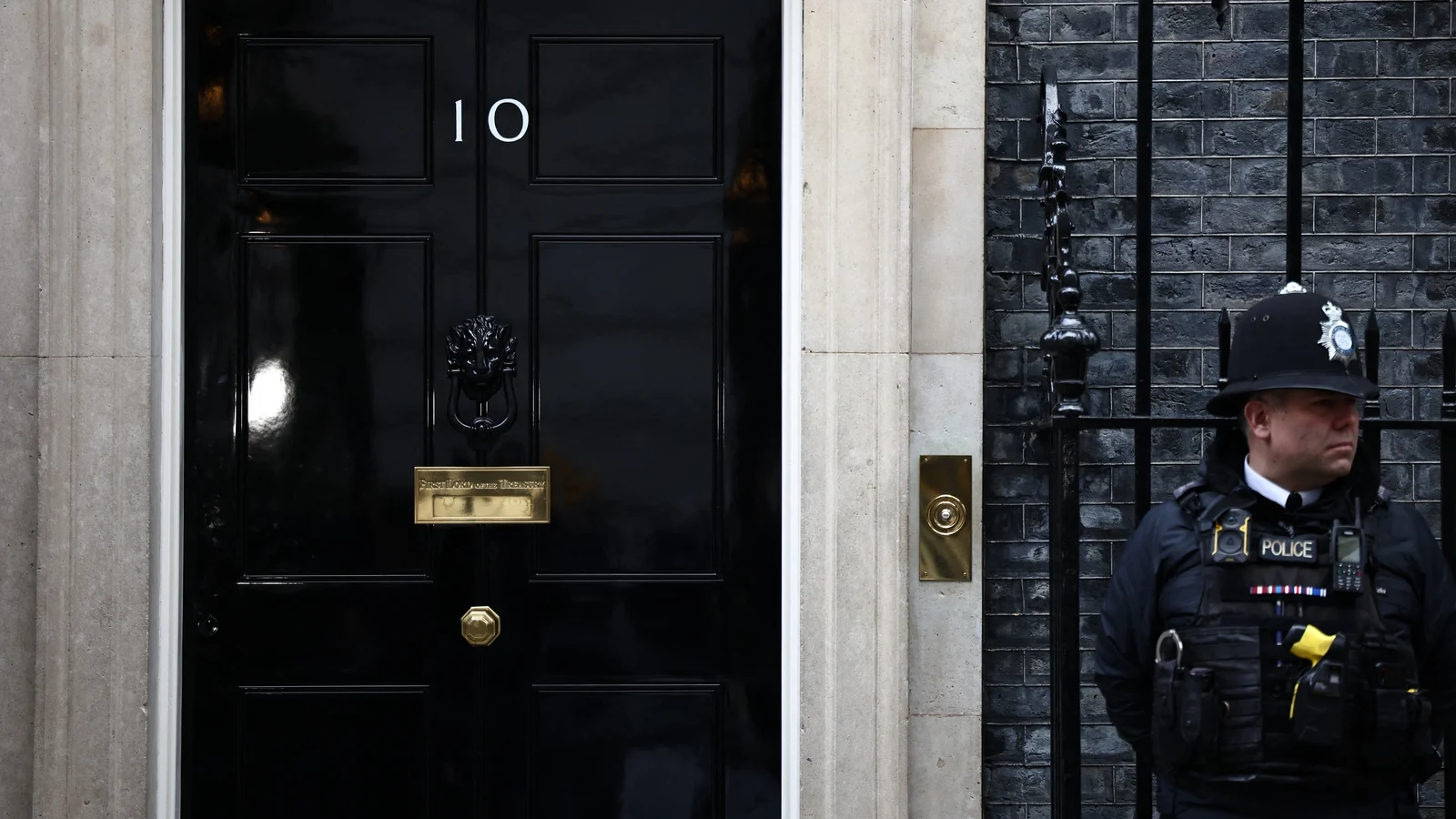
A sudden storm in Downing Street: the moment Westminster felt smaller than ever
It was the kind of Westminster morning that makes even seasoned aides check their phones twice. Rain stitched the sky over Whitehall and a line of umbrellas shuffled past the gates of Downing Street, but the real deluge had nothing to do with weather. The government’s headlines were being rewritten mid-broadcast, and the centre of the storm was an appointment that was supposed to be a diplomatic flourish — not a political landmine.
When Prime Minister Keir Starmer announced the choice of veteran politician Peter Mandelson as Britain’s ambassador to the United States, the move was billed as a signal: a seasoned hand to manage one of the UK’s most vital relationships. Within days, however, media reports and public scrutiny reopened old, uncomfortable associations between Mandelson and Jeffrey Epstein — the late financier convicted as a sex offender whose name has become shorthand for scandal.
“People expected a steady pair of hands,” said a Labour backbencher who asked not to be named. “Instead they got an unanswered question about judgment and vetting. That stings. It makes people wonder what else was missed.”
What happens if Keir Starmer steps down?
The constitutional choreography that follows a prime minister’s resignation is precise and, in its own way, ritualistic. A resignation would trigger a Labour leadership contest designed to choose a new leader who — by convention — becomes the next prime minister.
Here’s how that process plays out in practice:
- Parliamentary threshold: Any prospective candidate must secure the backing of at least 20% of Labour MPs. With Labour currently occupying 404 seats in the House of Commons, that threshold amounts to 81 sponsors.
- Grassroots and affiliates: Beyond MPs, candidates must clear further hurdles including support from constituency Labour parties and affiliated organisations such as trade unions.
- Unopposed outcome: If only one person clears the thresholds, there is no membership ballot — that candidate simply becomes the leader and, by convention, prime minister.
- Membership ballot: If multiple candidates qualify, the party’s members and affiliates cast their votes in a contest that can take weeks to complete. The winner takes the keys to Number 10.
“It’s a deliberately measured system,” said Dr. Aisha Khan, a scholar of British politics. “Labour’s rules distribute power beyond the parliamentary party. That gives rank-and-file members real leverage, but it also means change tends to be slower and messier than in the other major party.”
Fast facts
- Labour seats in the Commons: 404
- Minimum MP backers required to stand: 20% (currently 81 MPs)
- Labour party’s history: in its 125-year existence, the parliamentary wing has never successfully forced a sitting prime minister from office through an internal coup
Can Starmer be challenged without resigning?
Yes — but it’s not as simple as a no-confidence motion. A leadership challenge in Labour’s system is usually triggered by an alternative candidate emerging with enough parliamentary support to meet that 20% bar. Crucially, the sitting leader is automatically included on any ballot.
“Think of it as a competitive audition where the incumbent cannot be excluded,” said a seasoned constitutional adviser. “That protects leaders from purely symbolic uprisings but encourages concrete alternatives: you need a real challenger and a coalition behind them.”
Contrast that with the Conservative Party’s recent turbulence. From 2016 onwards, the Conservatives saw five prime ministers in eight years — a churn driven by lower thresholds and a parliamentary culture accustomed to rapid leadership changes. Labour’s mechanisms were intentionally designed to avoid that sort of whiplash.
Why Labour’s rules make ousting a leader hard
There’s a reason Labour MPs have never successfully removed a sitting prime minister in more than a century: the party’s design places significant power in the hands of its wider membership and affiliated organisations. That structure safeguards the leader from purely parliamentary rebellions, but it also means discontent must coalesce into an organised, rule-compliant challenge.
“You can’t simply say ‘no’ anymore,” laughed an exasperated former minister. “You have to say ‘yes, to someone else’, and then persuade the unions, the CLPs, the members — and do it fast.”
Even Tony Blair, who faced a wave of resignations in 2006, left only after setting a timetable for his departure; he did not fall overnight. The precedent underscores an awkward truth: the mechanisms that protect party cohesion can also prolong uncertainty.
Voices from the street and the experts
In an Islington café near a red-brick terrace, locals watched the headlines scroll across the television as they sipped flat whites. “It feels like being back in the era of secret handshakes and old boys,” said Maria Ochieng, a community organiser. “We vote for transparency and we deserve it. Ambassadors can’t be lightning rods.”
Across the Atlantic, Washington insiders were alert but measured. “Diplomacy depends on credibility,” said a retired British ambassador now living in the US. “If an appointee brings baggage that undermines public standing in either capital, that’s a problem. Not every controversy disqualifies someone, but reputational risk can be contagious.”
Labour-affiliated union leaders were more blunt. “Members expect accountability,” said a union official. “A failure to properly vet a senior appointment is a failure of leadership. We’ll be demanding answers — not just to deflect, but to restore trust.”
What does this mean beyond Westminster?
This episode won’t be contained to the corridors of British power. For allies and adversaries alike, questions about judgment, process and vetting echo into areas of foreign policy and international partnerships. An embassy is more than a building; it is a symbol. When the appointment of an ambassador becomes an internal crisis, it complicates the message the country sends overseas.
More broadly, the controversy taps into global anxieties about accountability in public life. Around the world, voters are demanding clearer, faster mechanisms to hold leaders to account — yet they are also wary of governance systems that encourage instability. How do democracies balance steadiness with responsiveness? That is the knot Labour must untie.
Where do we go from here?
At the moment, the ball is in two courts at once: Starmer’s decisions and the party’s response. If he resigns, the leadership contest will be an institutional marathon requiring 81 parliamentary sponsors to start the race, and possibly months of campaigning among the party’s members and affiliates. If challengers coalesce, the contest will enforce a choice rather than a no-confidence shrug.
“This is a test of political judgement as much as it is of process,” said Dr. Khan. “The public will be watching how transparent the review is and whether the party learns. That’s what will determine whether this episode becomes a brief squall or a long-term wound.”
So ask yourself: when politics gets messy, do you want speed and spectacle or deliberation and stability? And who, ultimately, decides which matters more? The answer will shape more than a party’s leadership; it will shape the future of how democracies reckon with crisis.