A castle, 27 leaders and a continent at a crossroads
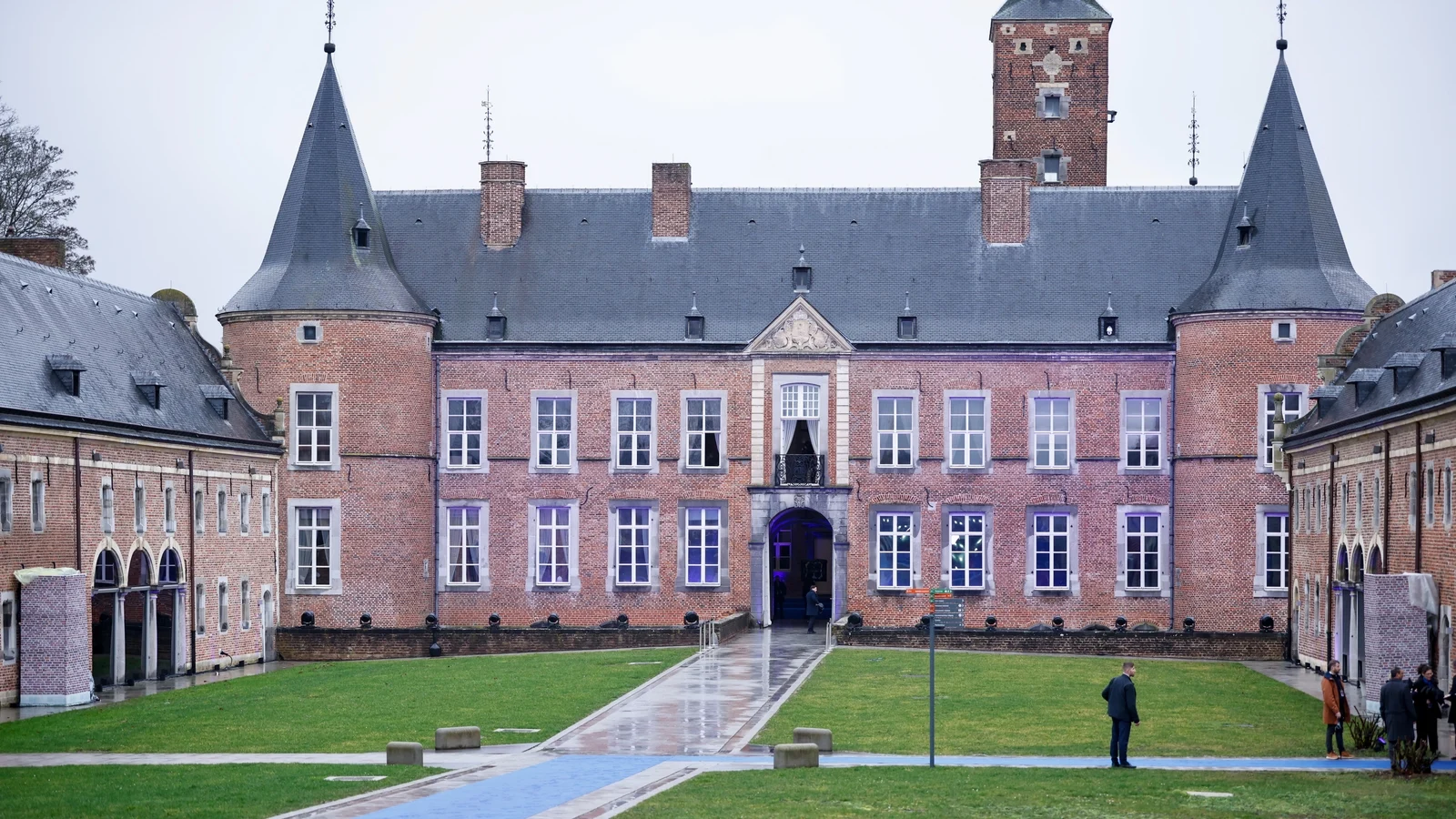
On an overcast morning in Limburg, the stone of Alden Biesen Castle seemed to drink in the drama of the day. Flags fluttered ionlessly; security vans threaded the lanes like dark beetles. Inside the ornate rooms where knights once plotted and feasts were held, the 27 leaders of the European Union gathered not for ceremony but for survival—at least that was how many here described it.
“This isn’t a photo opportunity,” one diplomat whispered to me as ministers shuffled through the echoing corridors. “It’s a test of whether Europe can still choose the future it wants, or whether it will be shaped by others.”
The summit’s short agenda reads like a map of anxieties: keep energy bills from strangling industry, mend and deepen the internal market so goods and services flow like blood, and mobilize investment at a scale that can counter the economic pull of the United States and China. The rhetoric is familiar. The stakes feel new.
Energy: the practical and existential problem
Walk past the castle gates and you meet the local realities—steel towns where furnaces once roared, family-run chemical plants whose chimneys are now quiet more often than owners would like. “Energy is not an abstract,” said Pieter, a third-generation steelworker from the Liège region. “It’s the lights in our factory, the jobs for my neighbours. When the bills climb, everything else starts to wobble.”
He’s not alone in that alarm. EU industry faces electricity prices that are, by several measures, more than double what similar companies pay in the United States and China. Those cost gaps are not theoretical: higher input bills mean lower margins, fewer investments, and the very real risk that entire supply chains relocate beyond Europe’s borders.
“If we want factories here in ten years,” said a European industrialist I spoke with in a hastily arranged meeting room, “we must fix the energy market—price it, transmit it, and plan it together.” His tone carried the blunt calculation of someone watching months of investment decisions hinge on kilowatt-hours.
What’s really broken
At the heart of the debate are two linked problems. First, energy pricing and grid integration remain fragmented across member states—patchwork rules, capacity constraints, and divergent subsidy schemes create winners and losers. Second, the green transition itself, while necessary, increases short-term costs unless managed collectively: renewable deployments need infrastructure, batteries, and new market rules.
“We cannot ask companies to shoulder the transition by themselves,” said an EU energy adviser. “The only sustainable route is a unified, functioning energy market that reduces price spikes and directs investment where it’s most needed.”
Old divisions, new urgencies: debt, trade and ‘Made in Europe’
France arrived at the castle with a manifesto in its pocket: more shared borrowing for large-scale investment and a “Made in Europe” approach that would channel public procurement towards products with robust European content. The ambition is clear—bigger projects, strategic autonomy, less dependence on foreign supply chains.
Germany, meanwhile, counsels caution. Its officials argue that piling on common debt risks long-term fiscal fragility and that the real lever is boosting productivity—ramping up R&D, streamlining regulations, and securing trade deals that open markets rather than locking them down.
“We keep circling the same choices,” said a senior German official. “Do we build with borrowed money, or do we go after structural reforms? Both are valid, but we first need clarity on results and responsibilities.”
Across the table, proponents of closer fiscal integration argue that half-measures won’t be enough when competitors are mobilizing entire financial systems to back industry. “Investment at this scale requires pooling risk,” a French economic adviser told me. “It’s not ideological; it’s practical.”
Voices from the wider economy
A small software entrepreneur in Berlin, Yasmin, worries about access to capital. “If interest rates are high and grant programs are small, we won’t scale here,” she said, balancing a croissant on a paper plate. “Talent is global. If the money isn’t here, the people and ideas will follow it.”
Meanwhile, in a corner of Flanders outside the summit, a ceramics factory owner named Luc—who runs a business that has supplied cookware to three generations of Belgian kitchens—sounded like someone bargaining for time. “We want to decarbonize, but not overnight,” he said. “We need a bridge—financial support, predictable pricing—so we can invest without losing our business.”
Consensus? Or a new form of selective cooperation?
There is a frankness in the castle halls that masks long-standing fault lines. Some leaders insist that an EU-wide push is possible; others say the club is too diverse to move at one speed. One proposal gaining currency is not unanimity but flexibility: if all 27 cannot agree, a coalition of willing member states would move ahead together.
“We have options besides paralysis,” noted a small-state leader. “Enhanced cooperation allows a subset to pilot reforms that others can join later if they wish. It’s a way to break deadlocks.”
But that path raises its own questions: will selective action create a Europe of different speeds where richer states accelerate and poorer ones lag—further fragmenting the single market it aims to save?
Looking beyond rhetoric: deadlines and the weight of time
Many in Alden Biesen were explicit: talk is cheap and time is not. A handful of leaders suggested a June summit as a moment to convert debate into binding decisions or, failing consensus, to trigger the mechanism of reinforced cooperation. “We cannot afford another year of motion without movement,” a Baltic president told me while scribbling notes.
Experts invited to the summit warned of a slow, collective decline if reforms are postponed. “This is not a spectacle,” said a former central banker who traveled to the castle to brief delegates. “It’s about creating the conditions for prosperity—stable energy, deep markets, and affordable capital. Delay is a tax on our future.”
Why this matters to the global reader
It’s tempting to treat European politics as parochial, but what plays out in Alden Biesen ripples beyond canals and vineyards. Europe commands large export markets, controls vital science and technology clusters, and is a partner—or competitor—in supply chains stretching across oceans. Its fortunes will shape investment flows, emissions trajectories, and geopolitical balances.
So ask yourself: do you want global industry to be diversified, resilient, and governed by shared rules? Or do you prefer a world where critical capacity is concentrated in a few economic blocs, subject to strategic pressures? The answer matters for consumers, workers, and policymakers alike.
After the castle doors close
The summit may conclude with modest declarations, perhaps a roadmap or a promise to return. Or it may mark the opening of a more serious push—collective borrowing, a revamped energy market, and targeted industrial policies. Either way, the scene at Alden Biesen feels less like a single meeting than like a crossroads moment.
As Pieter the steelworker put it before he left to start his shift: “We’re not asking for miracles. We’re asking for a plan that keeps our lights on and our kids working.”
And as readers around the world watch, the choice Europe makes will be about more than balance sheets—it will be about what kind of continent it wants to be: an inward-looking museum of past glories, or a living, adaptable economy ready to compete and collaborate on a turbulent global stage. Which path would you choose for the future?