In Geneva’s Quiet Rooms, the World Holds Its Breath
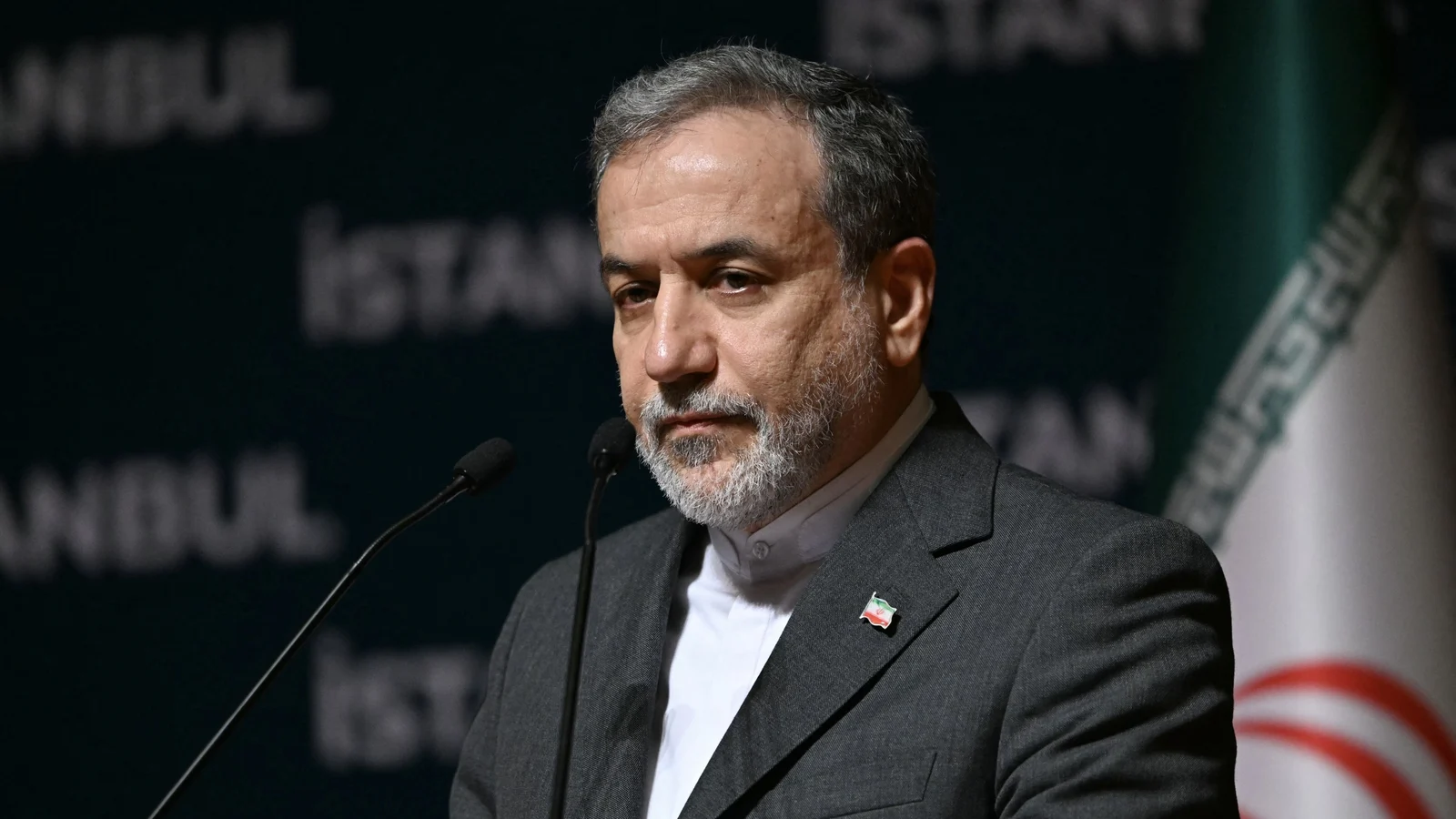
There is a particular hush to Geneva in winter — a thin, refined quiet that makes every footstep sound louder, every voice more consequential. It was into that hush this week that Iran’s foreign minister arrived, flanked by a team of diplomats and experts, to take part in a second round of indirect talks with the United States. The meetings are mediated by Oman and watched, nervously and avidly, by capitals from Tehran to Jerusalem and Washington to Moscow.
On the surface, this looks like another round in the long, sullen game of diplomacy. But beneath the choreography of protocol and shuttle diplomacy lies something raw and immediate: more than 400 kilograms of 60% enriched uranium whose whereabouts have been a subject of fierce international scrutiny since inspectors last tracked it in June. That stockpile is the tangible fulcrum on which trust, sanctions relief, and regional security could pivot.
What’s on the Table
This round of talks is officially “indirect” — Iran and the United States are not sitting across a table, but messages and offers are being ferried back and forth through Oman and the neutral Swiss hosts. Still, the issues are stark and simple to name even if they are devilishly hard to solve.
- Uranium stockpiles: Iran’s advance to 60% enrichment levels narrowed the scientific gap to a weapon-grade threshold, raising alarms in the West.
- Sanctions relief: A crippled economy is Iran’s daily reality; Tehran says concessions must be matched by tangible economic reopening.
- Ballistic missiles and regional proxies: Washington and allied countries want constraints on missile programs and Iranian support for armed groups across the Middle East.
“If we see the sincerity on their part, I am sure we will be on a road to have an agreement,” Iran’s deputy foreign minister Majid Takht-Ravanchi told foreign media in recent comments, signalling Tehran’s willingness to negotiate if economic relief follows.
Actors on a Small Stage with Global Consequences
This is not only a bilateral spat. It is a triangular flux of diplomacy, coercion, and domestic politics. On one side is Tehran, bruised by years of sanctions that have pinched ordinary Iranians hard. On another side is Washington, which has repeatedly signalled both the willingness to negotiate and an appetite for pressure — even military — if diplomacy fails. And threading through the talks are mediators: Oman, which has quietly facilitated communications before, and Switzerland, whose embassy in Tehran has represented U.S. interests since 1980.
A U.S. envoy, part of the team dispatched to the talks, told a reporter on condition of anonymity, “We’re here to set practical limits, to reduce the risk of escalation. That means verifiable steps and concrete timelines.” In the background, the United States has also sent high-profile figures, underlining the political weight behind the negotiations.
And then there is Israel. “There should be no enrichment capability … dismantle the equipment and the infrastructure that allows you to enrich in the first place,” Prime Minister Benjamin Netanyahu declared recently — words that sharpen the stakes and keep the region on edge.
On the Ground in Tehran: Voices That Often Go Unheard
Walk the alleys off Valiasr Street and you’ll encounter layers of ordinary life that are too easily flattened in geopolitical summaries. A tea vendor in a small shop beside a bookstore blows steam off a kettle and shakes his head. “People here want work, safety, to travel, for their children to breathe,” he says, stirring sugar into a glass. “Talk of bombs and carriers is far from what the family needs.”
A graduate student in international relations, studying in the evenings by a single lamp, is more circumspect: “We don’t want isolation. But we also don’t want humiliation. The conversation must restore dignity and livelihoods.”
Those livelihoods are what Iranian officials point to when they say economic sectors such as aviation, mining, oil and gas could be quick wins from any deal. Hamid Ghanbari, a deputy foreign minister focused on economic diplomacy, has argued that for an agreement to be viable, the United States must also be able to benefit in areas with “strong and rapid economic return potential.”
Switzerland and Oman: Quiet Carriers of the Conversation
Switzerland’s role in these talks is a reminder of how much diplomacy depends on small acts of trust. For decades, Bern has served as an intermediary between Washington and Tehran, a custodian of messages and a place where red lines can be tested in private. Oman, too, has been a discreet broker, its pragmatic foreign policy allowing it to move between adversaries.
“Neutral ground makes it possible to speak frankly,” said a Swiss diplomat involved in the preparatory work. “Geneva’s not glamour — it’s a workshop. Our job is to create a space where inconvenient realities can be faced.”
Why This Matters Beyond the Region
Ask any trader, diplomat, or family in the Middle East and they will tell you that the outcome here reverberates far beyond Tehran and Washington. A renewed spiral into tension could raise insurance premiums on shipping routes through the Gulf, push crude prices higher, and create waves across fragile supply chains. Conversely, a credible deal that restores some economic normalcy for Iran could reshape regional alliances and reopen avenues for trade and cultural exchange.
There are also deeper currents. This is a contest not only over centrifuges and sanctions but over how the international rules around nuclear materials, verification, and state behavior are enforced. It tests whether diplomatic patience can outlast the short, sharp instincts of military pressure.
Where Things Could Go
No one in Geneva is naive: trust is thin, verification is expensive, and domestic politics on both sides could scuttle progress. Still, negotiators speak in possibilities. They imagine phased steps: verified limits on enrichment; staged sanctions relief; international monitors back in; economic engagement calibrated to ensure rapid benefits.
“Diplomacy is slow but not inert,” a seasoned analyst who follows non-proliferation issues told me. “It’s a series of trades: time for transparency, sanctions relief for verifiable rollback. The devil is in the sequencing.”
Questions That Remain
Will the indirect format be enough to broker trust? Can Geneva produce a framework that satisfies Tehran’s need for relief and Washington’s insistence on verifiable limits? And perhaps most importantly: can ordinary people — the shopkeepers, students, and families whose daily lives are most affected — feel the benefits of any agreement?
As the delegations move between rooms in Hotel lobbies and conference centers, and as the world watches a stockpile of enriched uranium hover like a danger-laden shadow, one truth remains: diplomacy is a human endeavor. It is argument and concession, fear and hope. It is, at its best, the art of averting the worst while building room for the possible.
Whether Geneva’s hush now gives way to progress, or to another round of recriminations, will depend not only on what negotiators write on their pages, but on the small acts of courage and compromise that happen off-camera. Are we ready, as a global community, to back patience over brinkmanship? The answer will shape more than treaty texts — it will reach into markets, kitchens, and classrooms from Tehran to Tel Aviv, from Washington to Geneva.