Smoke Over the Frontier: A Night of Explosions, Loss, and Questions in Khyber Pakhtunkhwa
The night came in like a thief—quiet at first, the sky a cold blue over the ridged silhouette of Khyber Pakhtunkhwa—and then it exploded with a violence the region has learned, over decades, to fear.
In the tribal district of Bajaur and the town of Bannu, two bombs and a pitched gunfight left a stunned community counting bodies and tending the wounded. At least 11 security personnel and three civilians, including a child, were killed; 25 more were injured. Residents rushed to hospitals and mosques, where plastic sheeting and blood-streaked clothing mixed with the heady smell of rotting tea and incense—everyday life for a place that has had to learn how to grieve in public.
What happened
In Bajaur, a suicide bomber drove an explosives-laden vehicle into the boundary wall of a seminary late in the evening, security sources told me. Eight policemen and Frontier Corps personnel inside the religious college were killed on impact; roofs on nearby houses collapsed from the blast, and a child was among those killed.
“We could hear the walls shake,” said Hamid Gul, a neighbor who rushed to the scene. “When I ran in, there were books, shoes, and blood everywhere. A boy—maybe ten—was under the rubble. We tried to lift the stone ourselves.”
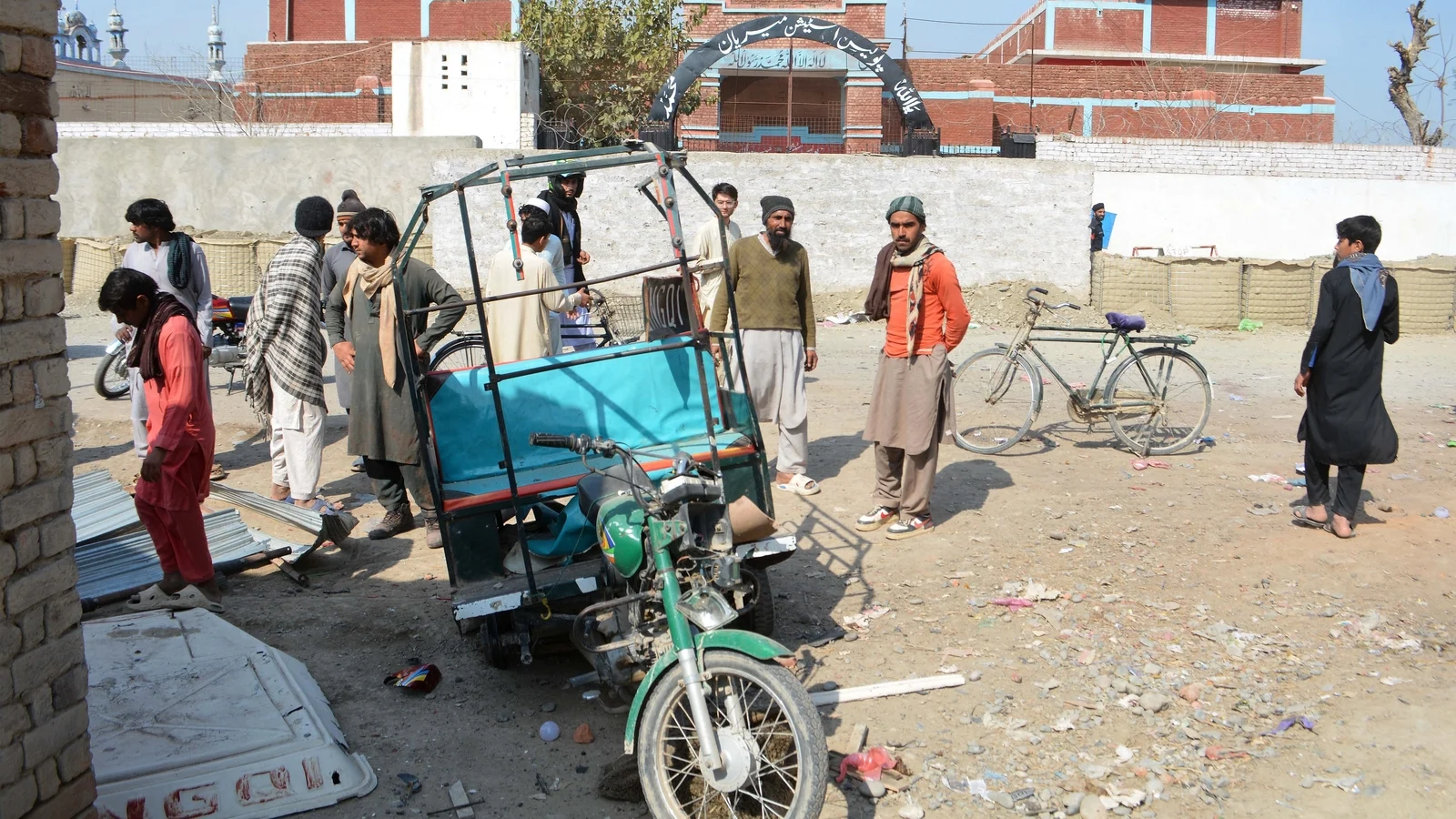
In Bannu, a device hidden in a rickshaw detonated near Miryan police station, killing two civilians and wounding 17. The third scene unfolded in Shangla district, where a search operation turned into a firefight; three policemen and three militants were killed. The provincial police said those militants were involved in targeting Chinese nationals.
Faces, names, and the human calculus
Names are still being confirmed; funerals are being arranged amidst curfews and checkpoints. The dead are not just tallies on a security brief—each loss is a thread in a family tapestry suddenly unraveled.
“He was my only son,” said Mariam Khan, a widow whose husband served in the Frontier Corps. “He sent me a photograph this morning. He said, ‘Don’t worry, Amma, the day is long and I will come home.’ I laugh and cry in the same hour.”
Across the hospital wards, doctors and nurses—overworked and under-resourced—worked by flashlight and the glow of mobile phones. The corridor was thick with the sounds of relatives calling out names, the metallic clatter of stretchers, the crackle of two-way radios coordinating to move the wounded to bigger facilities.
Why Chinese nationals are a target
Over the past decade, Chinese investment—most visibly through the China-Pakistan Economic Corridor (CPEC)—has reshaped Pakistan’s infrastructure and its geopolitical alliances. Tens of billions of dollars in roads, power plants, and ports have flowed into the country. But wealth and security are rarely distributed evenly, and resentment can fester where jobs are scarce, where land is disputed, or where people feel sidelined.
“Attacks on Chinese workers are both symbolic and strategic,” said Dr. Sara Qureshi, a security analyst in Islamabad. “They send a message to Beijing about the limits of protection and to local governments about contested governance. Militants want to undermine the economic base that bolsters the state.”
In March last year, five Chinese nationals working on a dam project were killed when a suicide attacker targeted their vehicle on the Karakoram Highway. That incident remains seared into the public memory of communities along the northern routes—an illustration of how fragile security can be when strategic projects run through rugged and restive terrain.
Numbers that matter
- At least 14 people were killed across three incidents in Khyber Pakhtunkhwa.
- At least 25 people were wounded.
- Earlier this month, a suicide blast at a Shiite mosque in Islamabad killed 31 people and wounded 169—claimed by the Islamic State group.
- Chinese investment in Pakistan through CPEC has amounted to tens of billions of dollars in projects; protection of personnel remains a central security priority.
Beyond the headlines: lives and landscapes
If you drive the winding roads from Peshawar toward the northern districts, the landscape changes like a film strip—the noise of trucks gives way to goats on the road, the tar turns to gravel, and then the jagged teeth of the mountains rise like a challenge. Small bazaars cluster where the roads narrow: tea stalls with chipped teacups, men hunched over chessboards, shopkeepers keeping one eye on their phones, another on the road that feeds their livelihood.
“We have learned to live with fear,” said Latif Ahmed, a tea vendor in Bannu. “But we will not leave. This is our home; we have nowhere else to go. The children have to go to school, the wheat must be sowed, the taxes paid.”
The wider context
Pakistan’s struggle with militant violence is not a single story but many: sectarian conflicts, insurgencies seeking to carve out power in neglected regions, and the overlapping shadow of groups like ISIS seeking to exploit fractures. The fall of Kabul in 2021 and the shifting dynamics in Afghanistan changed cross-border security calculations, even if direct causal links are complex and contested.
Analysts warn that failing to protect civilian life and critical infrastructure could deepen local grievances and provide fertile ground for recruitment—or push investments elsewhere. “Security is not merely about boots on the ground,” Dr. Qureshi adds. “It’s about governance, economic inclusion, and credible, accountable institutions.”
What now? Questions for policy and for readers
Who bears responsibility when a school, a seminary, or a mosque turns into a target? How do governments balance the urgent need to protect foreign investment and diplomats with the equally urgent need to protect their own citizens? And for ordinary people—shopkeepers, mothers, young students—how do they stitch together a life in the shadow of periodic explosions?
“We will demand justice,” said a local councilor, Rashid Khan. “But justice must not be more blood. We need jobs, schools, and a sense that the state is present—not just in the form of walls and checkpoints, but in hospitals that work, teachers who come, and courts that function.”
That plea is more than local politics. It speaks to a global theme: as money moves across borders and strategic interests override local concerns, there is often a human cost that can be easy to ignore from afar. The trauma of a night like this—of names read out at dawn and children asking where their fathers are—reverberates through families and communities for generations.
A call to witness
As you read this from wherever you are—a city apartment, a rural garden, a crowded newsroom—consider how we measure security and progress. Is the true index the length of a motorway or the number of funerals avoided?
“We need more than words,” Mariam said, folding her hands over a photograph. “We need people to come and understand, to care enough to change things.”
For now, Bajaur and Bannu will bury their dead, bandage their wounds, and light candles. The morning after the blast, a young man swept the steps of a mosque, his face still smudged with soot, and began the slow work of repair. It is an act of defiance; of ordinary courage.
Will policy change fast enough to stop the next act of violence? Only time—and the choices of many—will tell. For the families who lost loved ones last night, time has already become an unhealing wound. For the rest of us, there is a choice: to watch and forget, or to look closer and demand better.