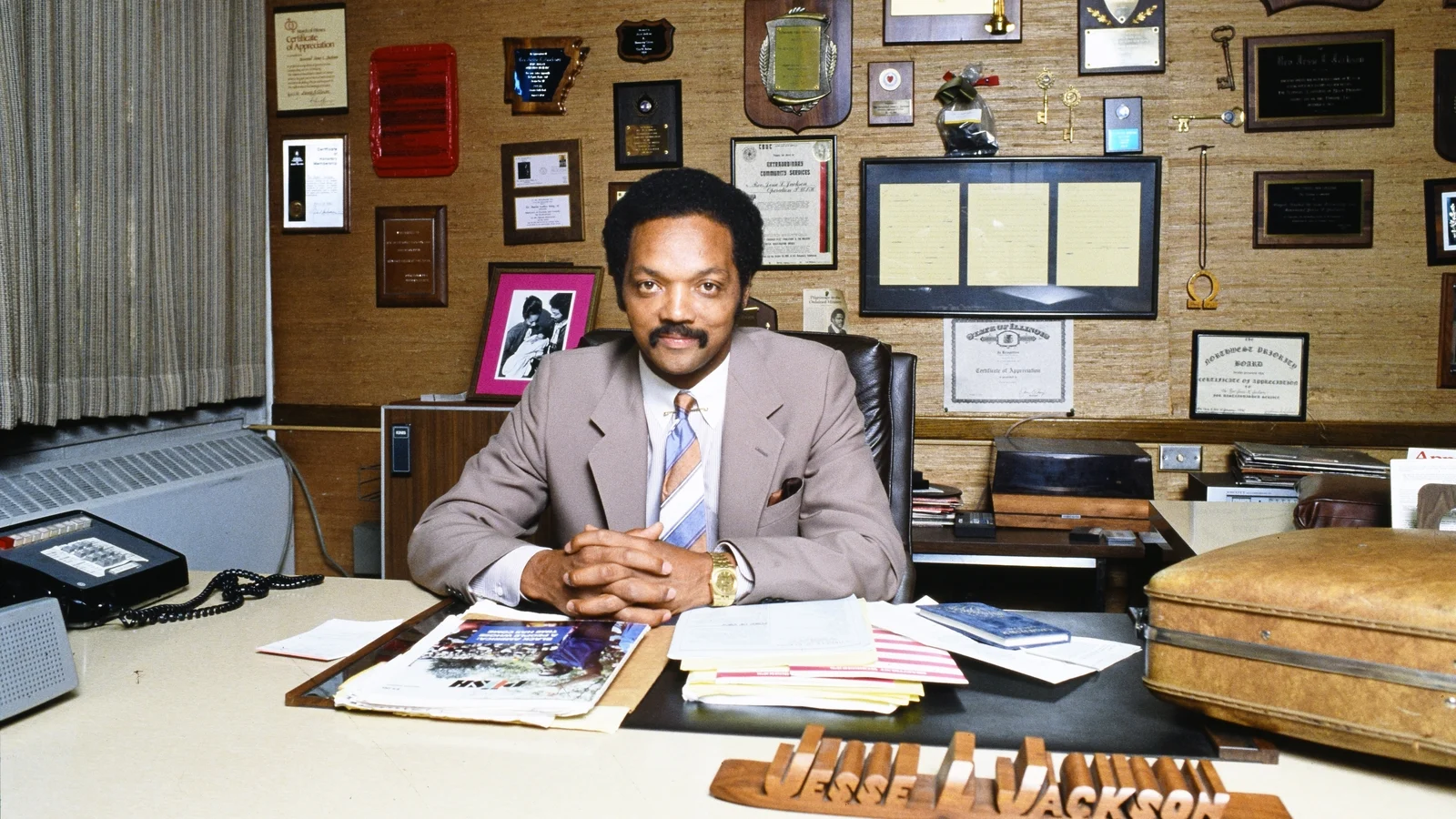
A Giant Who Spoke to the Whole Room: Remembering Jesse Jackson
The news landed like a hush mid-sermon: Jesse Jackson, the thunderous, gentling, complicated voice of American civil rights for more than half a century, has died at 84. For people who grew up under segregated signs and for those who came of age with tweets and streaming, Jackson was a bridge — not a sanitized relic, but a restless, searching presence who refused to let pain be private or progress be tidy.
“He was our door-opener,” said Marisol Vega, a community organizer who grew up attending Rainbow PUSH meetings on Chicago’s South Side. “Not perfect. Not always easy to love. But he made space for people who otherwise would have been invisible.” Her words echo a family statement that called him “a servant leader” to the oppressed and overlooked — a fitting epitaph for a man who made diplomacy, oratory and relentless agitation his craft.
From Jim Crow to the National Stage
Jackson’s story began in Greenville, South Carolina, born on October 8, 1941, into a region stitched tightly with the laws and habits of Jim Crow. The early years — a teenage mother, the adopted surname, a football scholarship and then a transfer to a historically Black college after encountering discrimination — are the kind of details that explain more than any policy analysis how a life of conscience takes root.
He moved north and into the orbit of Dr. Martin Luther King Jr., preaching, organizing, and learning to make large rooms feel intimate. On the day King was assassinated in Memphis, Jackson was in the hotel below; his later recounting of having held King in his arms became one of the many tensions that marked his life: deeply loyal to the movement that made him, yet a figure willing to pull the movement in new directions when he thought it needed course corrections.
Chicago: Laboratory and Battleground
Chicago, with its layered neighborhoods and political machines, became Jackson’s operating theater. He founded Operation PUSH and later the National Rainbow Coalition, which merged into Rainbow/PUSH in 1996. The organizations were black-led, coalition-minded, and stubbornly focused on economic empowerment — job training, corporate accountability and pressure campaigns that mixed faith and force.
“You could walk into one of his meetings and feel the argument in the air — not only about race, but about bread-and-butter stuff,” said David King, a former PUSH volunteer. “We were trying to get people into jobs, into homes, into the conversation of power. He believed dignity had an economic angle.”
The Orator Who Ran for President
Jackson translated sermon cadence into political momentum in two presidential bids that shook the Democratic Party. In 1984 he captured roughly 3.3 million votes — about 18% of the primary electorate — finishing a surprising third. Four years later he sharpened his message and broadened his reach, winning 11 state contests in 1988 and some 6.8 million votes, or about 29%.
Those campaigns were moments of possibility and blunt reminder. Jackson’s politics pushed issues of race, poverty and foreign policy onto the national stage, yet controversies — most notably inflammatory remarks about Jewish communities and New York that cost him critical allies — also revealed the peril of mixing raw, unfiltered candor with the new scrutiny of mass media.
“He didn’t dress his frustrations in velvet,” a longtime Democratic strategist observed. “Sometimes that was a strength — people heard their anger in him. Other times, it was a liability.”
Global Hustler: Prisoner Releases and Quiet Diplomacy
Jackson’s reach was not confined to American shores. He negotiated releases in places like Syria, Cuba, Iraq and Serbia, sometimes bringing home Americans who had become pawns of geopolitics. His role as a special envoy to Africa under President Bill Clinton in the 1990s and his meeting with Saddam Hussein in 1990 to help free hostages are the kind of episodes that make him read like a Cold War diplomat with a pastor’s moral thrust.
“He walked into rooms others wouldn’t,” said a former State Department official. “People thought of him as a moral broker. And often, he was effective.” It is true: Reagan thanked him when he secured the release of a U.S. naval aviator from Syria in 1984, and Bill Clinton awarded him the Presidential Medal of Freedom in 2000, recognizing a lifetime that had mixed chapel pulpit and political theater.
Controversy, Complexity, and Craft
Jackson’s life was neither untarnished saintliness nor disposable scandal. He confronted allegations — a son’s political fall from grace, personal lapses in judgment, inexplicable slips of rhetoric — that complicated the public’s love affair with him. Still, he remained a towering public presence, not because he was flawless, but because he kept trying.
He also wielded media savvy: a CNN show in the 1990s, relentless appearances, and an ability to frame a grievance as a national conversation. Yet those same qualities attracted critique: why did a movement leader spend so much time in the spotlight? Why were internal disputes so public? The answers live in the paradox of modern activism: exposure can amplify a cause, but it can also magnify human error.
Numbers That Mattered
- 1984 Democratic primaries: ~3.3 million votes (about 18%)
- 1988 Democratic primaries: ~6.8 million votes (about 29%), including wins in 11 states
- Diagnosed with Parkinson’s disease in 2017; remained publicly engaged afterward
- Founded Operation PUSH in the early 1970s; National Rainbow Coalition in 1984; merged to form Rainbow/PUSH in 1996
Legacy: What Jesse Jackson Leaves Behind
What do you inherit from a life that tries to bend institutions? For many, it is a vocabulary — phrases that teach people to ask for more. For others, it is the lines of power re-drawn: Black candidates tested the primaries because Jackson had shown it could be done. Barack Obama’s 2008 presidential success did not erase Jackson’s role; it built on a path that men and women before him had scouted.
“He gave ordinary people a permission slip to demand extraordinary things,” said Aisha Thompson, a young activist in Detroit who cites Rainbow/PUSH as formative for her organizing. “He taught us to call the president, to meet the CEO, to show up in numbers and in love.”
At the same time, Jackson’s story raises broader questions about movements and memory. How do we evaluate leaders who are fierce advocates and flawed humans? How does the public square handle concession and criticism? In an era of instantaneous judgment, what does forgiveness look like — and who gets it?
Final Reflections
In neighborhoods from Greenville to Chicago to Selma, elder church members will tell stories tonight: about a sermon that shifted a life, an office that helped a family, a call that coaxed a hostage home. Young people will stand at marches and ask how to harness moral force in an age when hashtags can make a moment but not always a movement.
Jesse Jackson’s life resists easy summarization. He was orator and organizer, error-prone and brave, a broker of compassion who also courted controversy. Above all, he insisted that public life was worth inhabiting for those the public too often forgets.
So ask yourself: when you see someone pushed to the margins, do you look away — or do you become, for a moment, a servant leader too? That question feels like the clearest inherence of a man who spent his life making noise until the nation listened.